Engineering & calculations
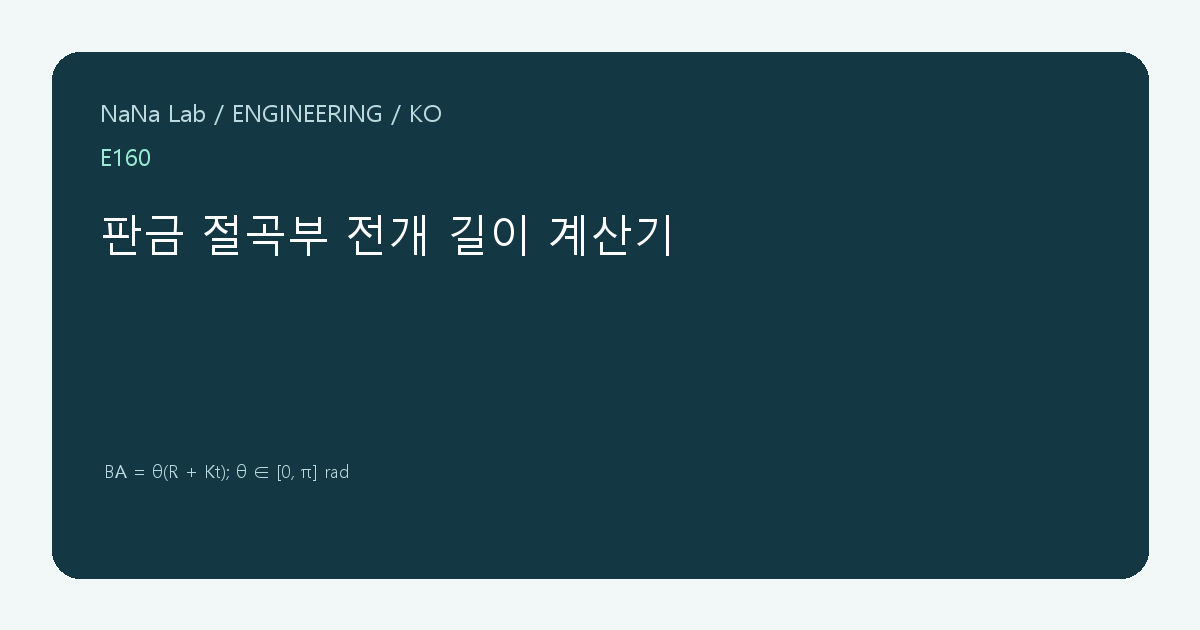
Sheet metal bend allowance calculator
Use an entered K-factor to locate the neutral axis and calculate the developed length of one circular curved bend.
Web appOpen app

We support R&D delivery, performance targets and patent applications.
Technical advice on AI and business planning for AI adoption.
We run proof-of-concept projects of around six months to validate ideas quickly.
We build AI platform prototypes that help employees work efficiently.
We review the feasibility of AI business plans and prepare evaluation reports.
Generative AI training tailored to the work your employees do.
AI engineer, CEO

Define your needs
Agree on scope and prepare a delivery plan
Carry out the agreed work
Deliver the results
APPS
Explore the newest apps and find the right tool for your task.
193 apps & tools
All: 193
Use an entered K-factor to locate the neutral axis and calculate the developed length of one circular curved bend.
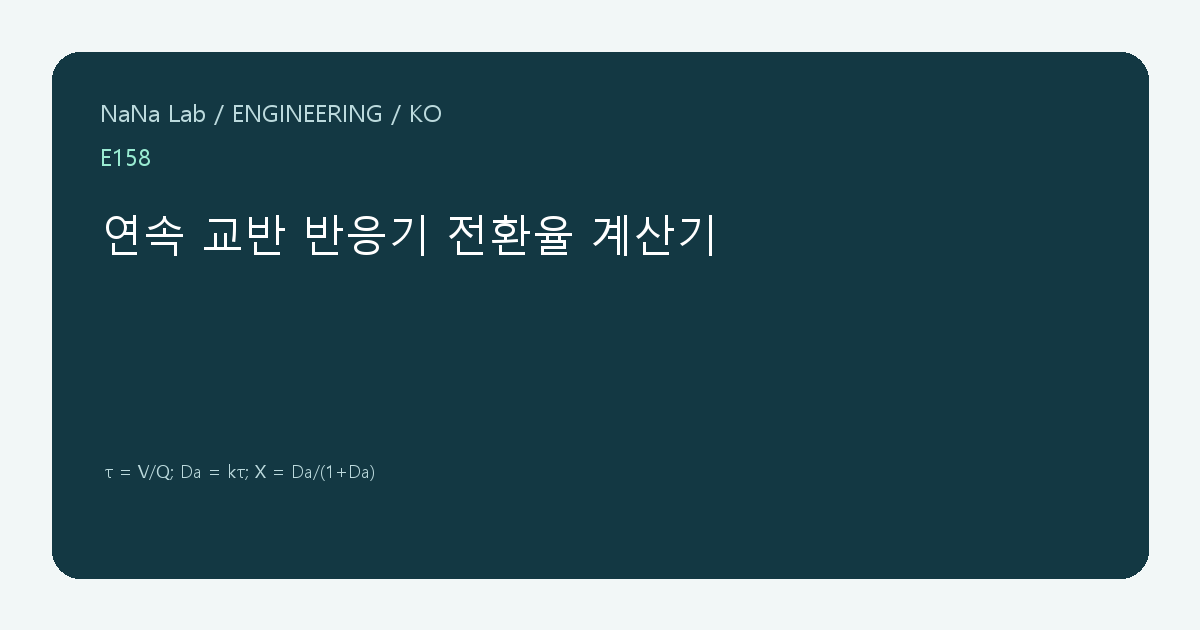
Calculate the steady-state conversion of an irreversible first-order reaction in a perfectly mixed continuous stirred-tank reactor.
Calculate the thermal energy delivered to the workpiece per weld length for constant voltage, current and travel speed.
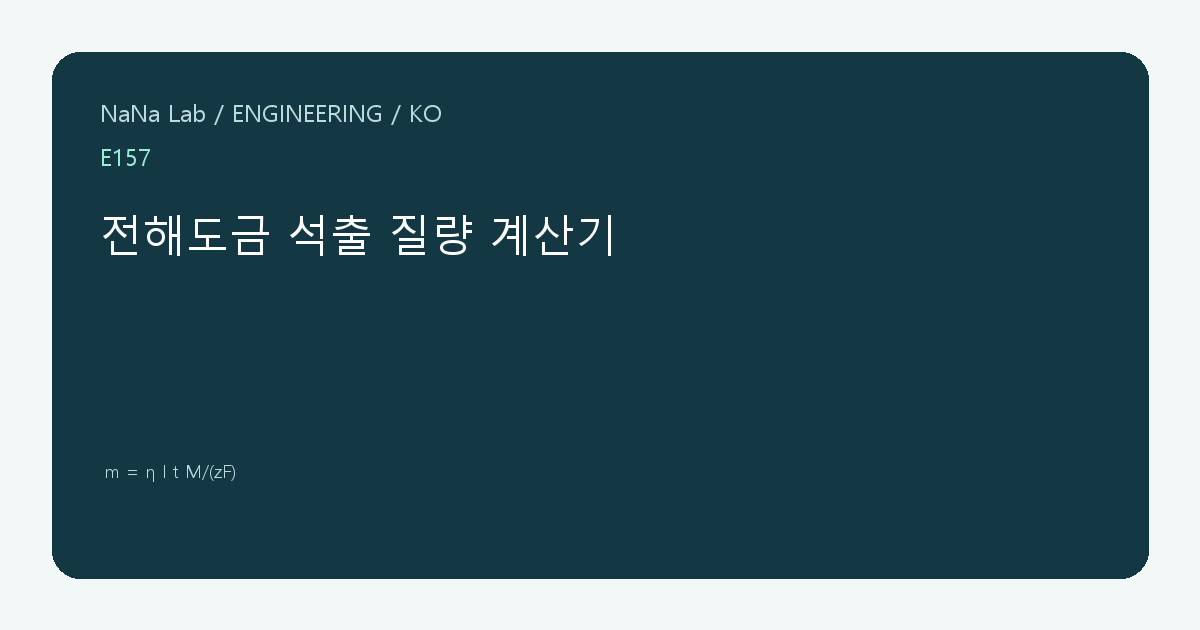
Use Faraday's law and the entered current efficiency to calculate the mass deposited by the desired electrode reaction.
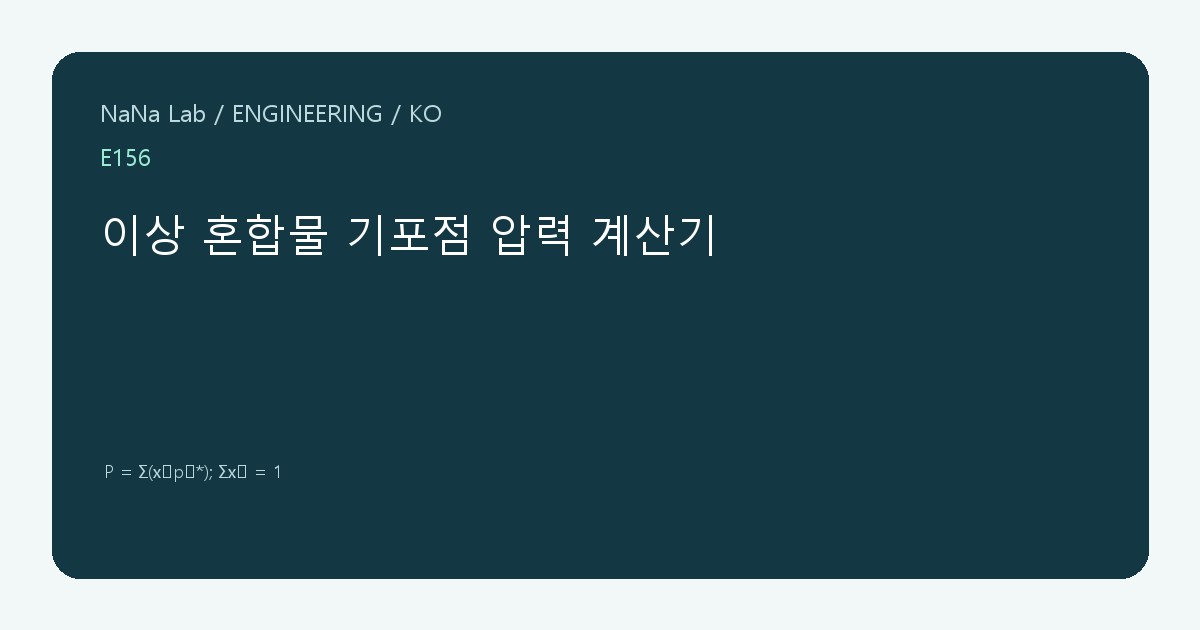
Calculate the total pressure at the onset of boiling in an ideal liquid solution from liquid composition and pure-component vapor pressures at a common temperature.
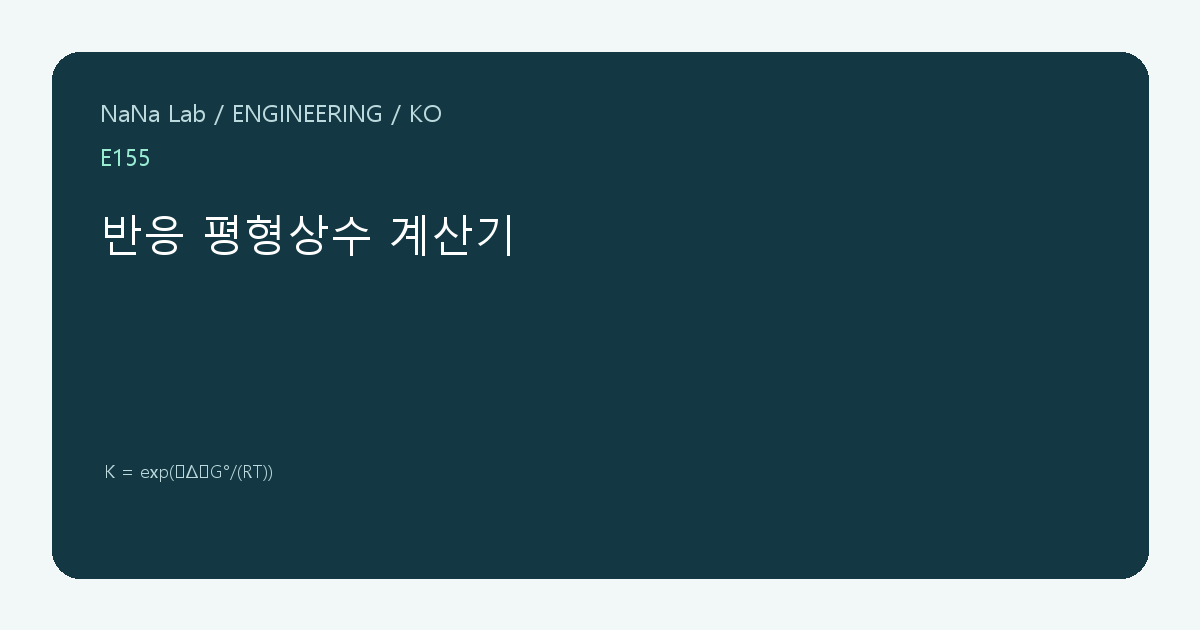
Calculate the dimensionless thermodynamic equilibrium constant from the standard reaction Gibbs energy for a specified reaction and standard state.
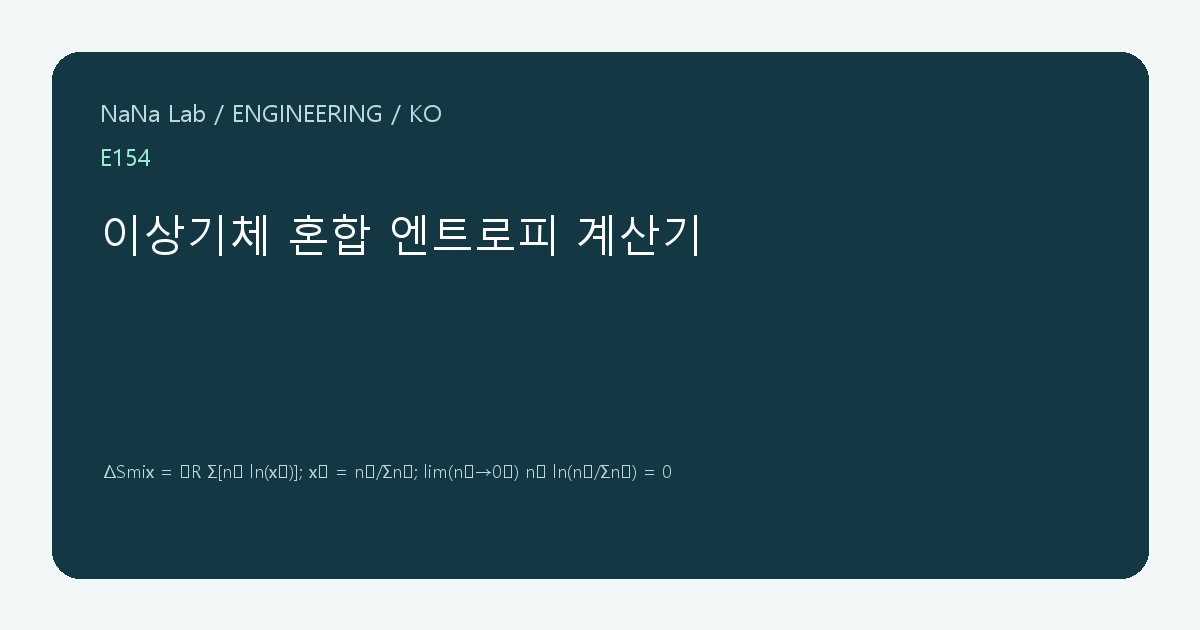
Find the entropy increase when distinct ideal gases, initially separated at the same temperature and pressure, are mixed.
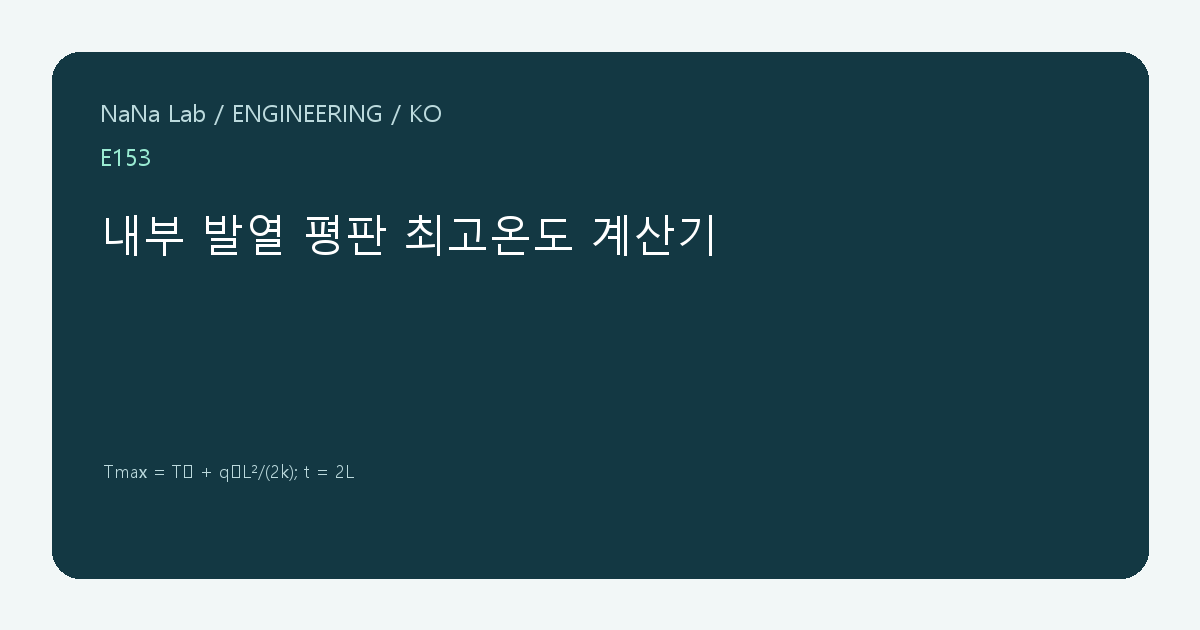
Calculate the steady maximum center temperature of a uniformly heated slab whose two surfaces have the same prescribed temperature.
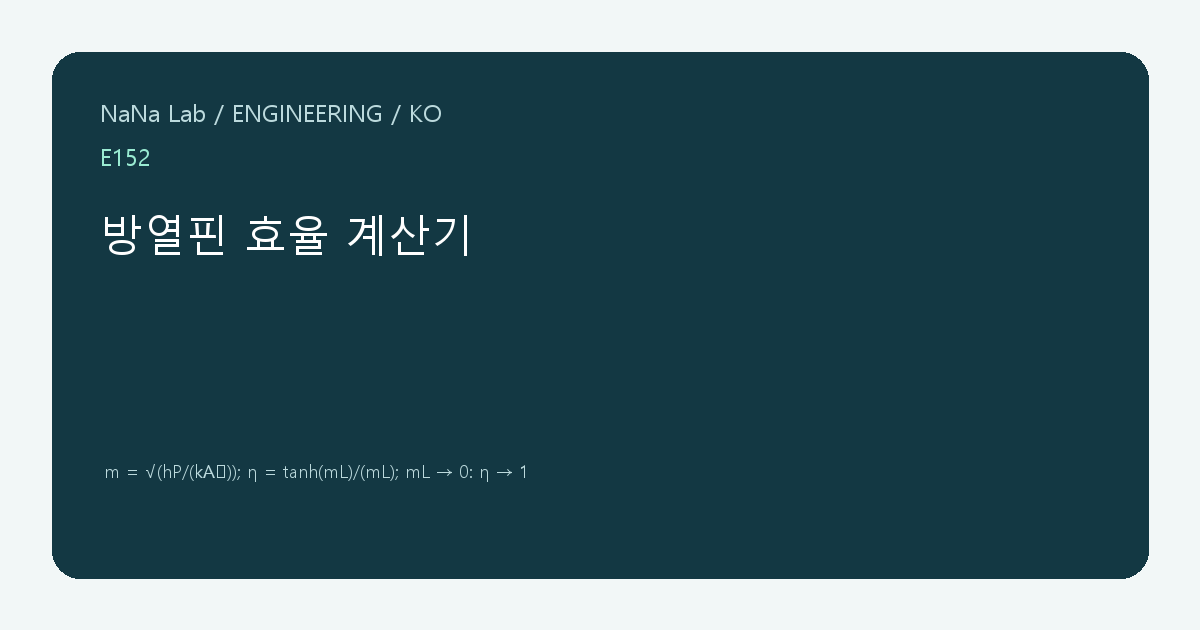
Compare heat transfer from a straight uniform fin with the ideal heat transfer if its entire surface were at the base temperature.
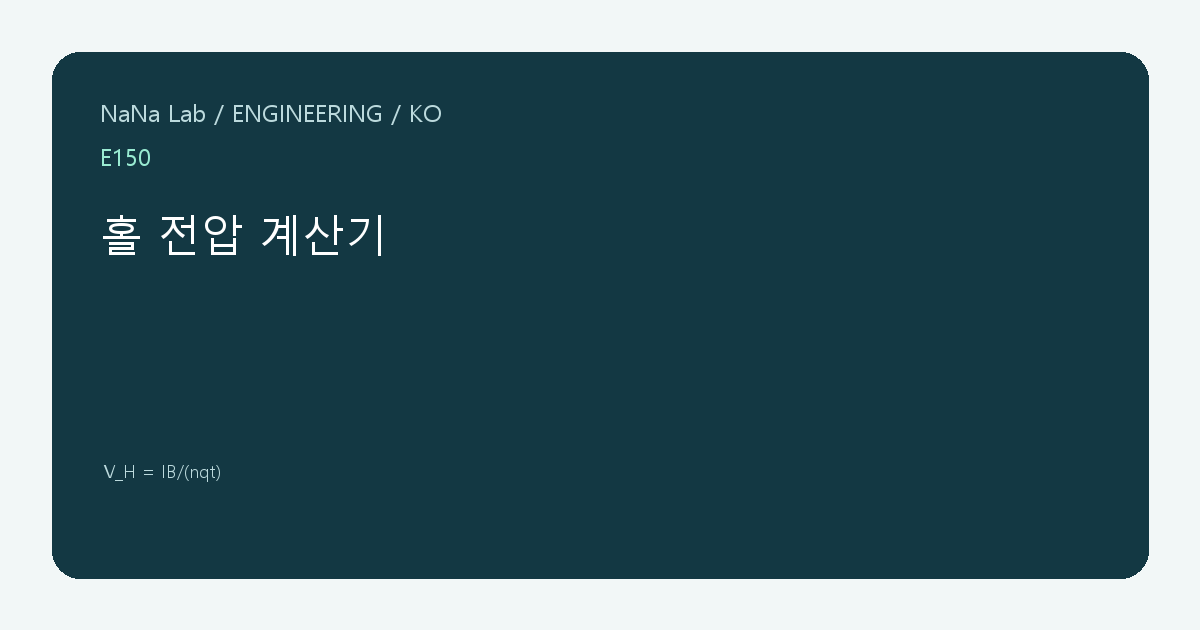
Calculate signed Hall voltage for a flat sample with a single carrier type.
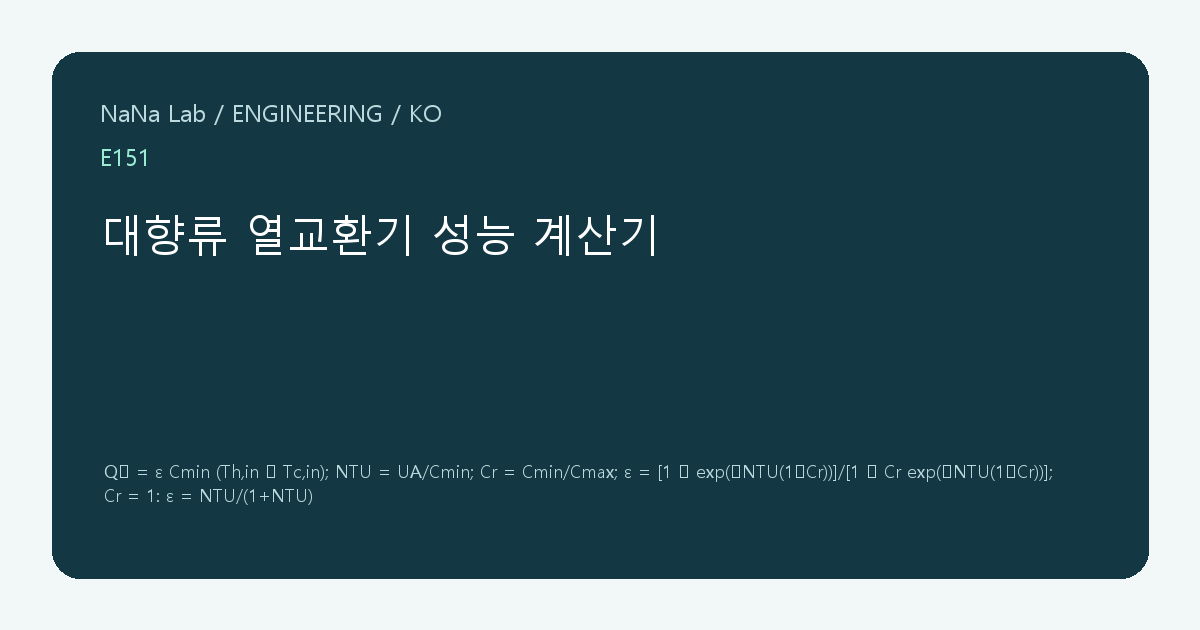
Calculate the steady heat transfer rate of a single-pass counterflow exchanger from UA, stream heat capacity rates and inlet temperatures.
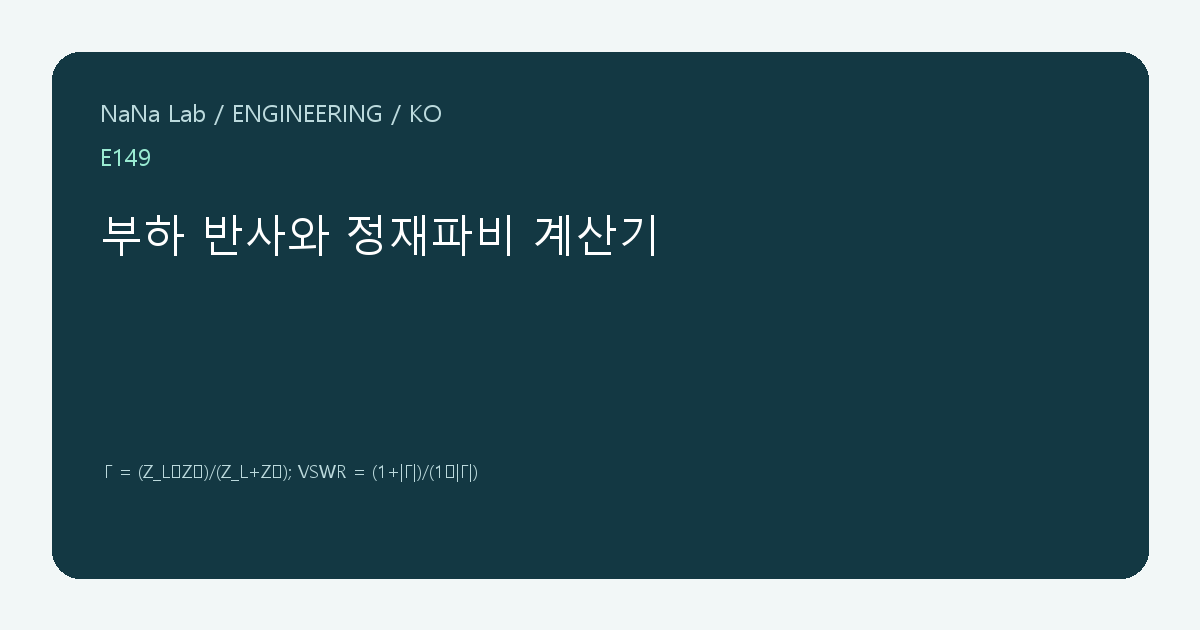
Calculate voltage standing wave ratio from a real reference impedance and a finite complex load impedance.
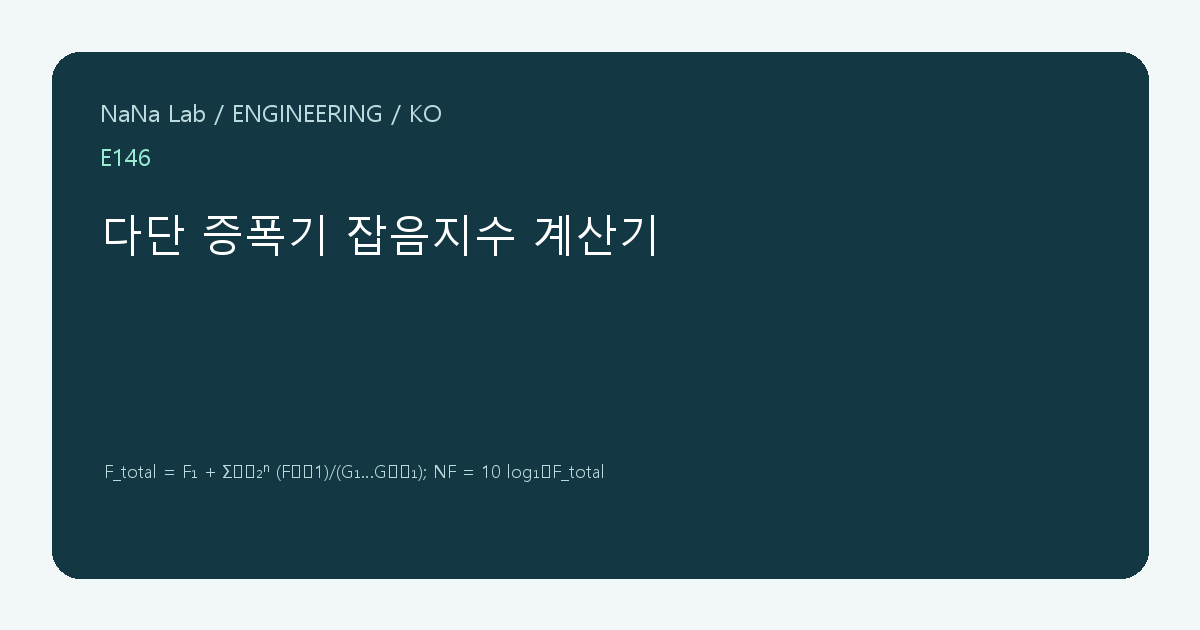
Combine the power gain and noise figure of an ordered list of stages using the Friis cascade relation.
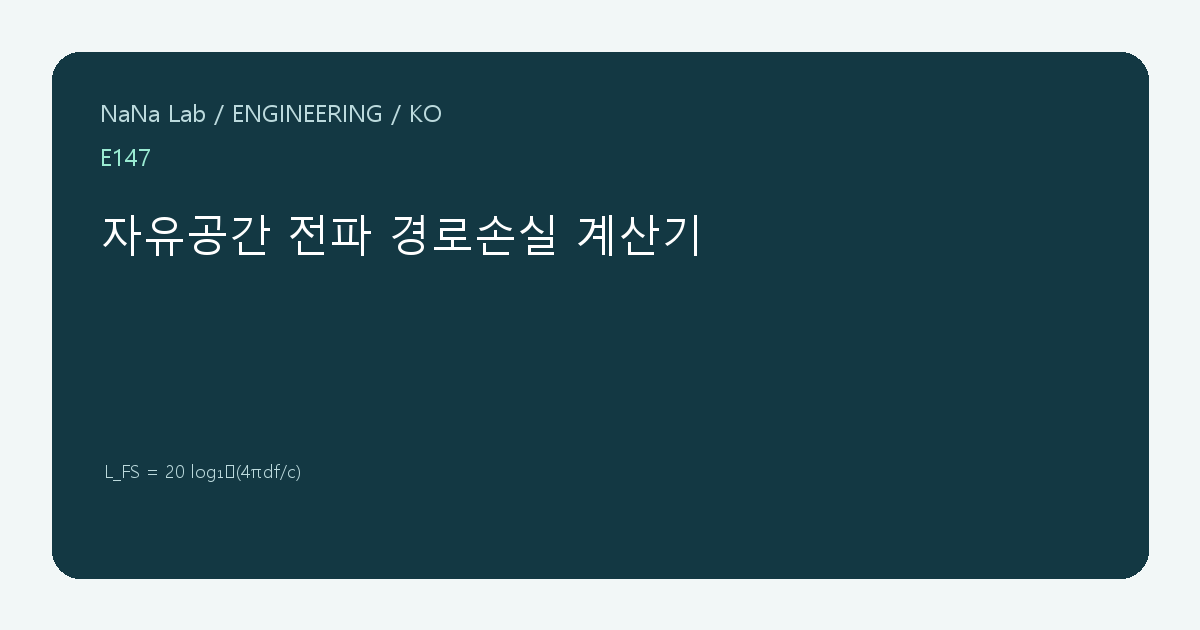
Calculate isotropic-reference path loss caused by geometric spreading in far-field free-space propagation.
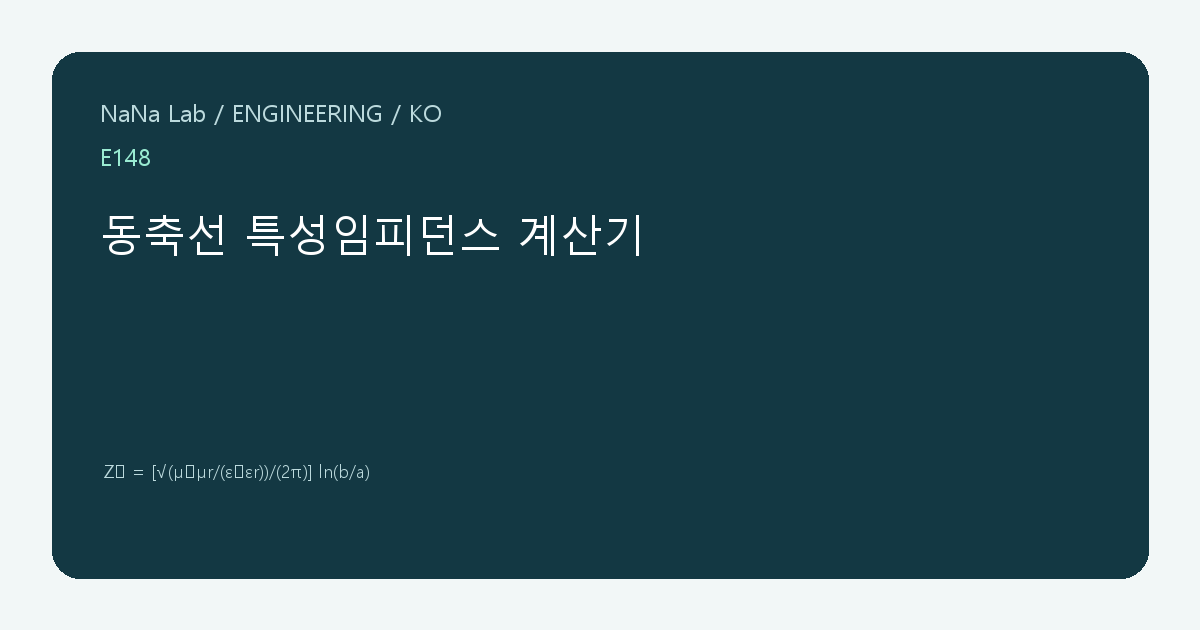
Calculate the lossless TEM characteristic impedance of a concentric coaxial line from its conductor radii and uniform dielectric properties.
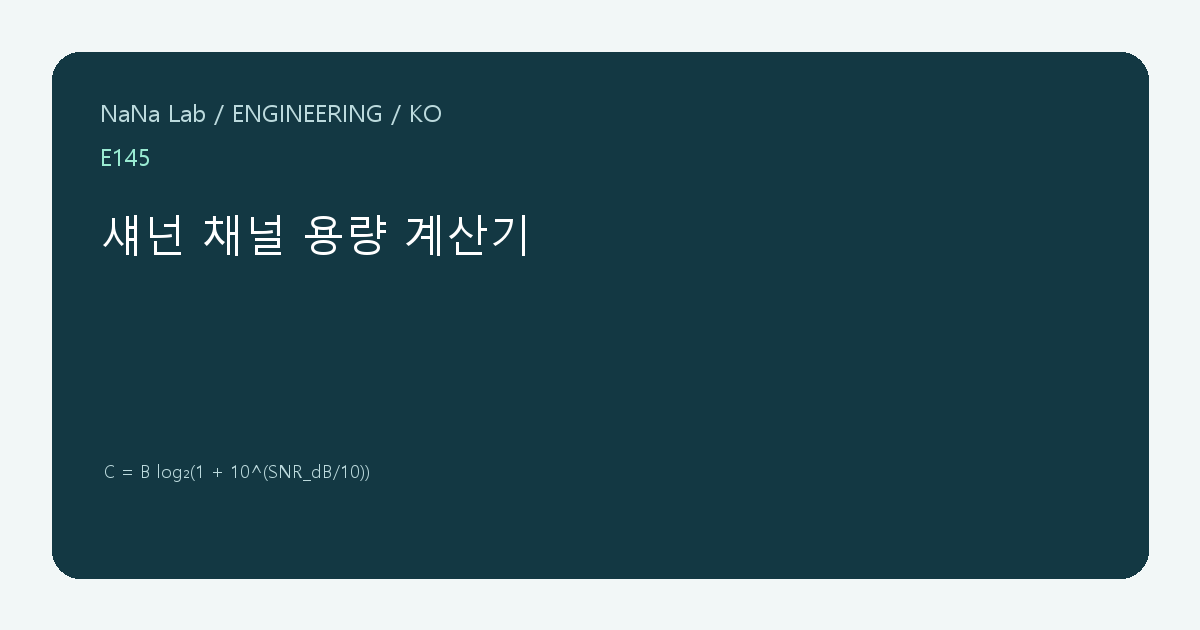
Calculate the Shannon capacity of a band-limited AWGN channel from bandwidth and received SNR.
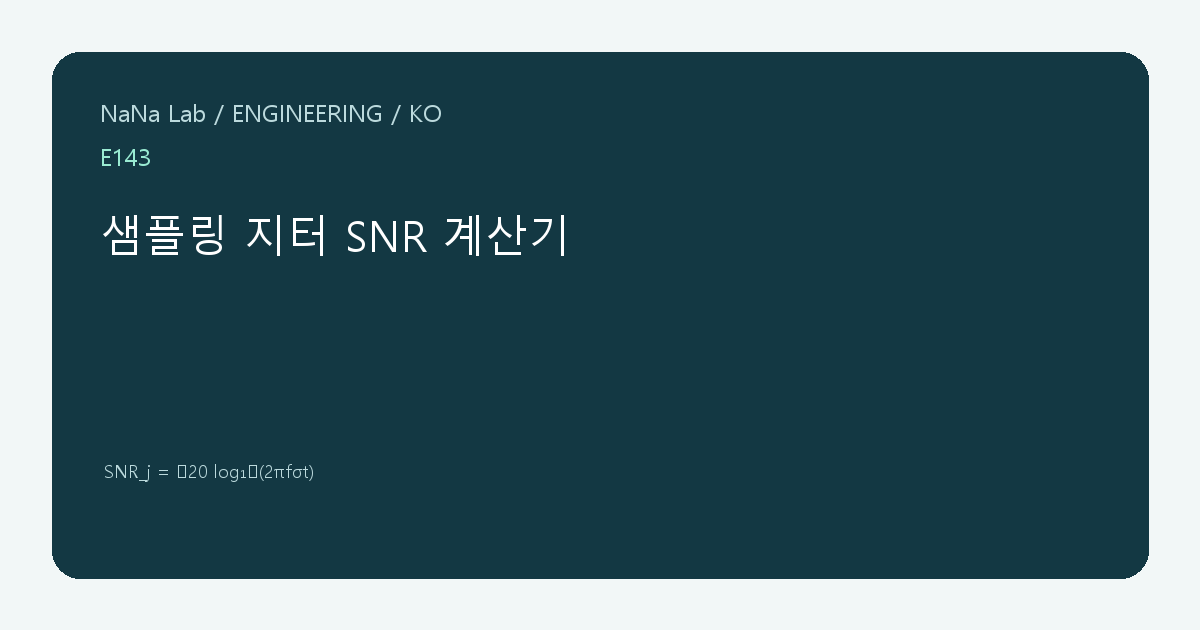
Estimate the signal-to-noise ratio imposed solely by timing jitter when sampling a sine wave.
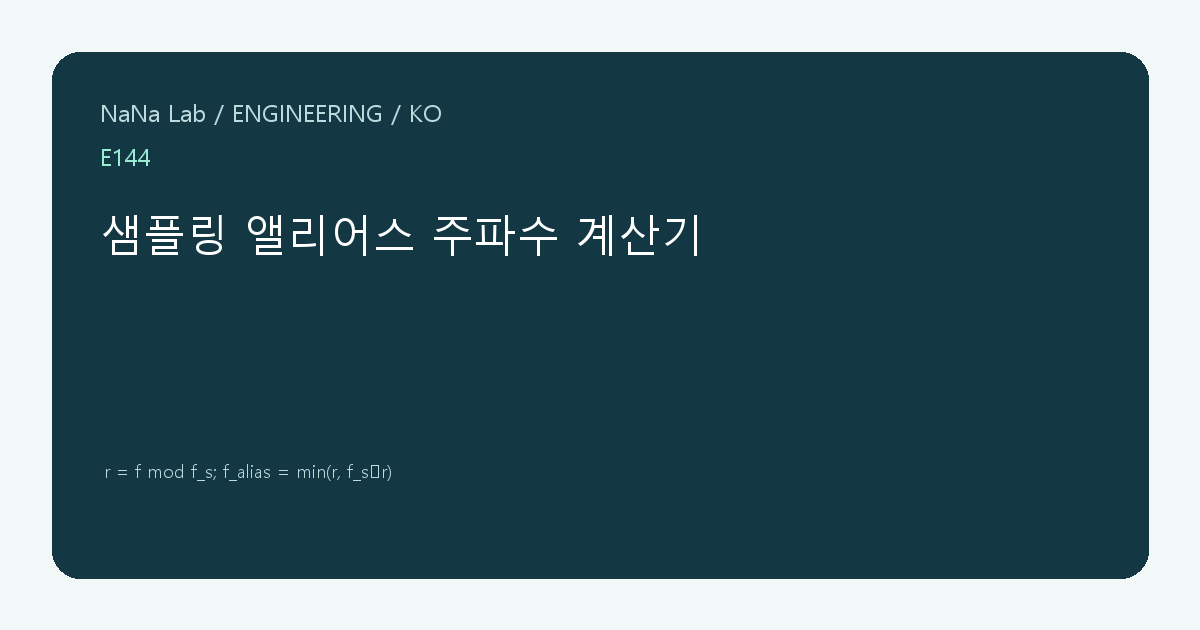
Fold a uniformly sampled real sinusoid into the frequency interval from zero to half the sampling rate.
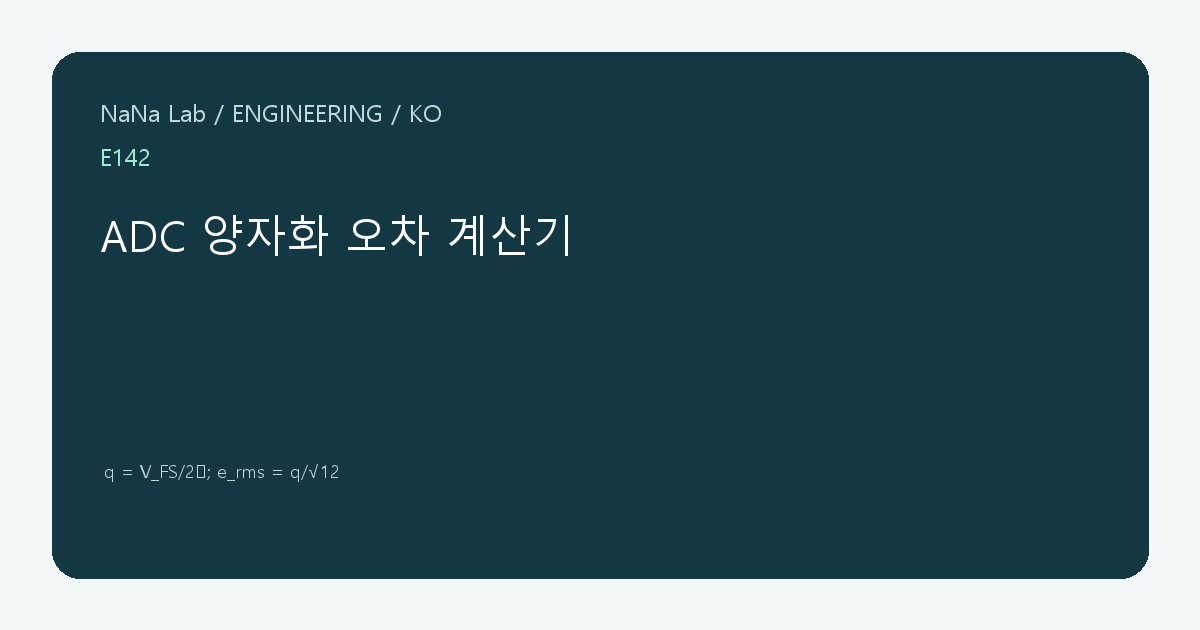
Calculate ideal RMS quantization error for a uniform N-bit quantizer across its full input voltage span.
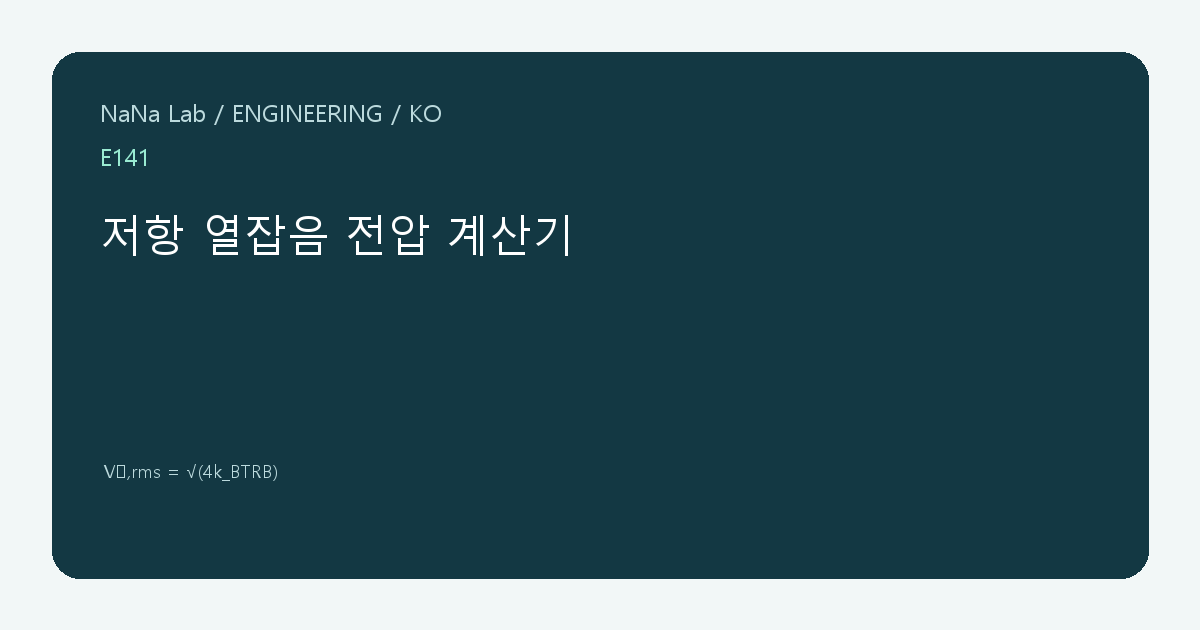
Estimate the RMS open-circuit thermal noise voltage of a resistor from its temperature and equivalent noise bandwidth.
Calculate signed lift per unit span from the Kutta–Joukowski relation for steady two-dimensional circulation flow.
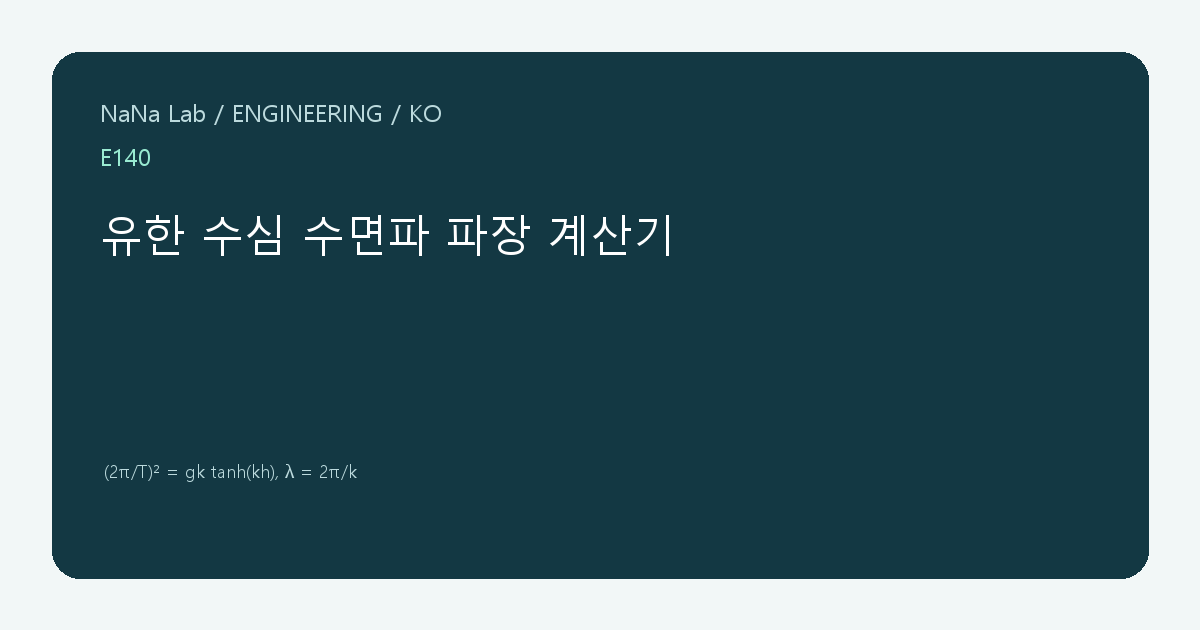
Solve the finite-depth linear gravity-wave dispersion equation for positive wavenumber to obtain wavelength, continuously spanning shallow and deep water.
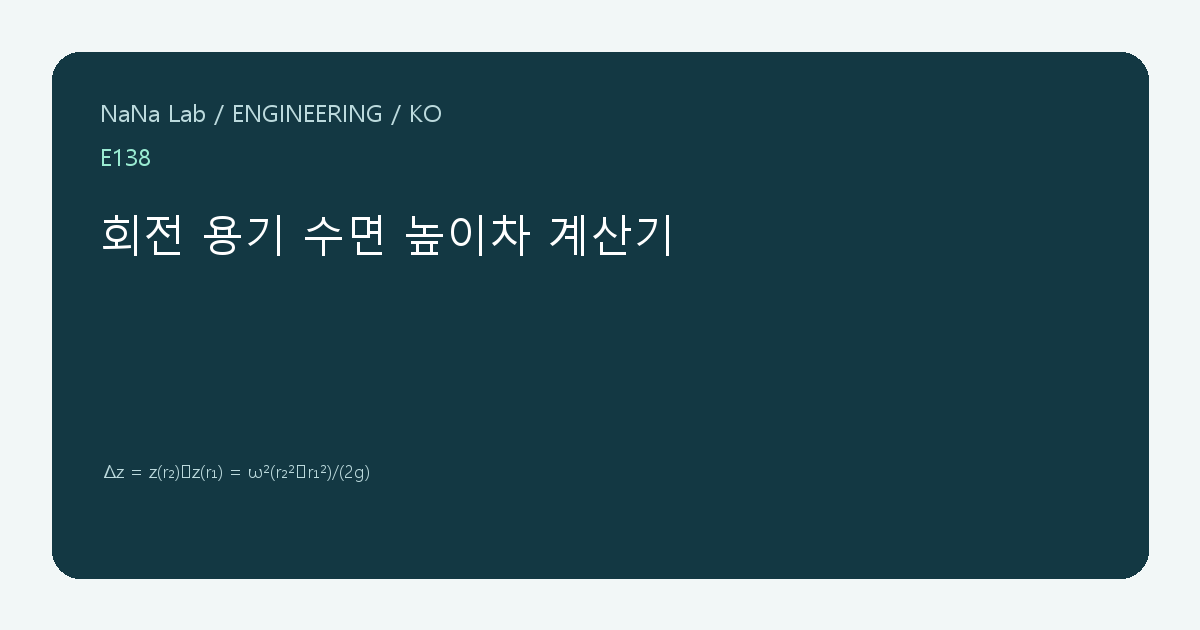
Calculate the signed free-surface height difference between two radial positions when liquid rotates as a rigid body with its container.
Calculate the viscous drag-force magnitude on one face of a moving plate from the linear velocity profile between parallel plates.
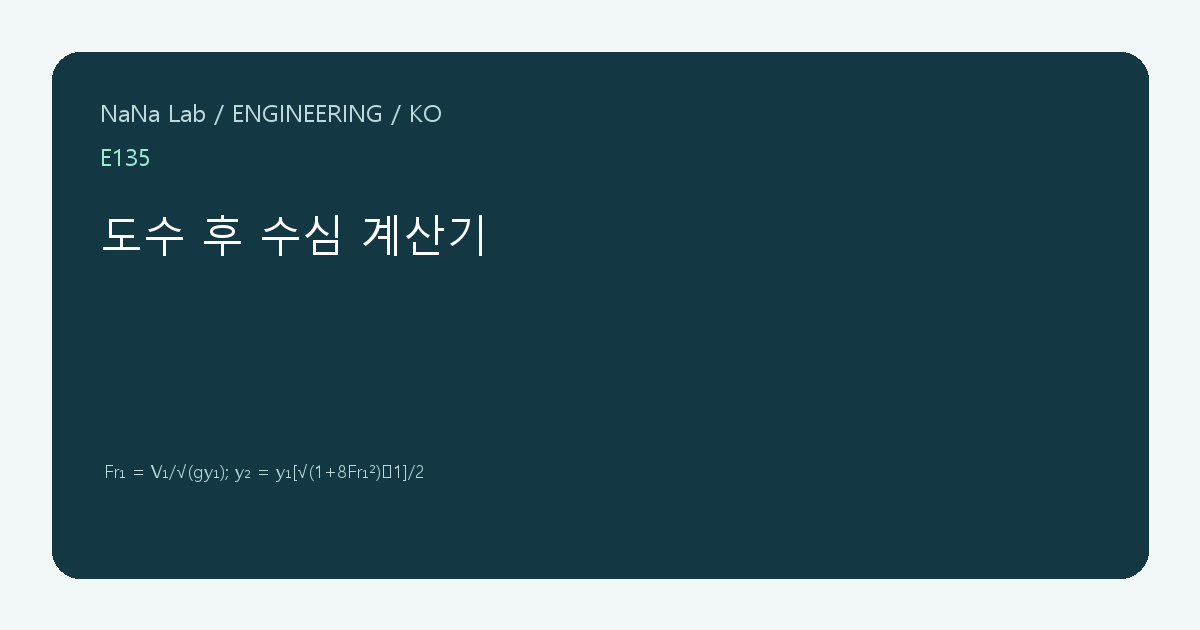
Calculate the downstream sequent depth corresponding to supercritical upstream flow in a horizontal rectangular channel using momentum conservation.
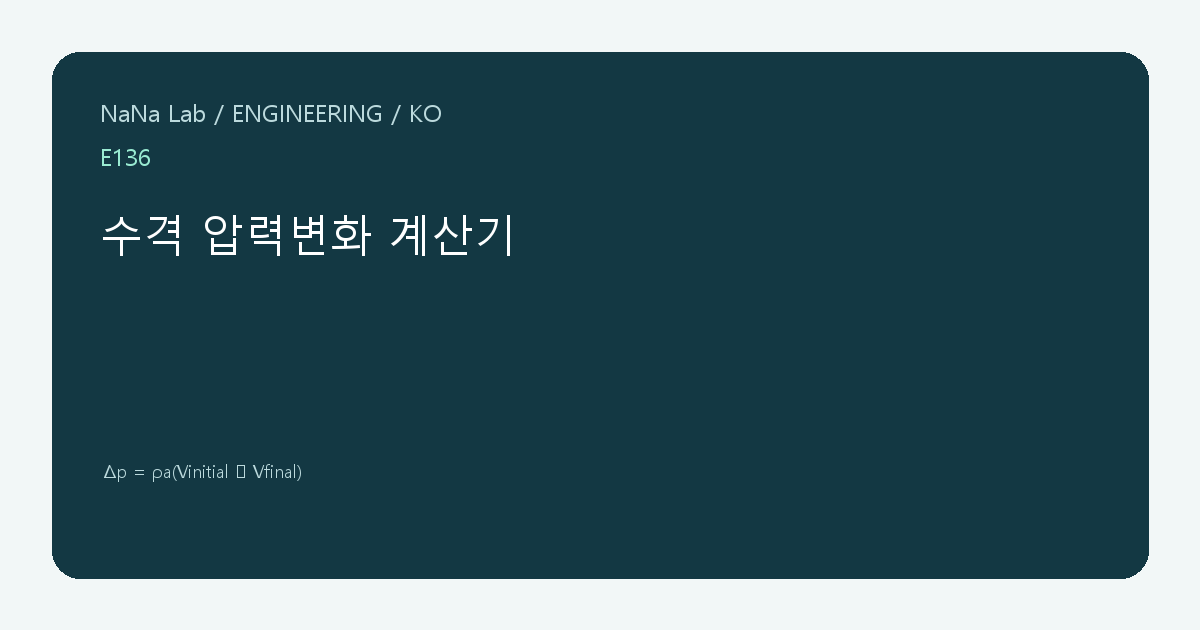
Estimate the initial pressure wave generated at a downstream disturbance and travelling upstream after a rapid change in liquid speed.
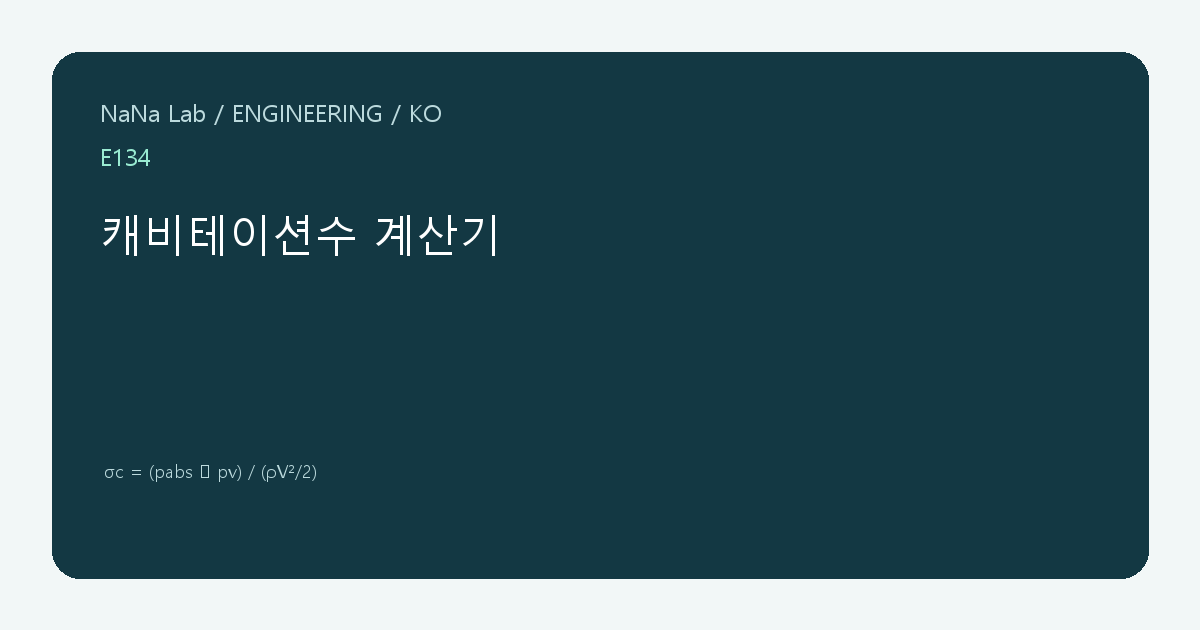
Calculate a cavitation index by dividing the margin between reference absolute pressure and saturation vapor pressure by dynamic pressure.
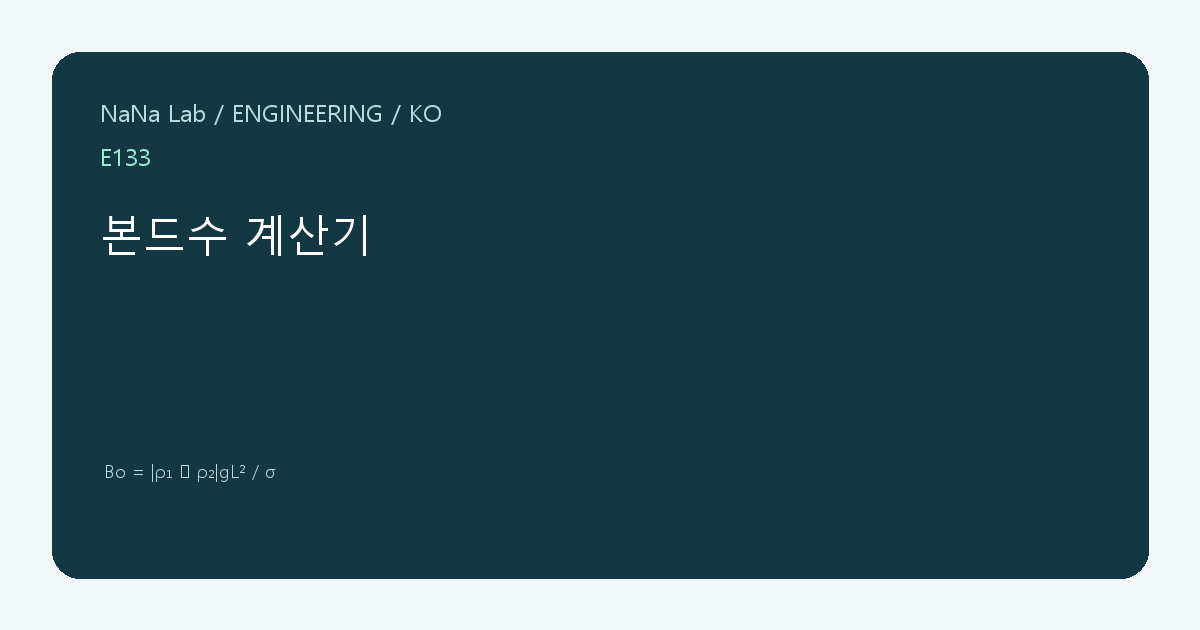
Calculate the magnitude ratio of gravity due to the density difference between two fluids to interfacial tension.
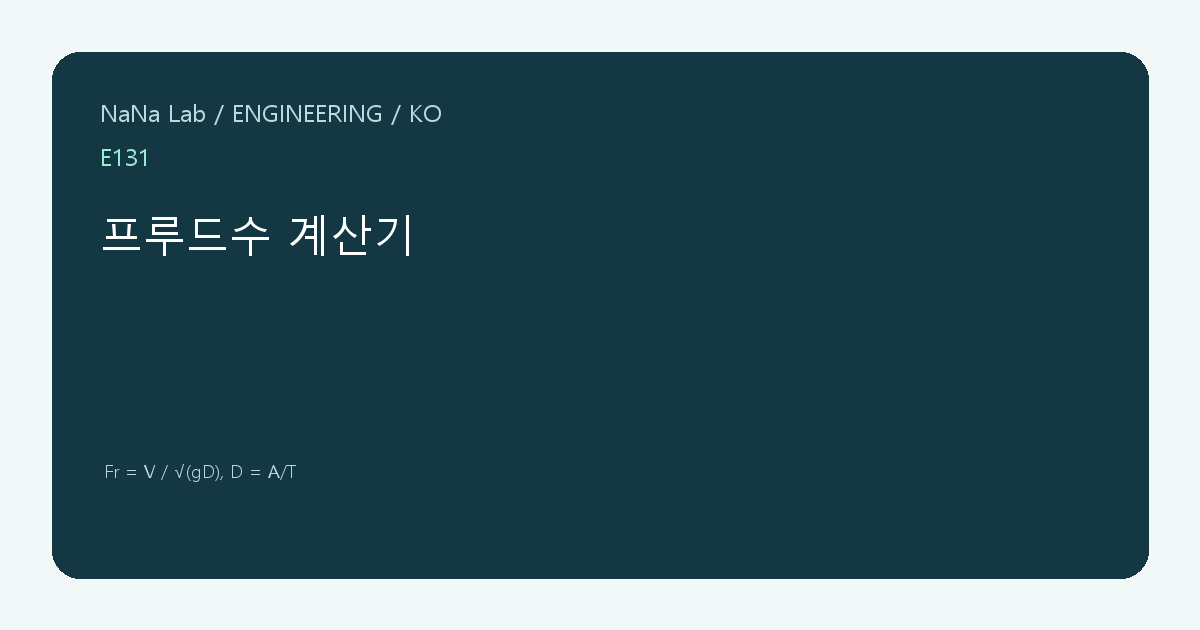
Calculate the Froude number for open-channel flow using the section-mean speed and hydraulic depth, defined as flow area divided by free-surface top width.
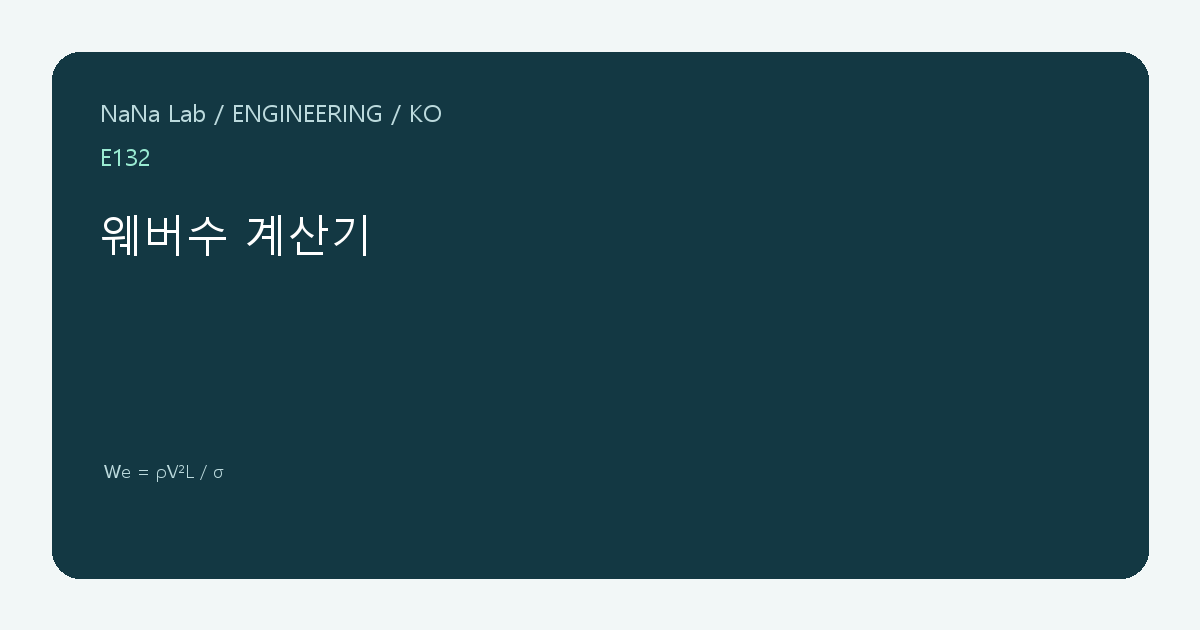
Calculate the ratio of inertia to interfacial-tension effects for a stated characteristic length and relative speed.
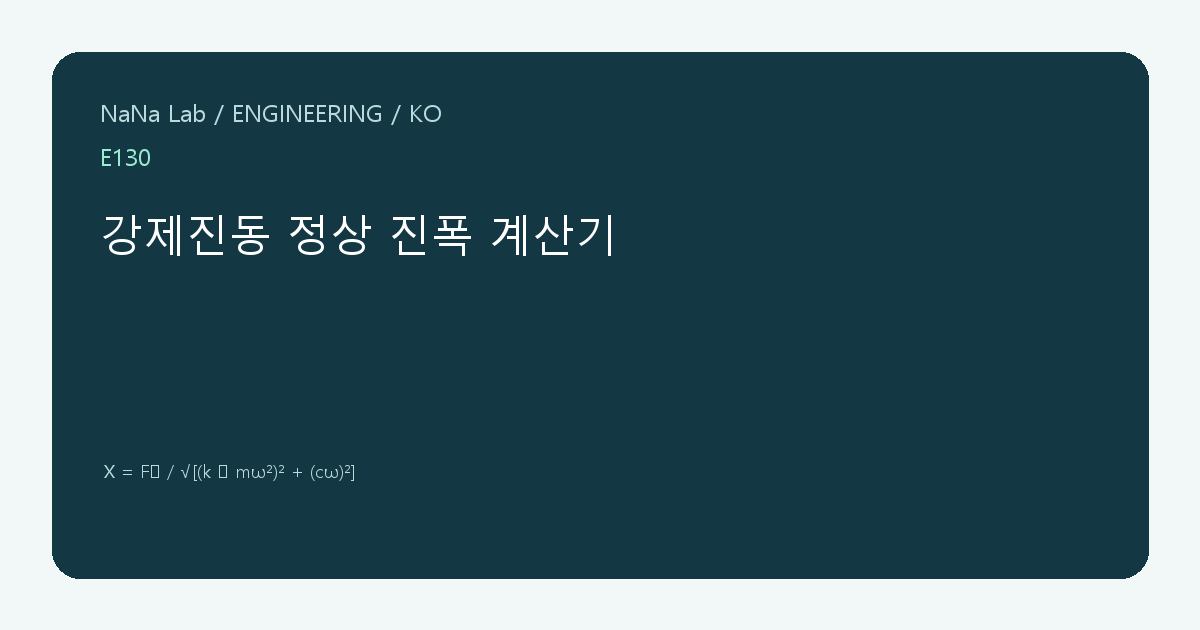
Compute the harmonic steady displacement amplitude of a single-degree-of-freedom mass-spring-damper system.
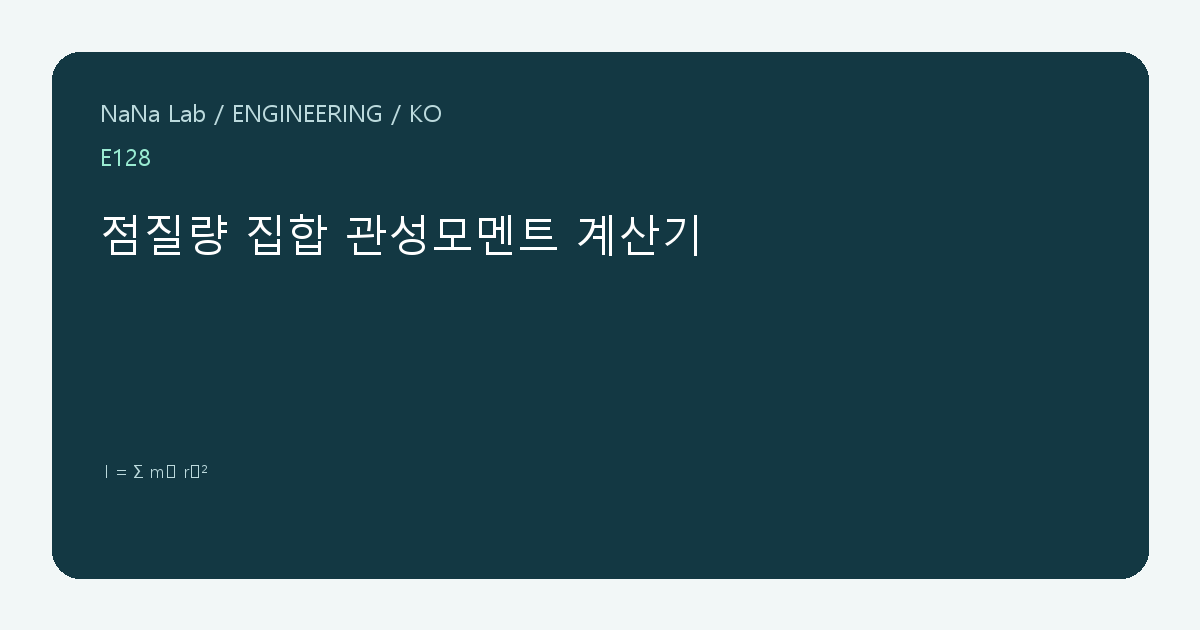
Sum fatigue-damage fractions from an editable list of applied and allowable cycle counts.
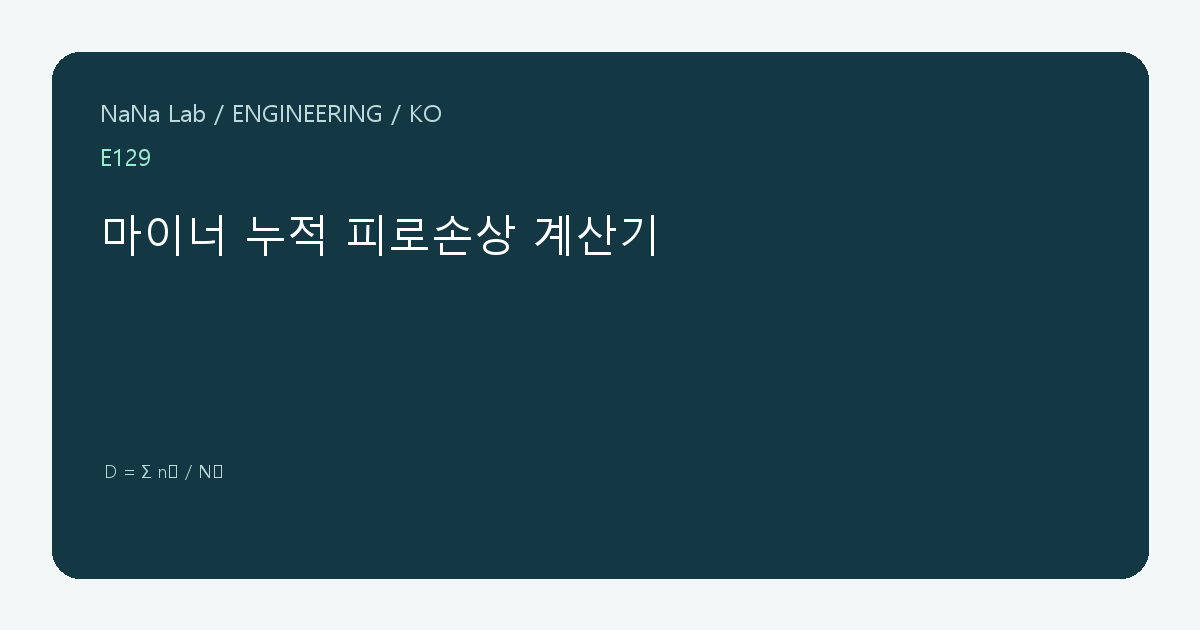
Sum the moment of inertia of a list of point masses using perpendicular distances to one stated axis.
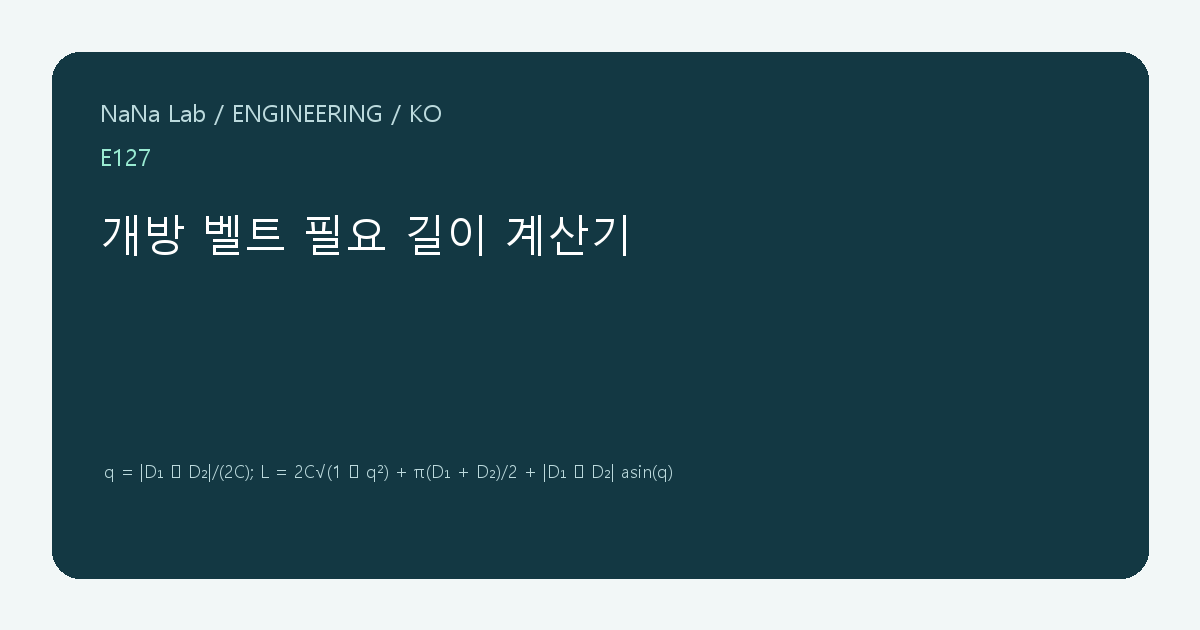
Compute an uncrossed belt’s pitch-line length using tangent and circular-arc geometry.
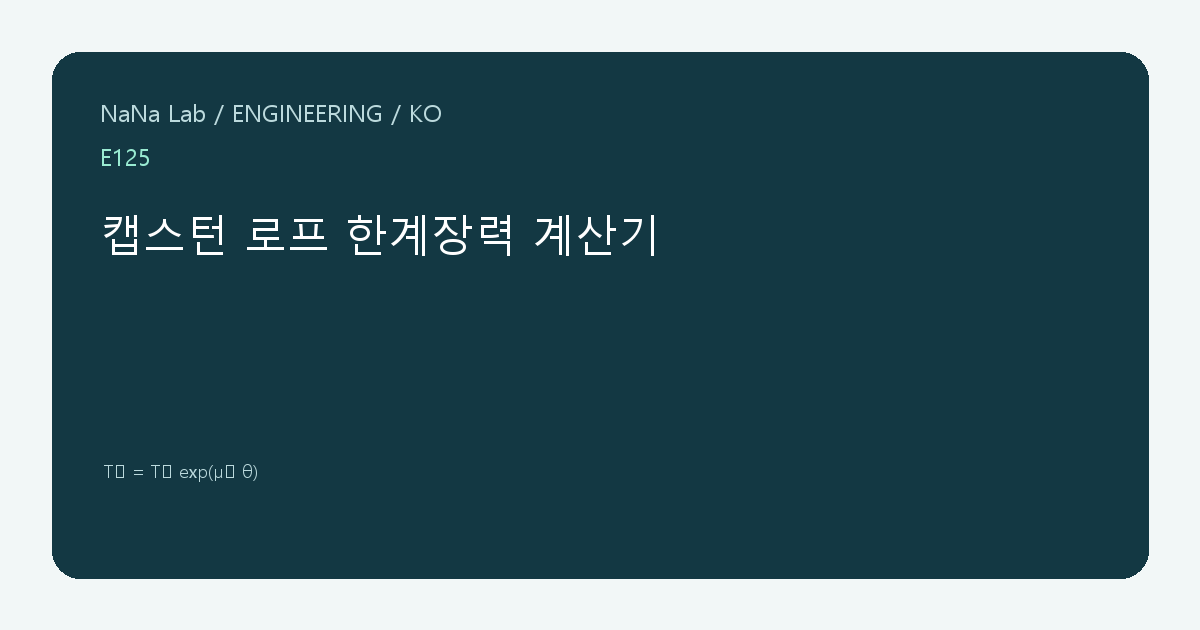
Find the larger rope tension at impending slip around a cylindrical drum.
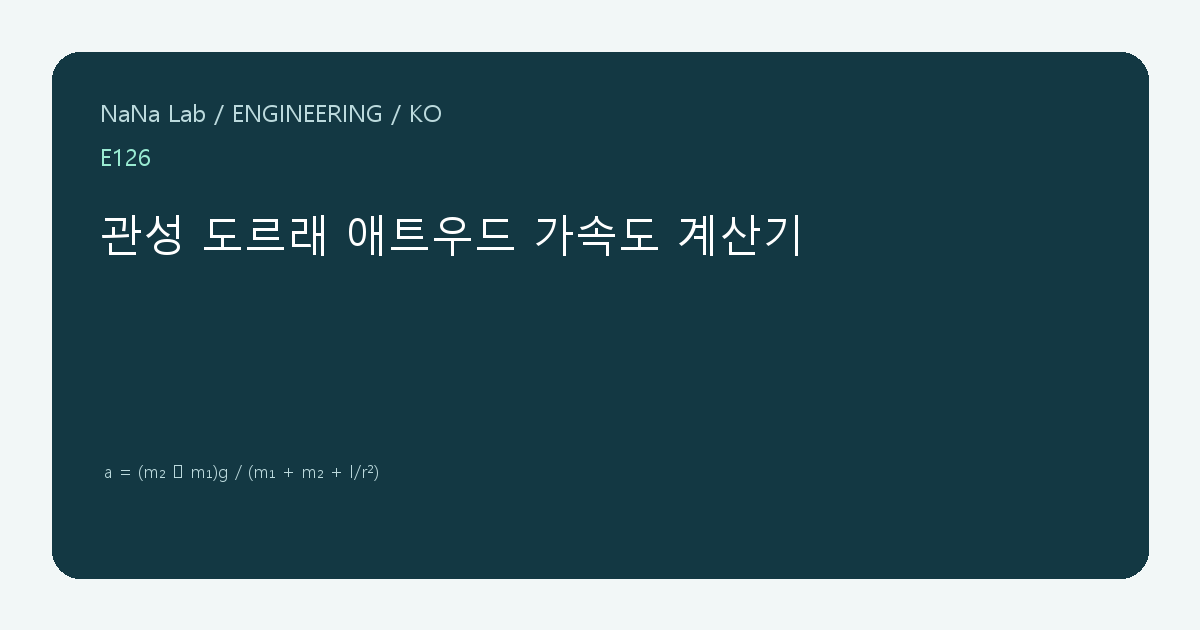
Compute the acceleration of two hanging masses connected over a pulley with rotational inertia.
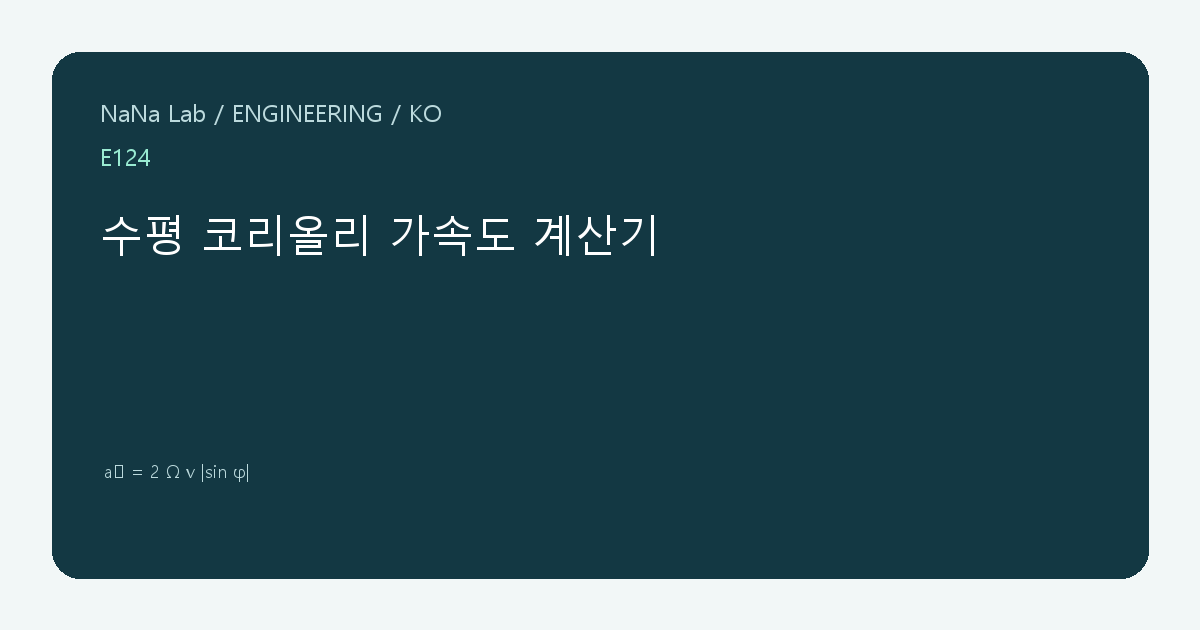
Compute the Coriolis acceleration component perpendicular to horizontal motion at a stated latitude.
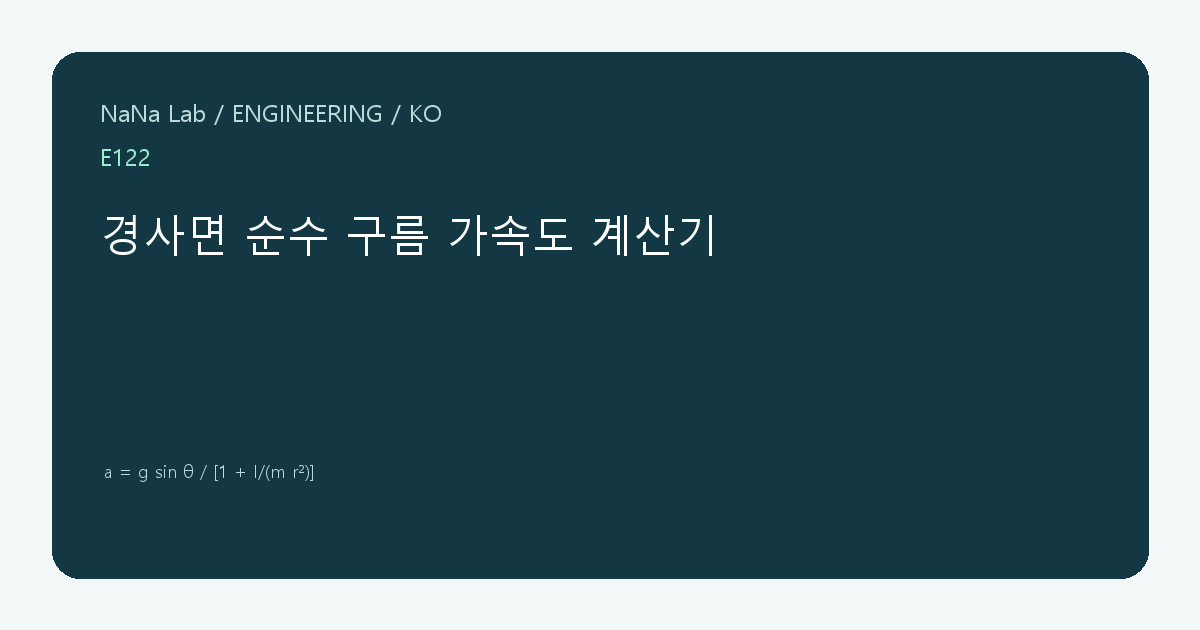
Compute down-slope acceleration while accounting for both translation and rotation.
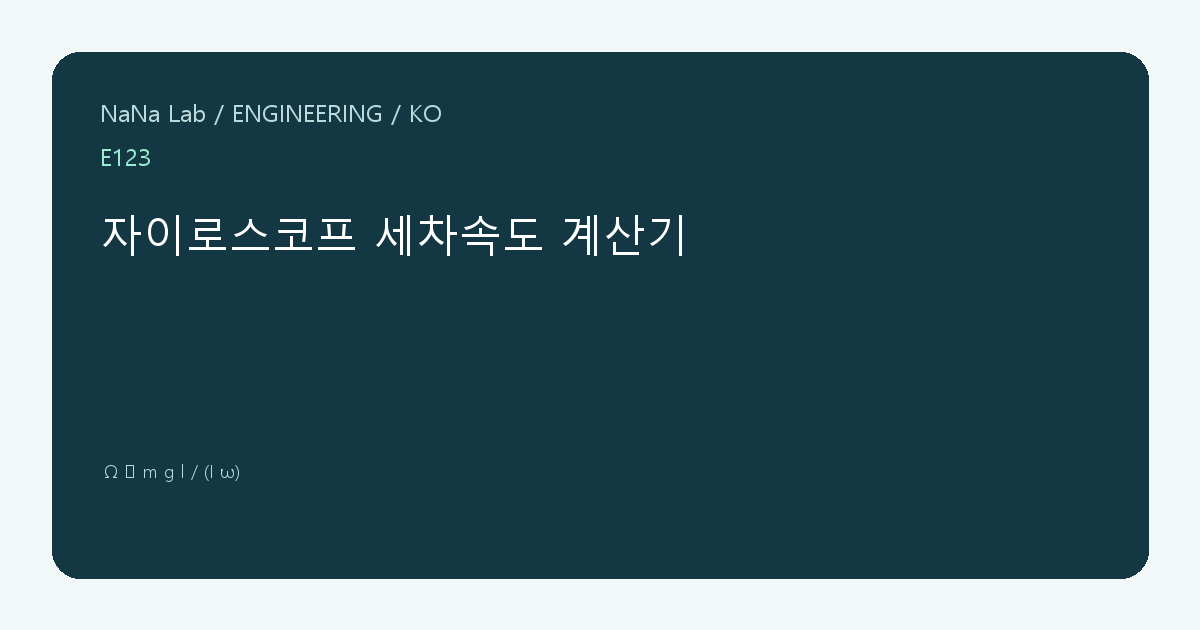
Estimate slow steady gravitational precession for a rapidly spinning symmetric gyroscope.
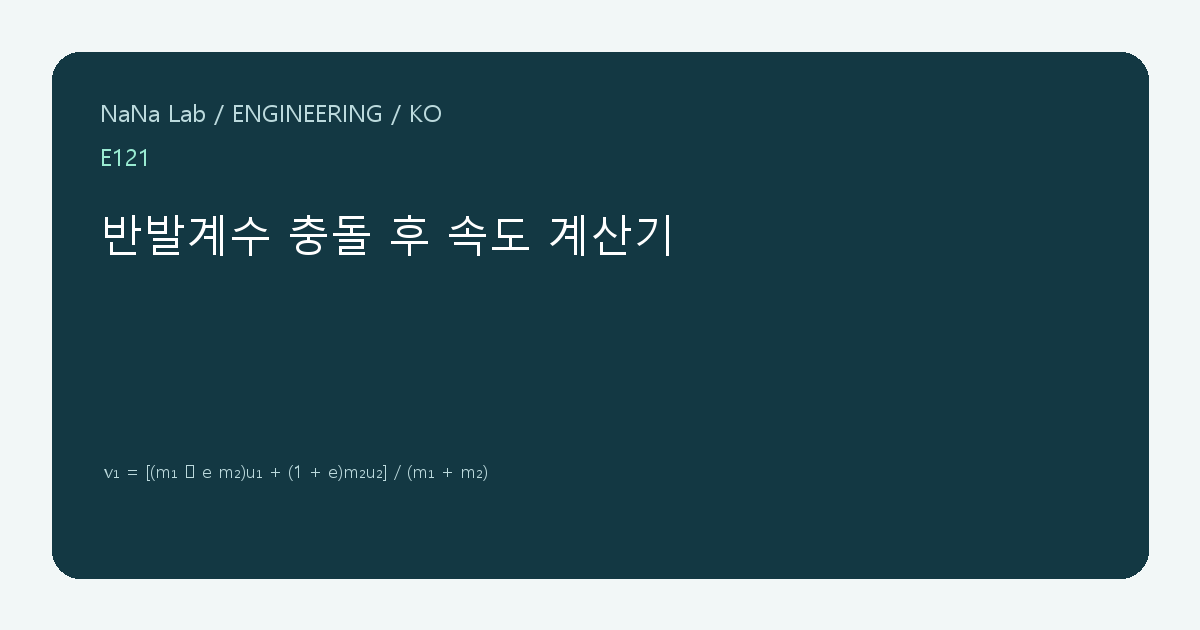
Find the first body’s final velocity from linear momentum and the coefficient of restitution.
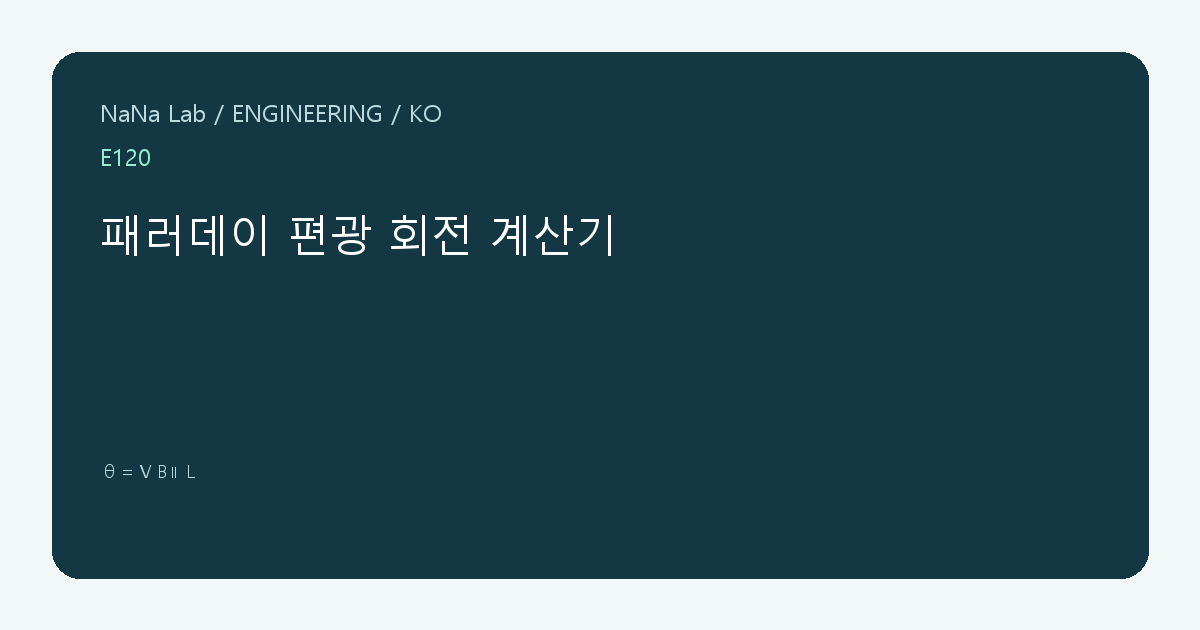
Calculate Faraday polarization rotation in a uniform longitudinal magnetic field.
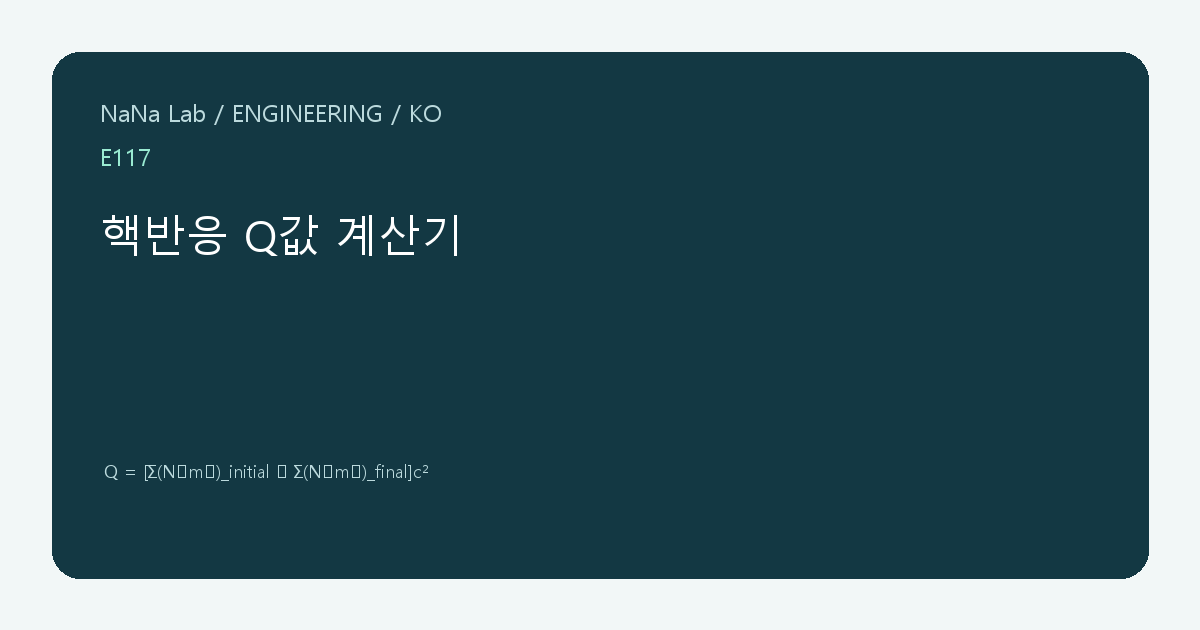
Calculate the energy release or absorption per reaction from the total rest-mass difference.
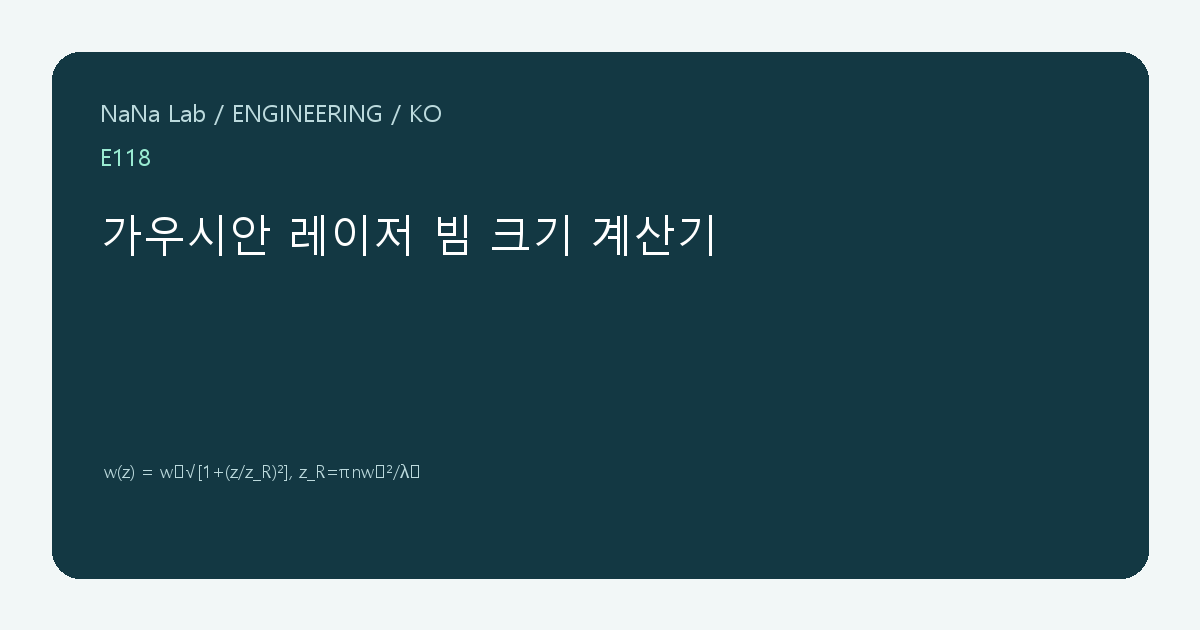
Calculate the radius of an ideal Gaussian beam at a distance from its waist.
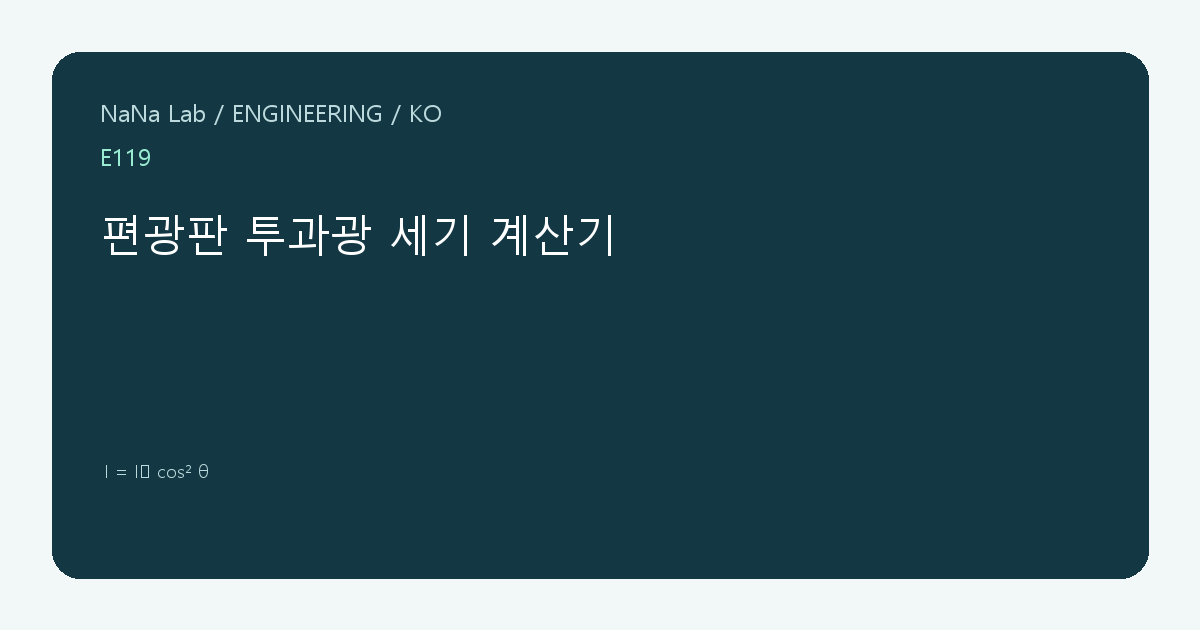
Calculate the intensity of linearly polarized light after an ideal analyzer.
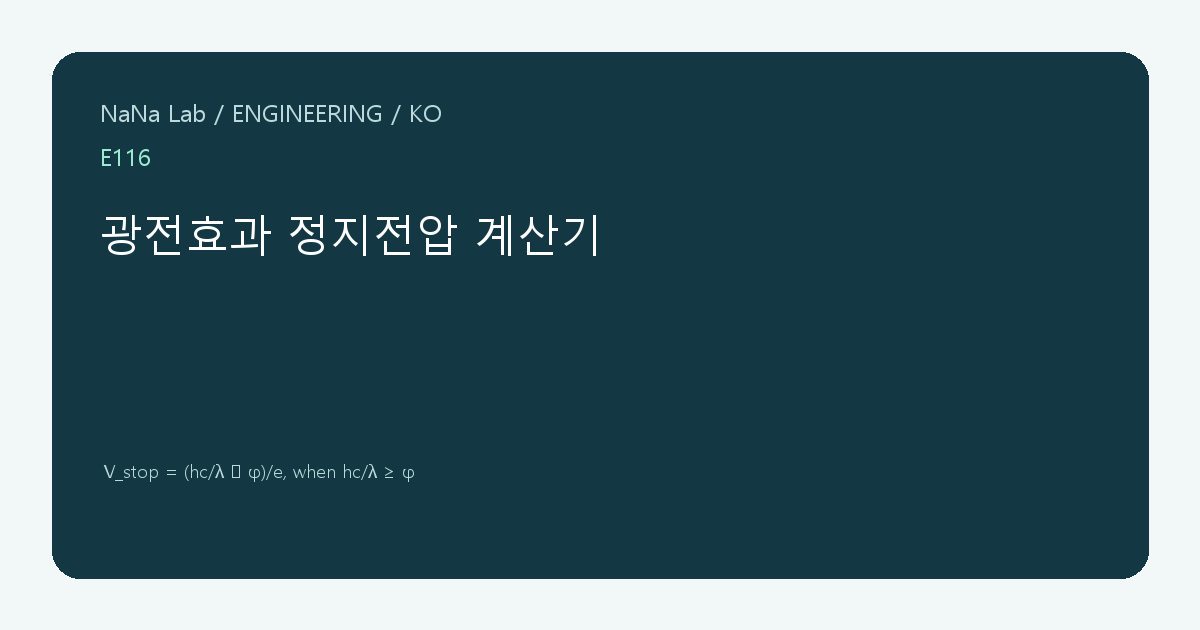
Calculate the reverse voltage magnitude needed to stop the fastest photoelectrons in a single-photon model.
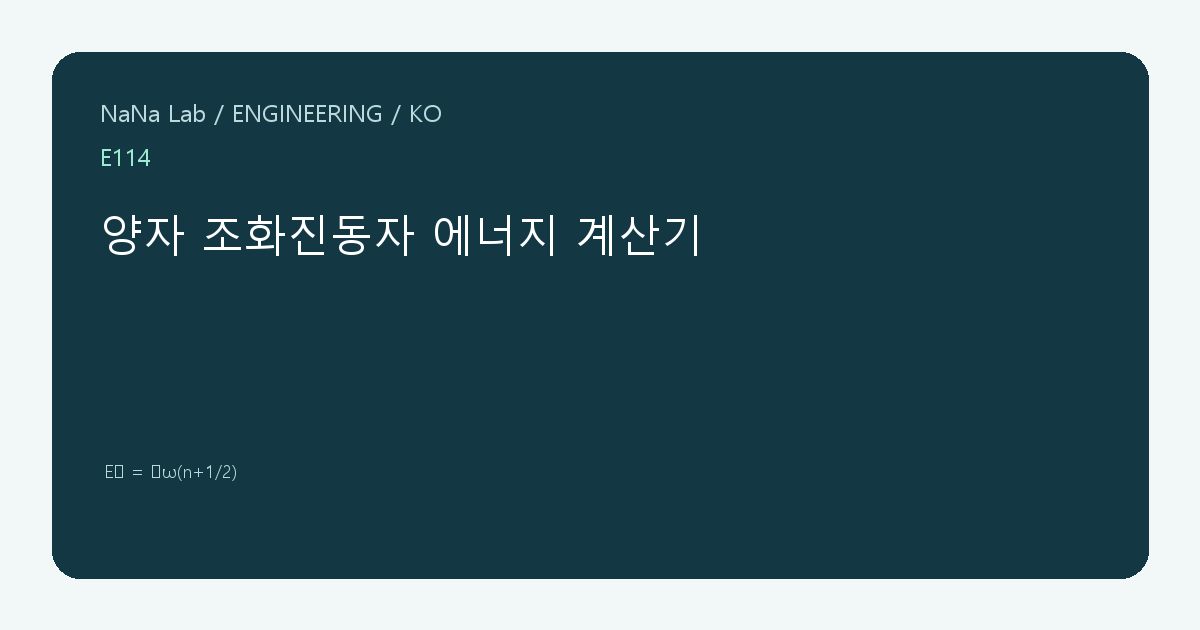
Calculate a one-dimensional quantum harmonic oscillator level including its zero-point energy.
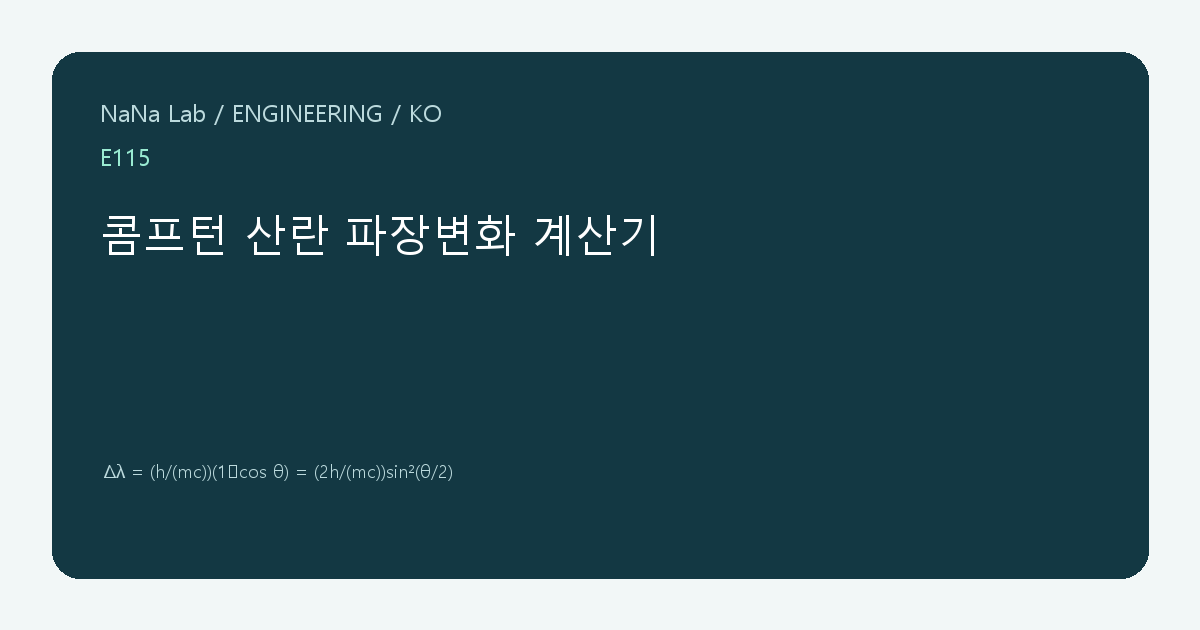
Calculate the photon wavelength increase when scattering from an initially stationary free target.
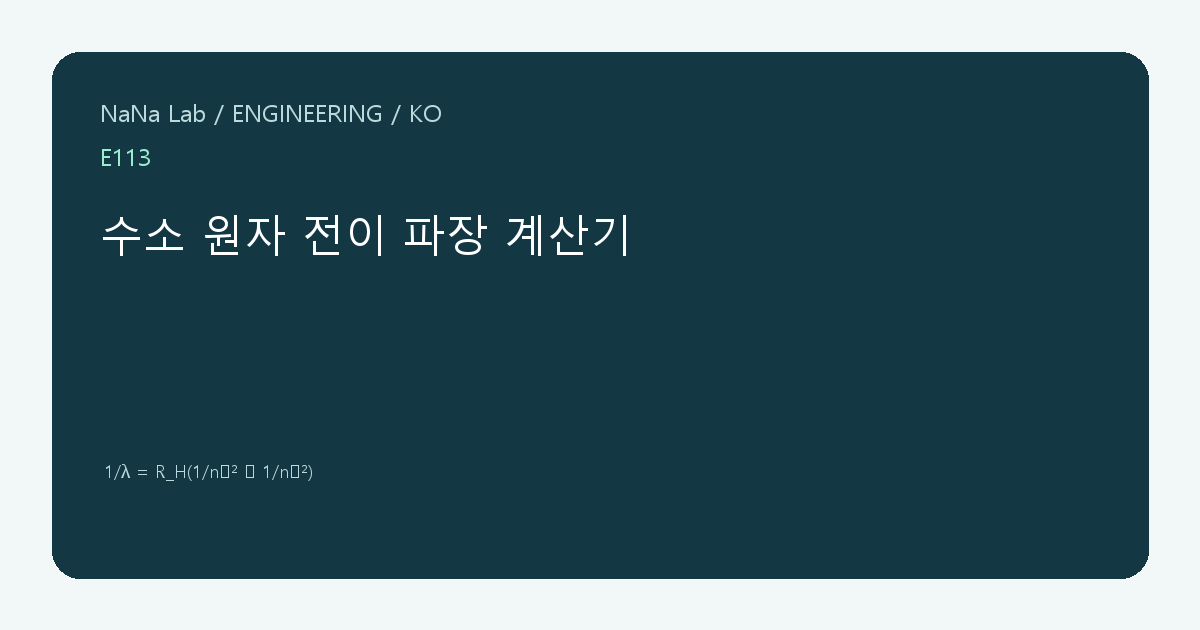
Estimate a hydrogen emission wavelength between two principal quantum numbers using a Rydberg model.
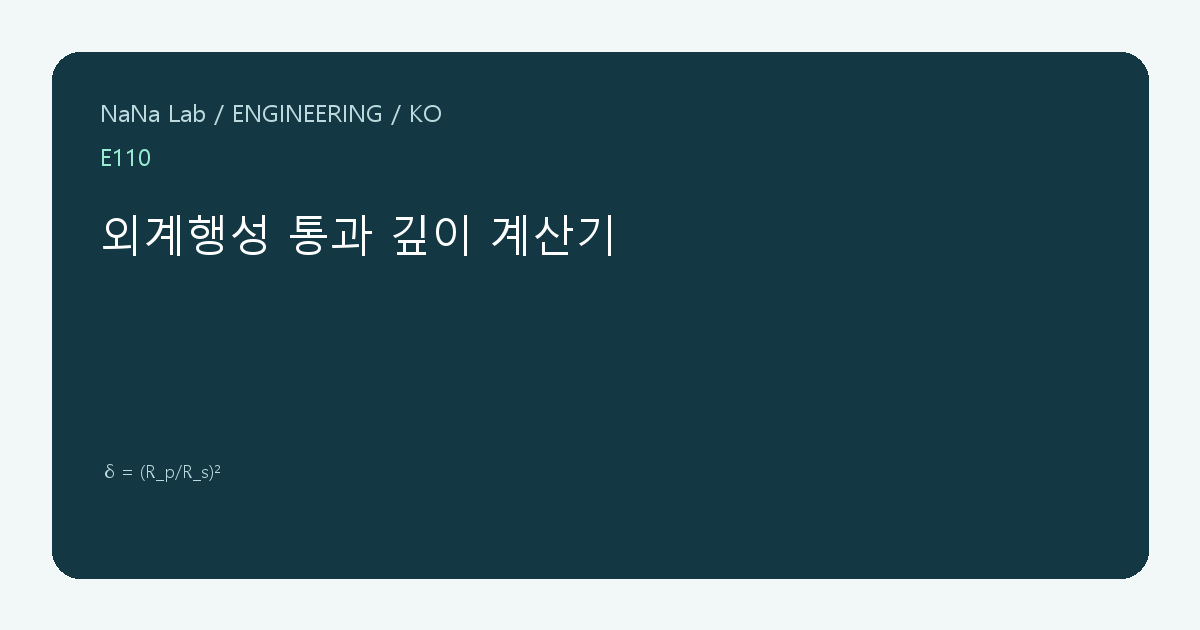
Calculate the ideal fraction of stellar light blocked by an opaque planet fully within the stellar disk.
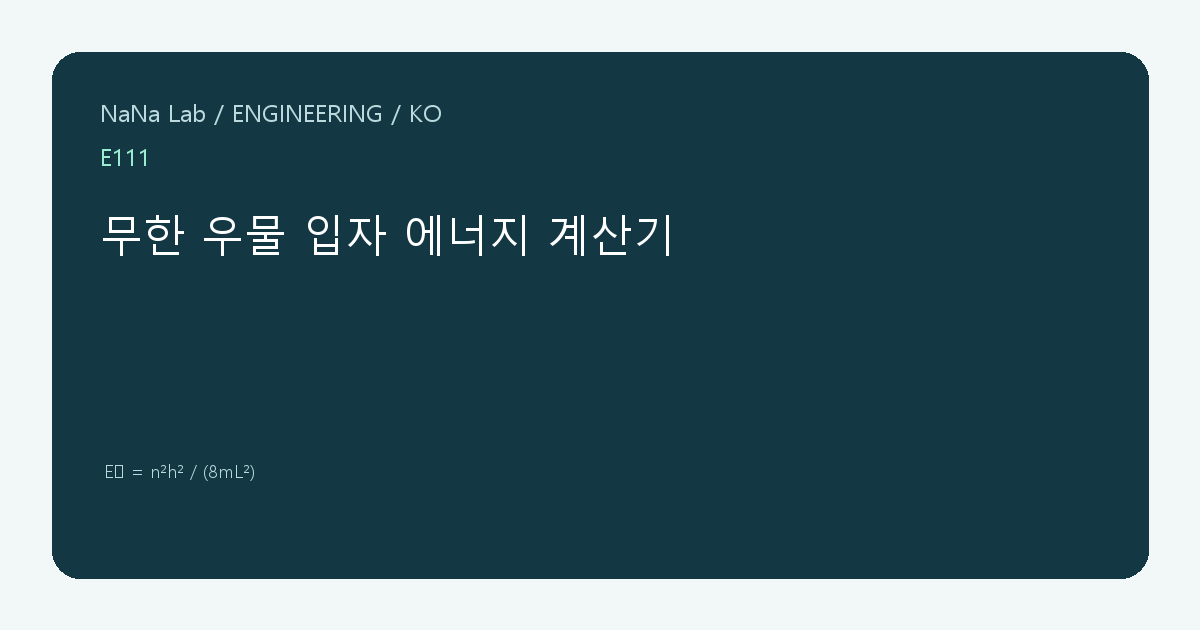
Calculate an energy level for a particle confined in a one-dimensional infinite square well.
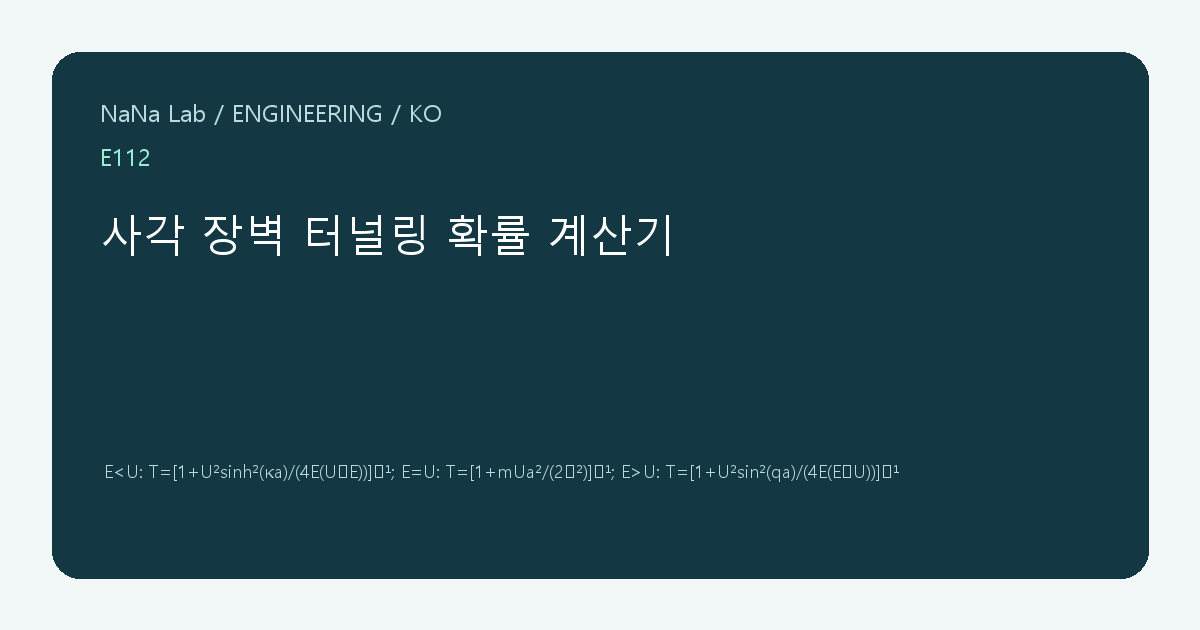
Calculate the transmission probability below, at and above a rectangular barrier.
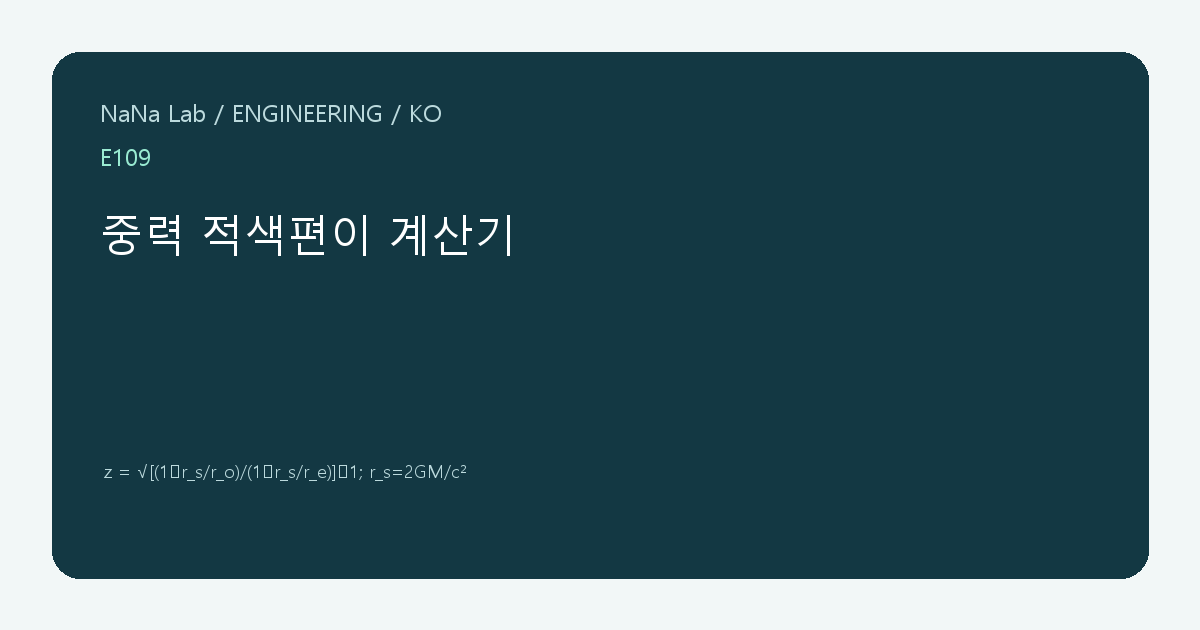
Calculate the gravitational wavelength shift between two static observers in exterior Schwarzschild spacetime.
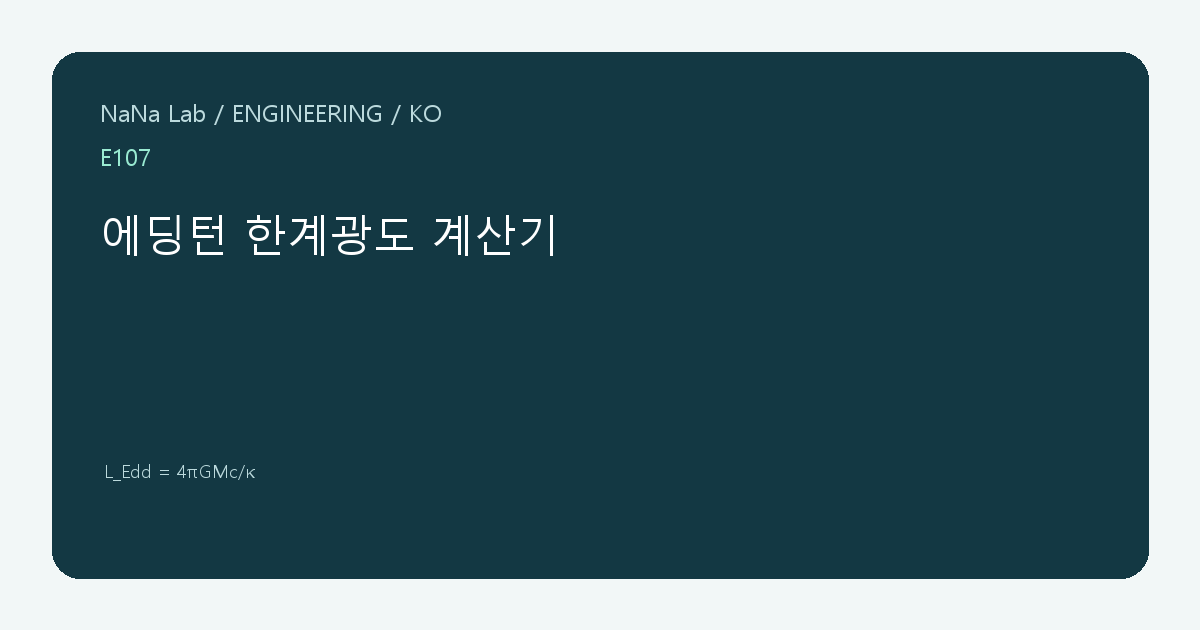
Calculate the spherical Eddington luminosity scale where radiative and gravitational acceleration balance.
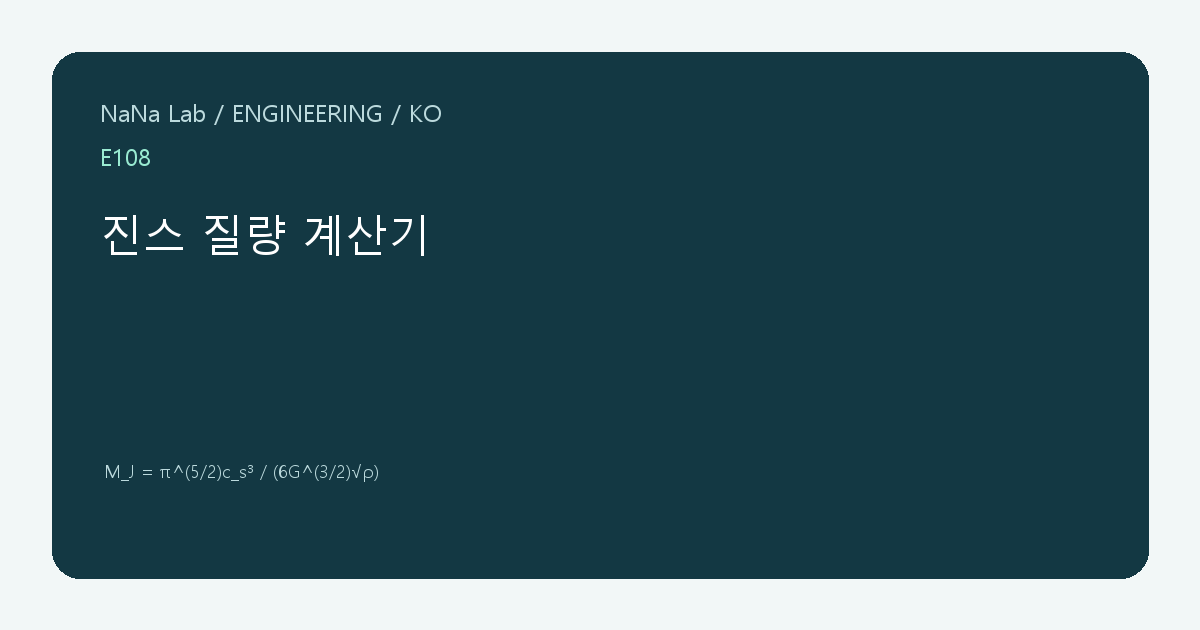
Calculate the mass of a critical-wavelength sphere in the linear Jeans instability model.
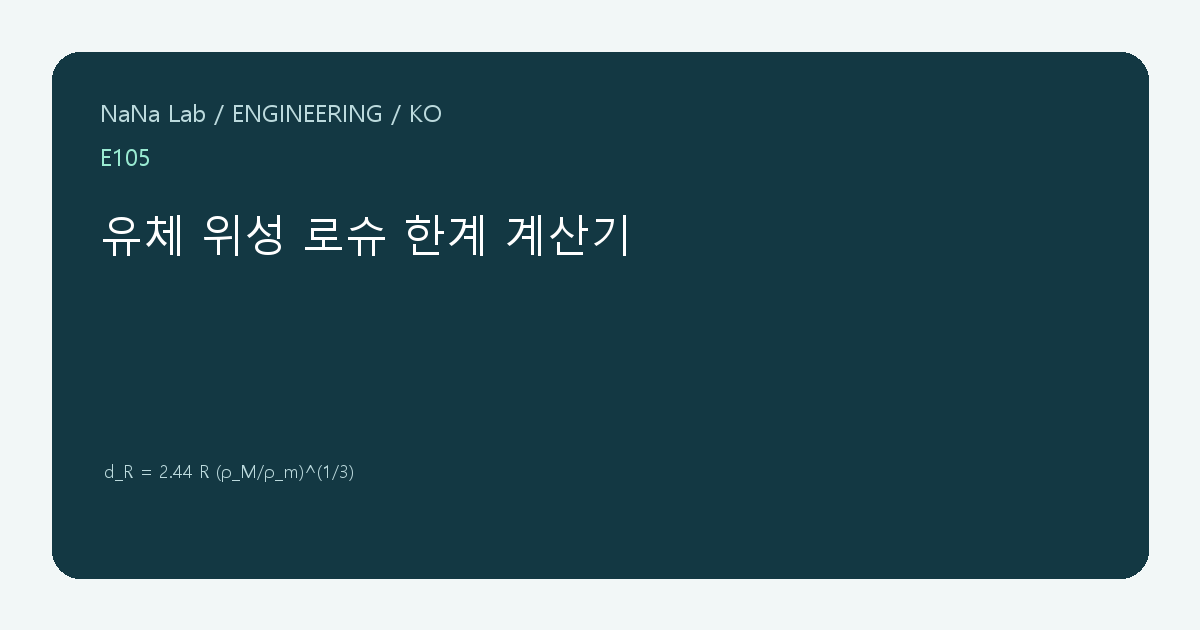
Estimate the classical tidal disruption distance for a fluid satellite without tensile strength.
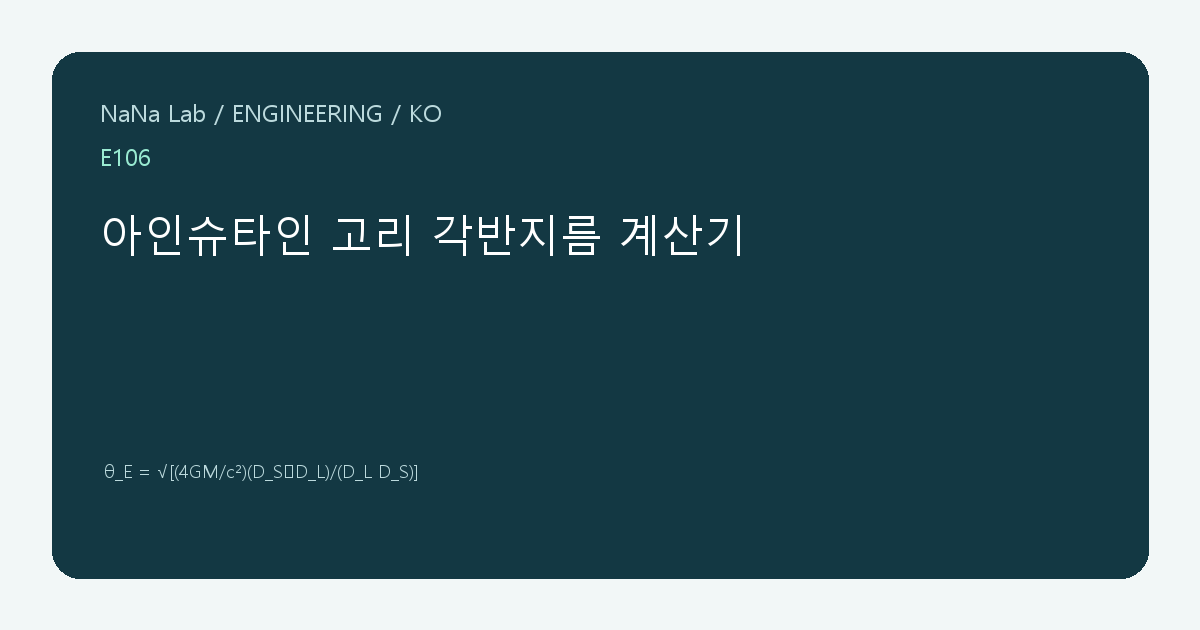
Calculate the Einstein ring angular radius for an aligned point lens in local Euclidean geometry.
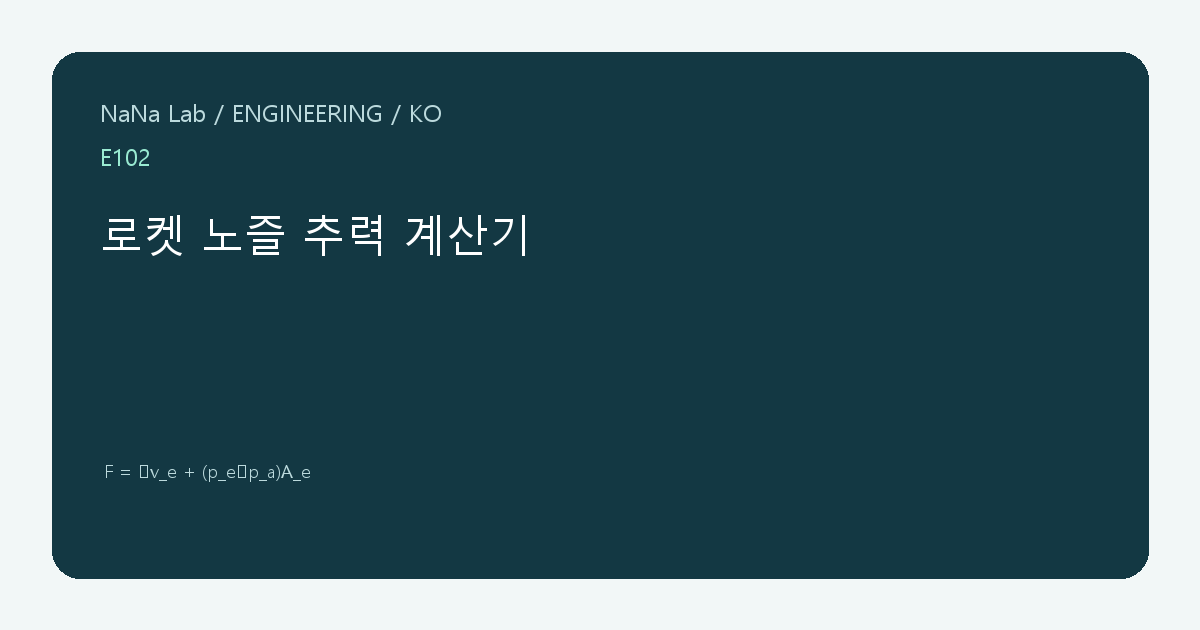
Calculate axial rocket nozzle thrust from exhaust momentum and the exit-to-ambient pressure difference.
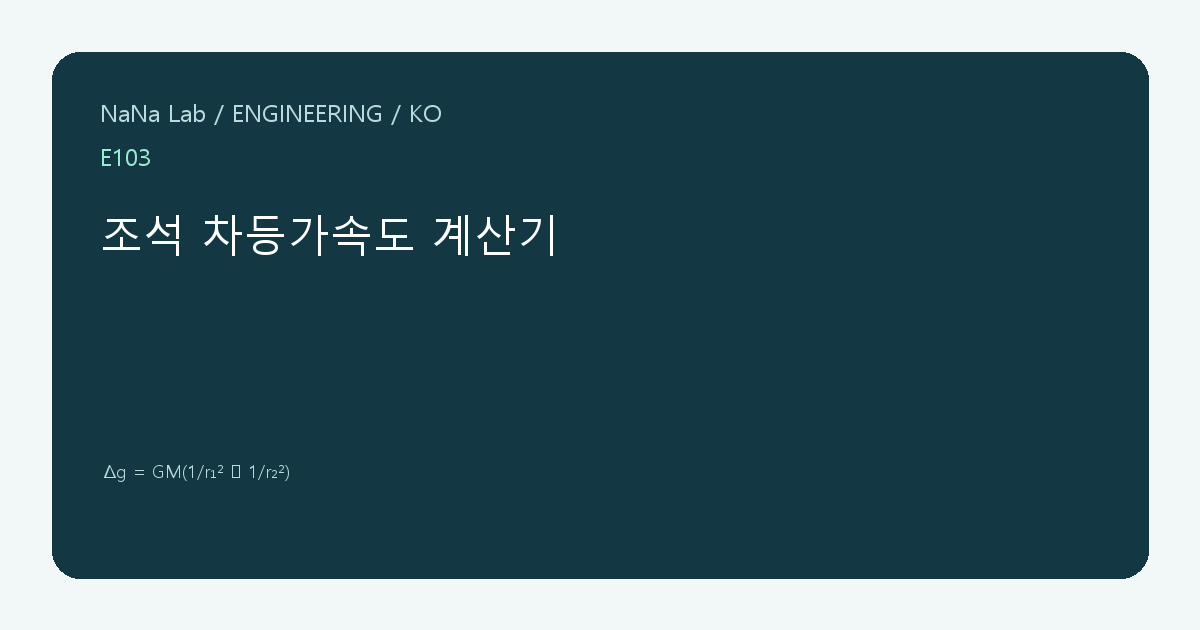
Calculate the difference in Newtonian gravitational acceleration magnitudes at two radially aligned points.
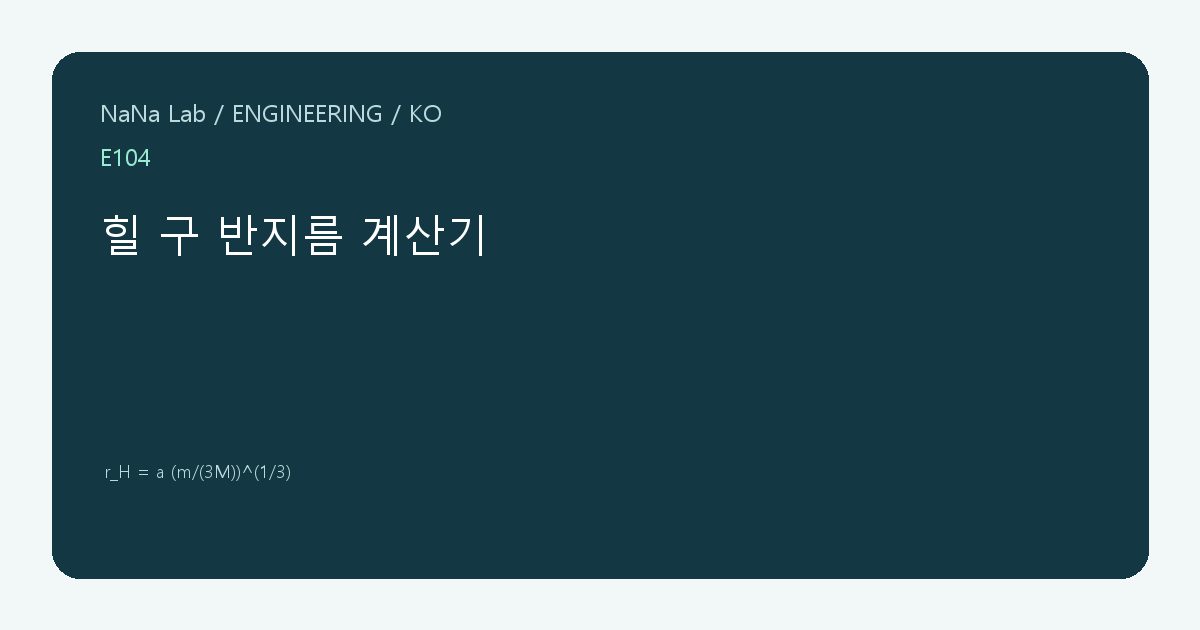
Estimate the Hill radius of a low-mass body on a circular orbit around a primary.
Calculate the ideal delta v from one rocket burn using total masses and effective exhaust speed.
Read national legislation as HTML in its original language. Browse documents with official sources, edition information and reuse terms.
Calculate logarithmic decrement from same-direction free-decay peaks.
Combine independent length standard uncertainties for a linear model.
Calculate incompressible orifice flow with negligible upstream velocity.
Calculate terminal velocity of a small sphere in creeping flow.
Calculate dissolved concentration using an explicit solubility-form Henry constant.
Calculate activity decay of a single nuclide with a constant decay rate.
Calculate an equilibrium potential for a specified reaction quotient and temperature.
Calculate concentration-based pH with an activity coefficient of one.
Calculate classical one-dimensional acoustic Doppler frequency.
Calculate sound pressure level relative to an explicit reference pressure.
Calculate a specified positive diffraction-order angle at normal incidence.
Calculate double-slit fringe spacing in the far-field small-angle approximation.
Calculate intensity reflectance at normal incidence between lossless dielectrics.
Calculate magnitude response of an unloaded RC low-pass filter.
Calculate ideal noninverting negative-feedback voltage gain.
Calculate the electromagnetic amplitude 1/e depth in the good-conductor approximation.
Calculate average real power from sinusoidal RMS voltage, current and phase.
Calculate sinusoidal impedance magnitude of an ideal series RLC circuit.
Calculate ideal AC transformer secondary voltage from the turns ratio.
Calculate the field magnitude of an isolated point charge in vacuum.
Calculate static rise or depression in a circular capillary.
Calculate buoyancy from the weight of displaced fluid.
Calculate LMTD from two positive terminal temperature differences.
Calculate final temperature for a reversible adiabatic ideal-gas process.
Calculate reversible isothermal pressure-volume work done by an ideal gas.
Calculate sensible heat for heating or cooling without a phase change.
Calculate thermal diffusivity from conductivity and volumetric heat capacity.
Convert a known convection coefficient to a Nusselt number.
Calculate the ratio of momentum diffusivity to thermal diffusivity.
Calculate the Rayleigh number for a specified natural-convection configuration.
Calculate tip deflection of a slender cantilever under a tip point load.
Calculate the second moment of area of a circular tube about a centroidal diameter.
Calculate energy stored in a stretched or compressed linear spring.
Calculate the onset-of-sliding incline angle in a Coulomb friction model.
Calculate sliding stopping distance with constant kinetic friction.
Calculate the center of mass of two point masses on one axis.
Calculate the equivalent stiffness of two linear springs in series.
Calculate one-dimensional impulse from average force and duration.
Calculate ideal projectile range when launch and landing heights match.
Calculate fall time from rest in uniform gravity.
Calculate the RMS translational molecular speed of an ideal gas.
Calculate a matter-wave wavelength from momentum.
Calculate translational kinetic energy using special relativity.
Calculate the Lorentz factor from relative speed.
Calculate the horizon radius of a nonrotating uncharged black hole model.
Calculate the gravitational acceleration outside a spherical body.
Calculate gravitational potential energy relative to infinity.
Calculate the total impulsive speed change between coplanar circular orbits.
Calculate the period of an ideal circular orbit.
Calculate the minimum initial speed to escape an isolated body.
Check viscous damping relative to critical damping in a linear vibration model.
Check waiting time for a stable first-order process or sensor response.
Check numerical aperture from core and cladding refractive indices.
Check a refracted ray angle measured from the interface normal.
Check the Rayleigh diffraction angle for an ideal circular aperture.
Check signed image distance in a paraxial thin-lens model.
Convert a vacuum wavelength to single-photon energy for basic spectroscopy.
Check osmotic pressure with the ideal dilute-solution approximation.
Check the half life of an ideal first-order disappearance or decay process.
Check the temperature dependence of a reaction rate constant.
Check a dilute gas mean free path in kinetic theory or vacuum experiments.
Check ideal gas density from absolute pressure, molar mass and temperature.
Check ideal elastic buckling load for a slender pinned column.
Check twist between the ends of a uniform circular shaft.
Convert a known bending moment to the extreme-fiber normal stress.
Check uniaxial thermal stress when a bar cannot expand.
Check axial length change from a known load and material modulus.
Check maximum torsional shear stress for an initial shaft diameter.
Check average axial stress in a specimen or a bar.
Check a simple pendulum period for basic gravity and vibration experiments.
Check the undamped natural frequency of a linear vibration model.
Check the normal acceleration component in a circular-motion experiment.
Check mechanical shaft power from signed torque and rotation speed.
Check stored rotation energy in a flywheel or a rigid rotor.
Check a power ratio for an amplifier or a link loss budget.
Check an ideal resistive divider before connecting an ADC or sensor load.
Check the ideal resonance frequency for a filter or resonance experiment.
Check ideal inductive reactance at a chosen sinusoidal frequency.
Check the magnitude of ideal capacitor reactance at a sinusoidal frequency.
Check the current response time constant of a first-order coil circuit.
Check the time constant of a first-order charging or filter circuit.
Check an initial inductance estimate for a long air core coil.
Check ideal capacitance for a sensor or a dielectric experiment.
Check conductor resistance from resistivity, length and cross-sectional area.
Check the ideal refrigeration coefficient of performance between two reservoirs.
Check the theoretical efficiency limit for a heat engine between two reservoirs.
Check free length change in a metal rod or an assembly clearance.
Check radiative heat loss between a small gray surface and large surroundings.
Apply Newton's law of cooling to a surface with a known convection coefficient.
Check heat conduction through a wall or insulation specimen.
Check a drag load using a known wind-tunnel drag coefficient.
Convert dynamic viscosity to kinematic viscosity without mixing their units.
Check the rate of pressure work from pressure rise and flow rate.
Check Hagen–Poiseuille pressure loss in microchannels and laminar-flow experiments.
Check liquid-column pressure in tanks and hydrostatic experiments.
Convert volumetric flow to mass flow for gas supply and material balances.
Check flow through a pipe or ventilation opening using its cross-sectional area.
Check dynamic pressure before estimating wind-tunnel loads and coefficients.
Compare flow speed with the local speed of sound in wind tunnels and nozzles.
Check flow similarity in pipe experiments and scale models.
Find sleeping places that satisfy the preferences of all six picky cats.
Memorize a line for two seconds and redraw it at the same length.
Allocate 100 points for your next life and discover your personal result.
Remember the rhythm of raindrops you just heard and repeat it.
Calculate lunch bills without a calculator to test mental speed and accuracy.
Look at a table for three seconds, then reproduce the arrangement of its objects.
Estimate ten seconds three times without watching a clock to test your sense of time.
What organism will you become? Discover 72 possible next lives based on Earth’s biomass, with your own life ID.
Commissioned by a large corporation, this app helps anyone see the current state of the AI industry at a glance.
Where will you be born next? Discover a new country and passport based on world population shares.
Practice AI agents with exercise sites and example files in one place.
Browse prompts collected from published books.
Edit a configuration file to turn a website into an Android app.
Display your current status while you are away or in a meeting.
A tool to help you read long documents and organize their main points.
Generate sample text for design layouts and document drafts.
Inspect page counts, word counts and other PDF and DOCX document information.
Check Korean character counts and bytes to measure the length of your writing.
See what today might bring with a lighthearted fortune reading.
Select a moment from a video and turn it into an animated GIF.
Resize images, change their proportions and crop the parts you need.
Reduce the size of PDF files, office documents and images.
Everyday calculations and currency conversion, with voice input and calculation history.
Try another search or category.
Archive titles, institution names, dates and original documents are retained in their source language. Feeds and public JSON retain the Korean catalog.
All lectures and speaking engagements · newest first
All: 231 · newest first
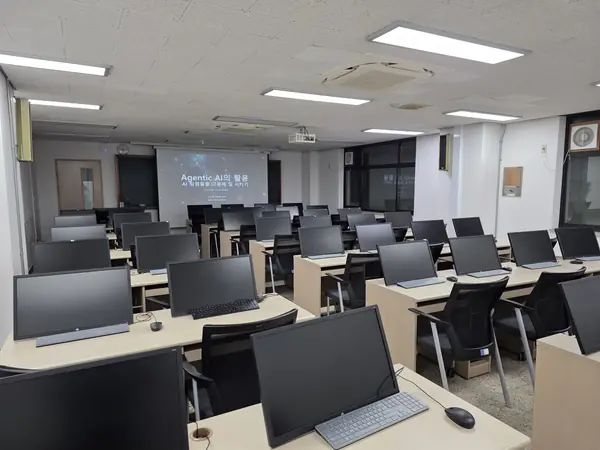
홍익대학교 학습전략강화워크숍에서 안티그래비티로 에이전틱 워크플로우를 체험하고, AI 팀원을 구성해 업무를 분담하는 방법과 토큰 엔지니어링을 다뤘습니다.
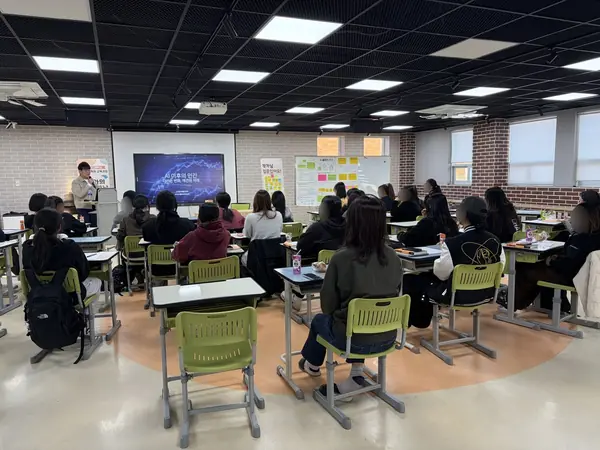
AI의 발전이 삶과 직업에 가져올 변화, 그리고 AI 시대에 사람이 준비해야 할 역량을 이야기했습니다.

제5기 9급 신규자과정에서 업무 자료를 활용해 정책 문제를 해결하는 생성형 AI 실습을 진행했습니다.

홍익대학교 학습전략강화워크숍에서 Agentic AI의 개념과 주요 도구를 소개하고, 안티그래비티 설치부터 바이브코딩 실습까지 진행했습니다.
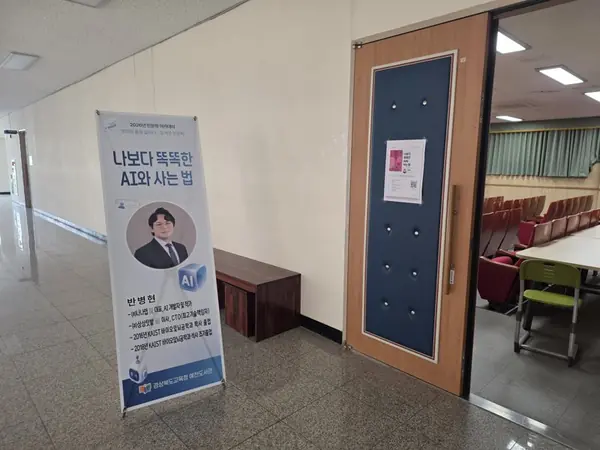
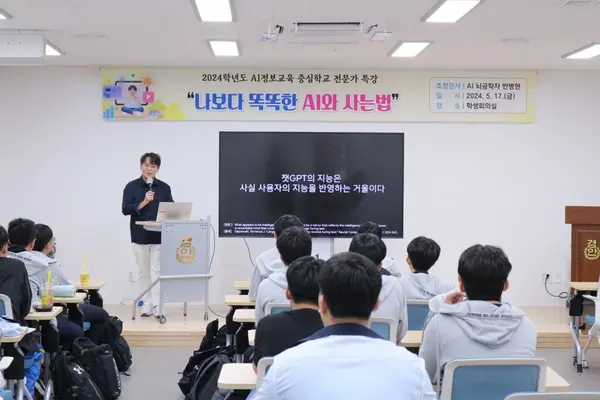
경북일고등학교에서 AI의 발전이 직업세계와 삶에 가져올 변화를 주제로 강연했습니다.
제5기 9급 신규자과정에서 생성형 AI의 기초와 프롬프트 작성 방법을 다루고 업무 활용을 실습했습니다.
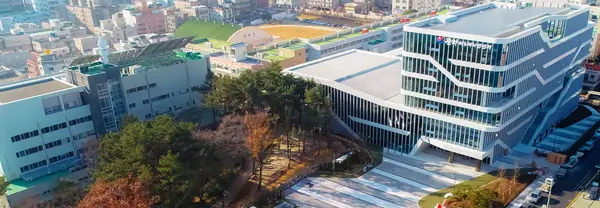
통합건강증진사업 실무자를 대상으로 AI를 활용한 문서 작성 방법을 다뤘습니다.

제191기 5급 승진관리자과정에서 AI와 함께 업무용 프로그램을 만드는 바이브코딩을 다뤘습니다.

Codex와 에이전틱 프레임워크를 활용한 실무 업무 자동화를 다뤘습니다.

4주간의 Webex 온라인 학습모임에서 AI 에이전트와 협업해 업무용 웹 앱을 기획·제작하고, 배포한 결과를 공유하며 개선했습니다. 매주 실습과 피드 인증을 함께 진행했습니다.
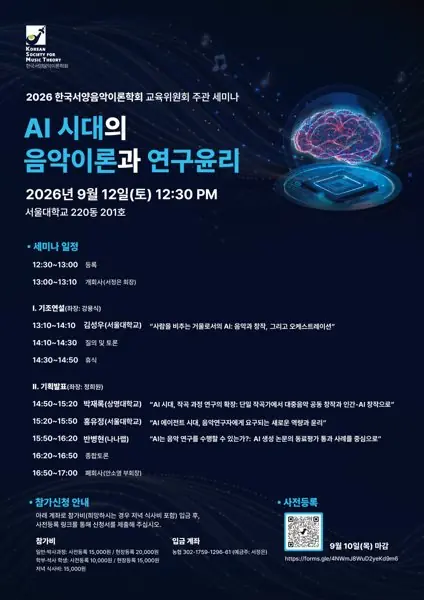
AI 생성 논문의 동료평가 통과 사례를 중심으로 음악 연구에서의 AI 활용 가능성을 살펴봤습니다.

생성형 AI의 활용 범위와 한계, 자료 검증, 에이전틱 프레임워크를 다뤘습니다.

제190기 5급 승진관리자과정에서 AI 활용 발표에 대한 평가와 총평을 진행했습니다.

MVP 강연에서 AI 에이전트의 활용 사례와 AI에 맡길 업무를 구분하는 방법을 다뤘습니다.

생성형 AI와 에이전트를 활용해 데이터를 시각화하고 메시지를 전달하는 방법을 다뤘습니다.
제190기 5급 승진관리자과정에서 AI와 함께 업무용 프로그램을 만드는 바이브코딩을 다뤘습니다.

AI와 에이전트가 업무 수행 방식에 가져오는 변화를 사례와 함께 살펴봤습니다.

온라인 강연에서 AI를 활용해 기획보고서를 작성하는 방법을 다뤘습니다.

온라인 강연에서 AI 에이전트의 등장과 업무 활용 사례를 소개했습니다.

용인중앙도서관 온라인 강연에서 AI가 만드는 새로운 기회와 직업·일상의 변화를 살펴봤습니다.
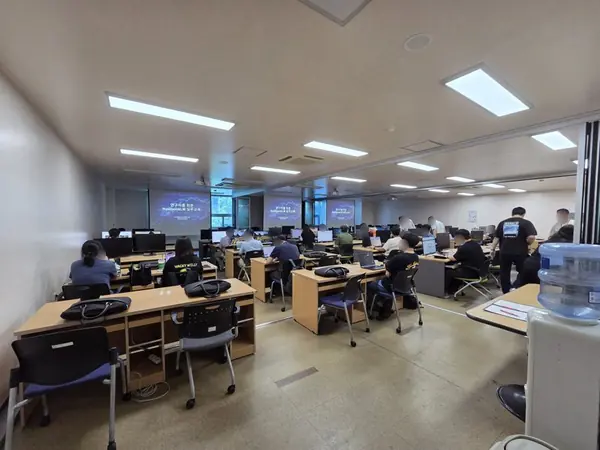
선행논문 분석부터 리뷰 논문, 리비전 대응, 발표자료 작성까지 연구에 AI를 활용하는 방법을 실습했습니다.
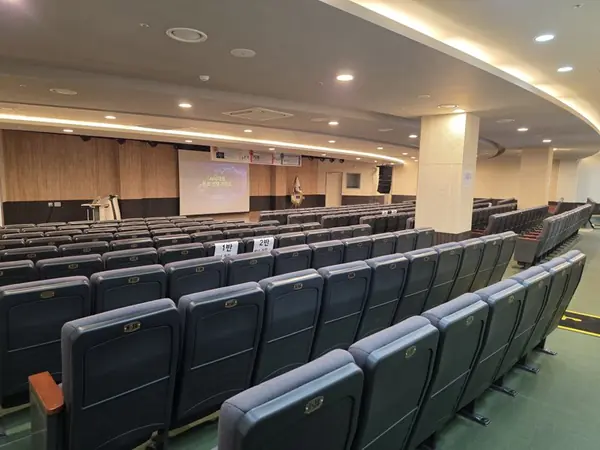
AI가 바꾸는 직업세계와 진로 선택의 방향을 주제로 강연했습니다.
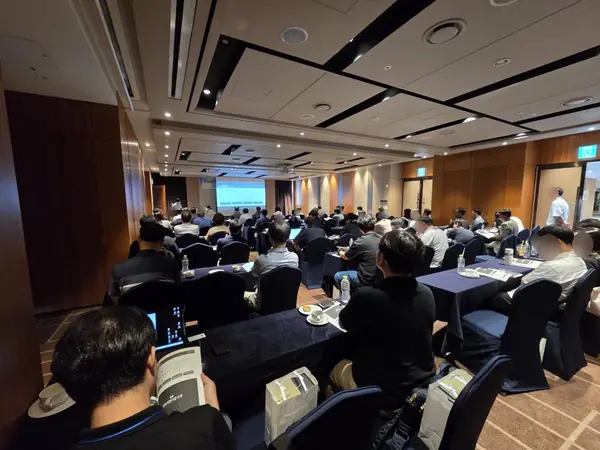
챗GPT를 중심으로 인공지능의 발전과 앞으로의 변화를 살펴봤습니다.

제14기 9급 신규자과정(지역인재수습직원)에서 업무 자료를 활용해 정책 문제를 해결하는 생성형 AI 실습을 진행했습니다.

생성형 AI를 공공기관 업무와 연구 수행에 적용하는 방법을 소개했습니다.
제14기 9급 신규자과정(지역인재수습직원)에서 생성형 AI의 기초와 프롬프트 작성 방법을 다루고 업무 활용을 실습했습니다.

제189기 5급 승진관리자과정에서 분임 정책연구의 AI 활용 발표 강의를 진행했습니다.
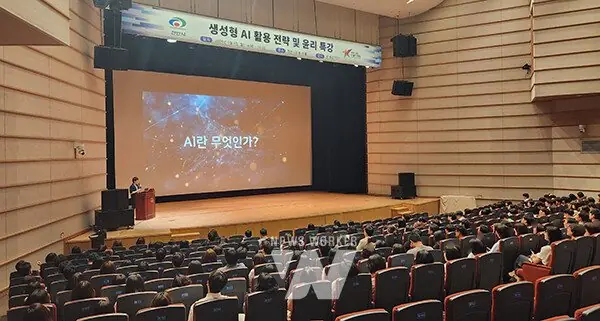
생성형 AI의 활용 전략과 업무에서 고려해야 할 윤리 문제를 다뤘습니다.
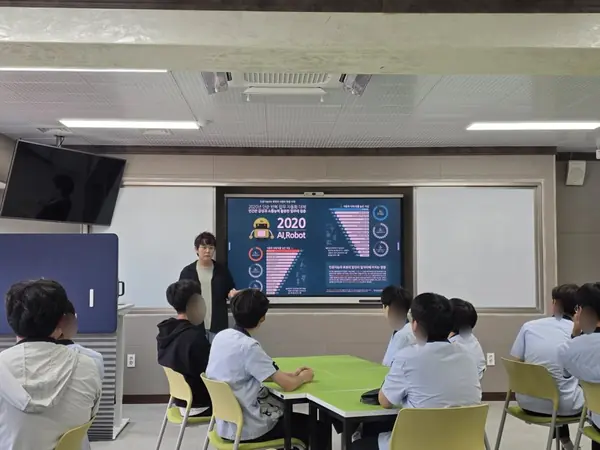
학생들과 AI의 발전, 로봇 기술, 일자리 변화에 관해 이야기를 나눴습니다.

네 차례 교육을 통해 업무용 웹 애플리케이션 제작과 외부 API 연결 방법을 다뤘습니다.

제68기 7급 신규자과정에서 생성형 AI와 함께 웹 애플리케이션을 만드는 바이브코딩을 실습했습니다.

AI로 행정업무의 효율을 높이는 방법과 행정서비스의 변화를 살펴봤습니다.
제189기 5급 승진관리자과정에서 프롬프트 설계, 자료 기반 업무 처리, 웹 애플리케이션 제작을 다뤘습니다.

생성형 AI를 행정업무에 활용하기 위한 프롬프트 설계 방법을 다뤘습니다.

프롬프트 설계, 시장조사, 보고자료와 기획서 작성까지 CX 실무에 필요한 AI 활용법을 다뤘습니다.

AI 산업의 흐름과 일상·업무 활용, 프롬프트 설계 전략을 함께 살펴봤습니다.
제68기 7급 신규자과정에서 생성형 AI의 기초와 프롬프트 작성 방법을 다루고 업무 활용을 실습했습니다.
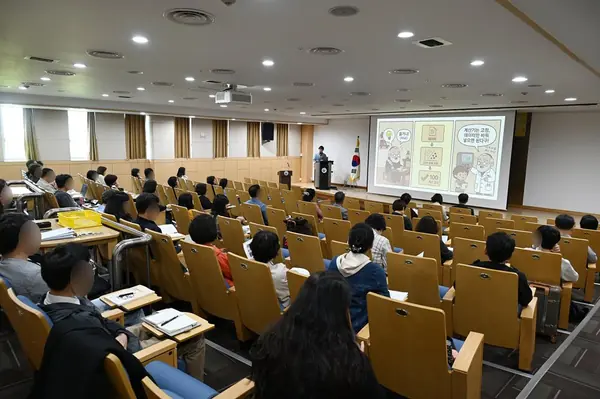
생성형 AI의 발전과 장애인 교육의 미래를 주제로 강연했습니다.

생성형 AI로 웹 애플리케이션을 만들고 업무에 적용하는 방법을 실습했습니다.
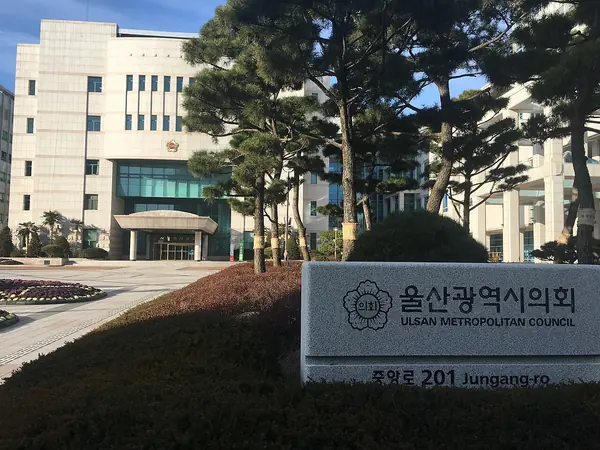
통합건강증진사업의 실무에 AI를 활용하는 전략을 소개했습니다.

4년차 사원을 대상으로 AI 산업의 흐름과 업무 활용 사례를 소개했습니다.

생성형 AI로 아이디어를 기획하고 검토하는 팀 프로젝트 실습을 진행했습니다.

제67기 7급 신규자과정에서 업무 자료를 활용해 정책 문제를 해결하는 생성형 AI 실습을 진행했습니다.
제67기 7급 신규자과정에서 생성형 AI의 기초와 프롬프트 작성 방법을 다루고 업무 활용을 실습했습니다.

연구자의 관점에서 생성형 AI의 활용 가능성과 주의해야 할 한계를 살펴봤습니다.

회장님과 계열사 임원들을 대상으로 3회에 걸쳐 특강을 진행했고, 경쟁사의 AI도입 현황 분석과 계열사 주요 업무의 AX 가능성에 대한 자문을 제공했습니다.

제188기 5급 승진관리자과정에서 생성형 AI의 공직 실무 활용과 프롬프트 설계 방법을 다뤘습니다.

제21기 7급 신규자과정(지역인재수습직원)에서 업무 자료를 활용해 정책 문제를 해결하는 생성형 AI 실습을 진행했습니다.
제21기 7급 신규자과정(지역인재수습직원)에서 생성형 AI의 기초와 프롬프트 작성 방법을 다루고 업무 활용을 실습했습니다.
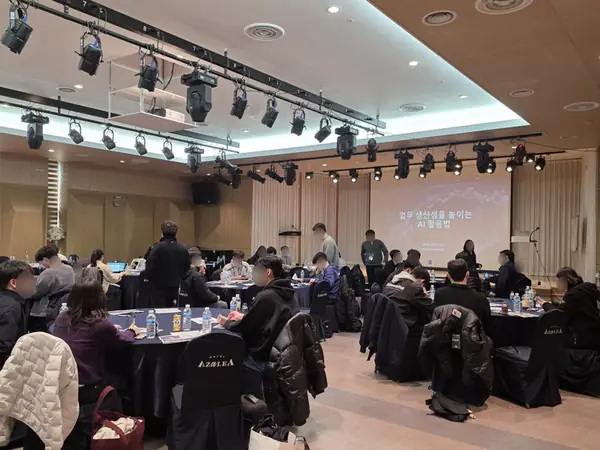
생성형 AI를 업무에 활용해 생산성을 높이는 방법을 소개했습니다.

AI의 발전이 사람과 교육에 가져올 변화를 학교운영위원장들과 함께 살펴봤습니다.
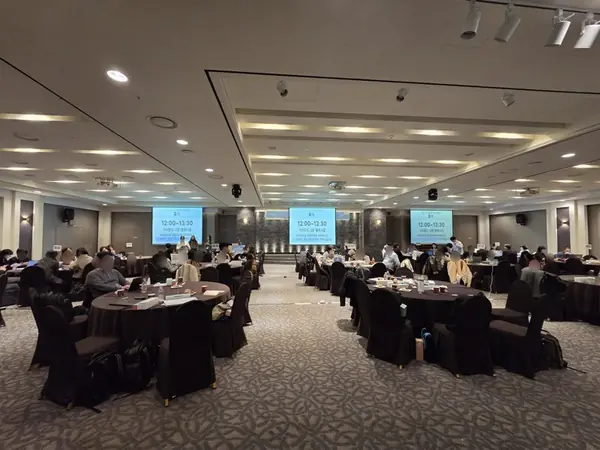
2025 디지털새싹 성과공유회에서 생성형 AI를 활용한 실무 효율화 전략을 소개했습니다.

마을교사 양성교육에서 챗GPT와 미래교육의 접점을 살펴봤습니다.
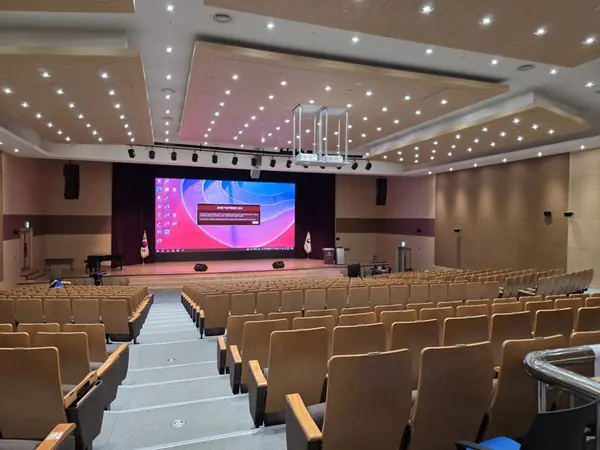
제187기 5급 승진관리자과정에서 공직자를 위한 생성형 AI의 업무 활용 교육을 진행했습니다.
제187기 5급 승진관리자과정에서 공직자를 위한 생성형 AI의 업무 활용 교육을 진행했습니다.
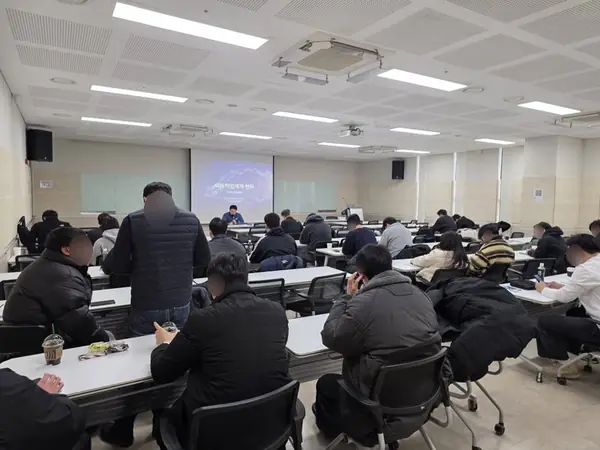
AI의 발전이 직업세계에 가져올 변화와 대응 방향을 살펴봤습니다.
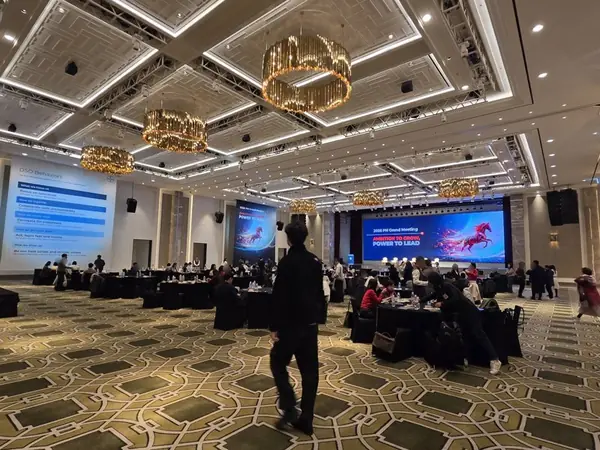
생성형 AI에 원하는 결과를 요청하기 위한 프롬프트 설계 방법을 다뤘습니다.
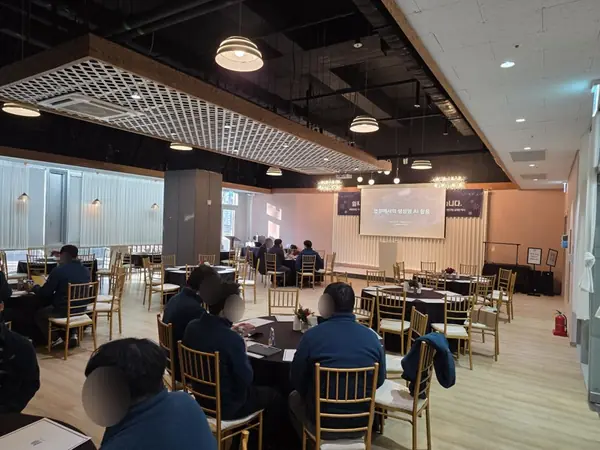
생성형 AI의 원리와 한계를 짚고, 업무용 프롬프트 작성과 AI 결과물 검토 기법을 소개했습니다. 데이터 분석과 모델 설계 지원 등 실무 적용 사례, AI 사용 시 보안상 주의점도 다뤘습니다.

복지행정분야 핵심인력 워크숍에서 업무용 프롬프트 작성과 AI 답변 검토 기법을 다뤘습니다. NotebookLM을 활용한 자료 기반 질의응답과 유권해석 사례를 통해 공직 실무에 AI를 적용하는 방법을 실습했습니다.

제4기 AI 이해와 활용 과정에서 오전에는 AI 실습 2(심화), 오후에는 AI 실습 3(연습) 강의를 진행했습니다.

챗GPT의 작동 원리와 RAG를 살펴보고, AI 산업의 경쟁 구도와 인프라 변화를 소개했습니다. 기업의 AI 도입이 업무 환경에 가져올 변화도 함께 다뤘습니다.
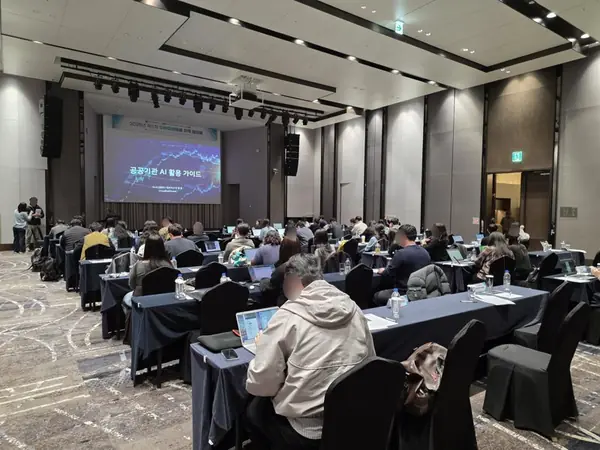
공공기관의 AI 도입과 내부망 구축, RAG 활용 방식을 소개했습니다. 공공 AI 챗봇의 악용 사례와 대화 정보 유출 사례를 통해 도입 시 점검할 보안 문제도 살펴봤습니다.
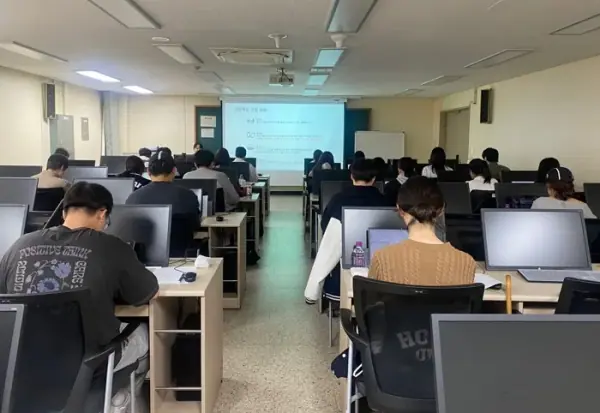
홍익대학교의 초청으로 학부생들을 대상으로 한 특강을 제공했습니다. 11월 3일, 11월 17일 2회에 걸쳐 기초, 심화강의 진행했습니다.
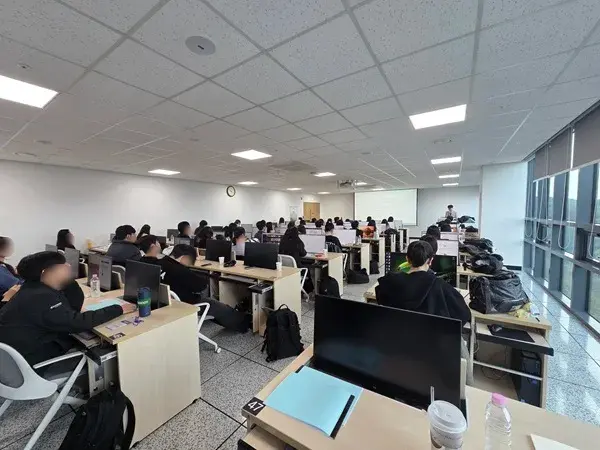
기획재정부의 청년인턴 50여명을 대상으로 한 3일간의 AI 연수를 진행했습니다. 11월 5일 세종시에서 이론 연수가 진행되었고, 11월 12일~13일 양일간 태안의 공무원연수원에서 집합교육이 진행되었습니다. 시수가 많다 보니 기초부터 실습, 활용, 경시대회까지 올인원으로 진행하였고, 일부 수강생들과는 아직까지도 연락을 주고받고 있습니다.
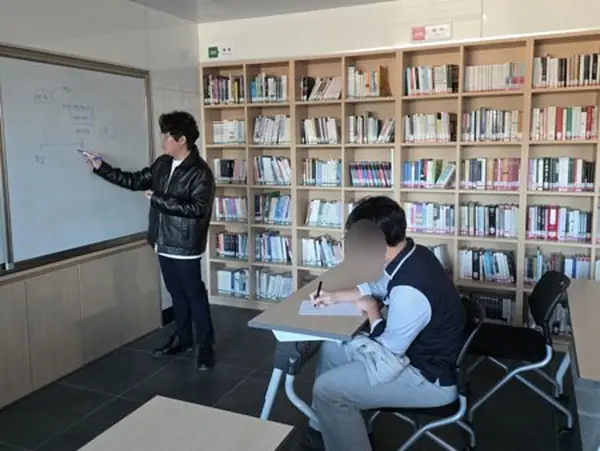
생성형 AI로 달라지는 산업과 직업, 그 변화에서 찾을 수 있는 기회를 주제로 강연했습니다. 기업의 AI 구축 사례와 프롬프트 엔지니어링, RAG 활용 방식도 소개했습니다.
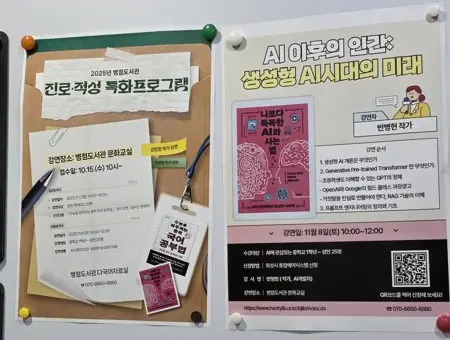
생성형 AI가 일과 산업을 어떻게 바꾸는지 살펴보고, GPT의 원리와 프롬프트 작성법을 소개했습니다. 할루시네이션과 RAG, AI 악용 사례를 통해 활용 시 주의할 점도 짚었습니다.

생성형 AI가 산업과 직업에 가져오는 변화를 살펴보고, AI 시대의 진로를 주제로 강연했습니다. GPT의 작동 원리와 프롬프트 엔지니어링, RAG의 기초도 함께 소개했습니다.

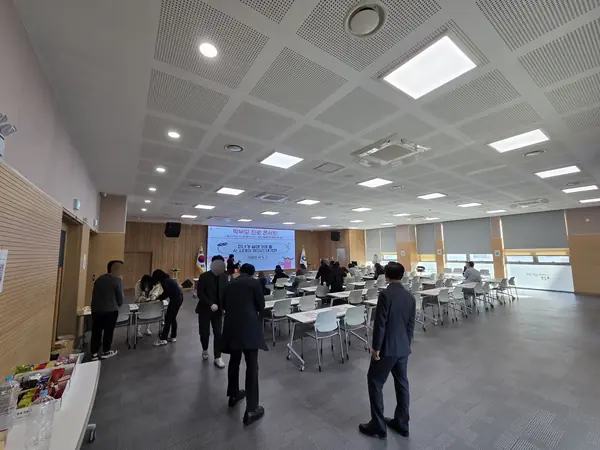
영등포구청의 진로직업체험지원센터에서 구내 학부모분들을 대상으로 한 AI시대의 진로특강을 제공했습니다. 구청장님도 방문하시고, 학부모분들의 뜨거운 열정에 저도 자극을 많이 받는 자리였습니다.

전남교육청 특수교육지원센터에서 진행한 특수교육 담당자 연수에 참석해 특강을 제공했습니다. 장애학생e페스티벌에 참석하셨던 장학사님께서 불러주셨습니다.
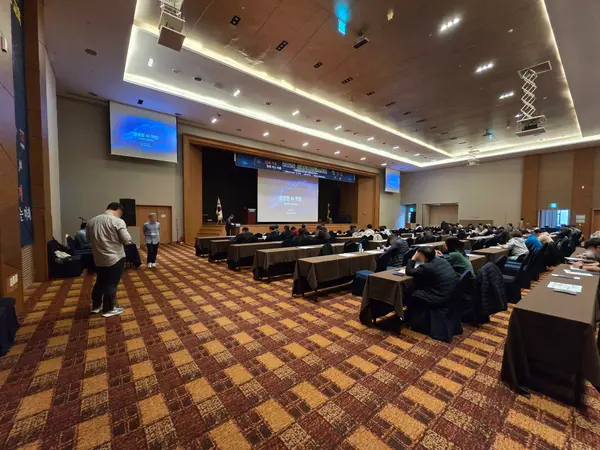

가톨릭상지대학교 바이오제약학과의 초청으로 생성형 AI 활용 특강과, 의료용 대마 관련 특강을 제공했습니다.



보건복지인재원에서 실시하는 [보건의료 디지털 실무역량 강화과정] 교육에 다녀왔습니다. 9월 10일, 9월 24일 2일간 진행된 교육이고 1일 8시간 진행되었습니다.
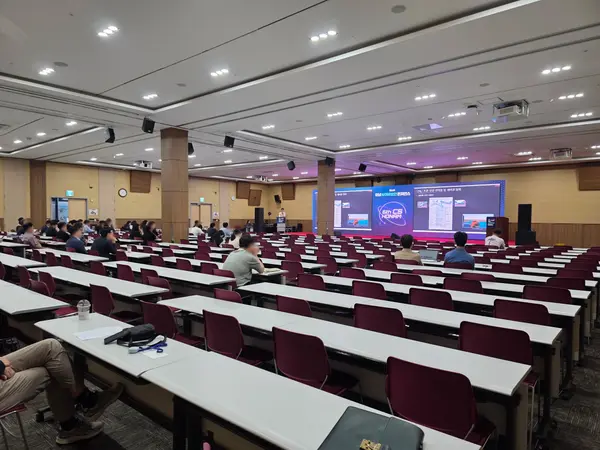
한국정보보호학회에서 주관하는 [2025 제6회 호남사이버보안콘퍼런스]에서 특강을 제공했습니다.

[2025년도 서울시교육청 도서관 및 평생학습관 AI, 디지털기반 역량강화 연수]를 진행했습니다. 오전, 오후 각각 100여 명 참석하셨습니다.

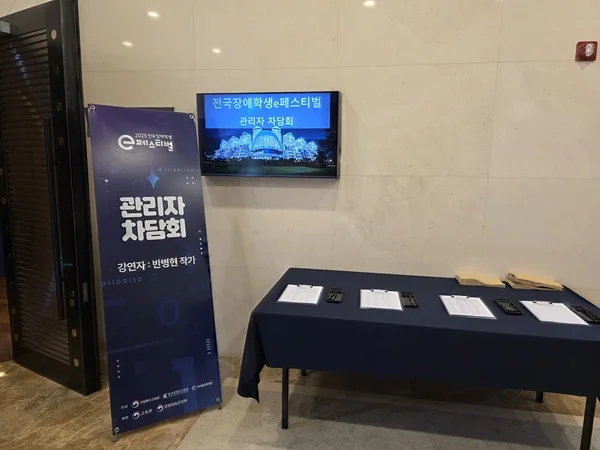
국립특수교육원, 한국콘텐츠진흥원, 넷마블 문화재단이 공동으로 개최한 [전국 장애학생 e페스티벌]에서 관리자를 대상으로 한 특강을 제공했습니다. 전국의 특수교육 관련 장학사, 교장선생님들이 모인 자리였습니다.


남양주시청의 [슈퍼 성장을 위한 일잘러:리워크 Work Smart 교육] - [2025년 일잘러 리 스킬(re-skill) 과정]에서 4시간 분량의 실습 연수를 제공했습니다.

미래와소프트웨어 재단에서 주최하는 제16회 꿈찾기 캠프에서 특강을 제공했습니다. 어린이들이 아주 활기차서 즐거웠습니다.



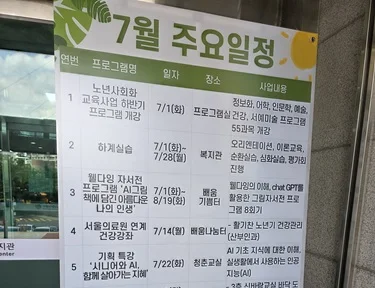
어르신들을 대상으로 특강을 진행했습니다. 그 넓은 홀이 가득 찬 걸 보고 깜짝 놀랐습니다.
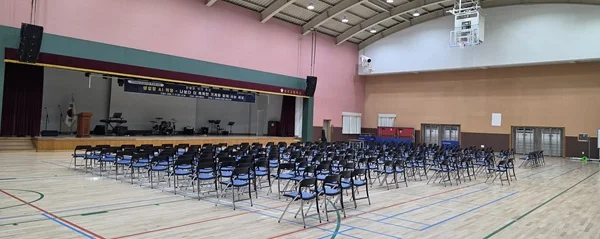
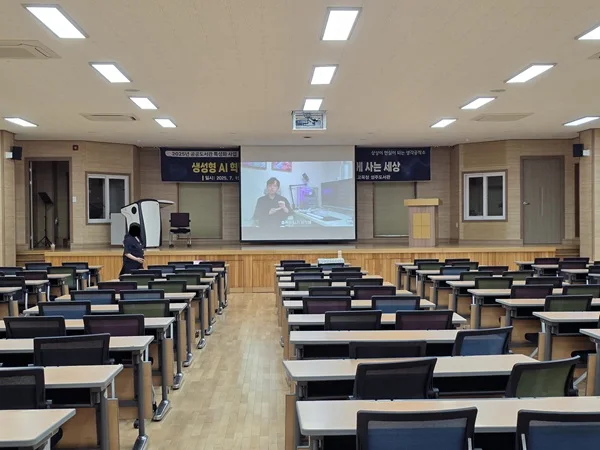
성주여고에 방문하여 특강을 진행했습니다. 제 얼굴이 박힌 머그컵과 직접 구운 쿠키도 선물로 받았습니다. 이런 환대는 처음이라 크게 감동했습니다.

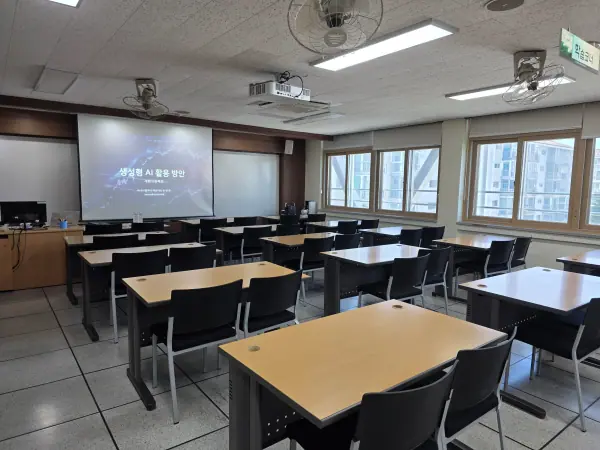


제1기 금연사업관리과정의 "AI를 활용한 보건사업 홍보전략" 교육을 다녀왔습니다. 전국 보건소 재직자분들 집합교육입니다.
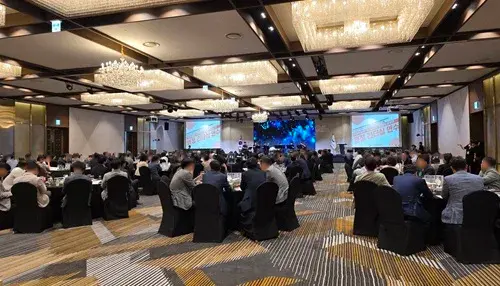
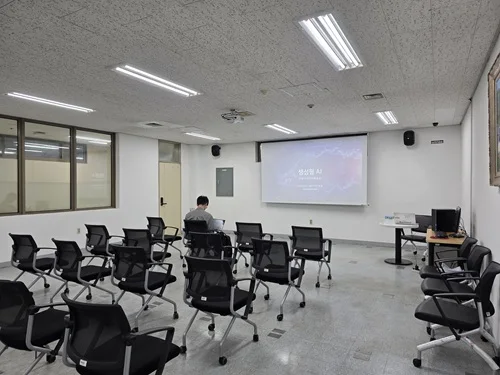
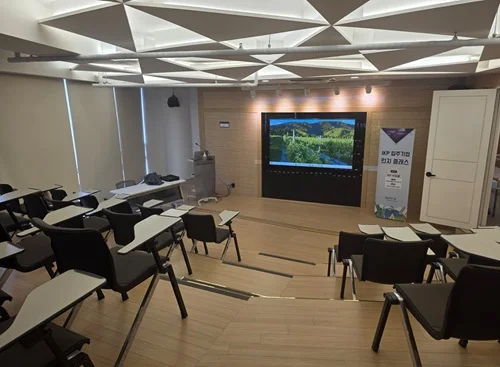


[2025 교육공동체 미래역량 강화 과정] 연수 출강했습니다. 3주에 걸쳐 750명을 대상으로 교육 진행했습니다.

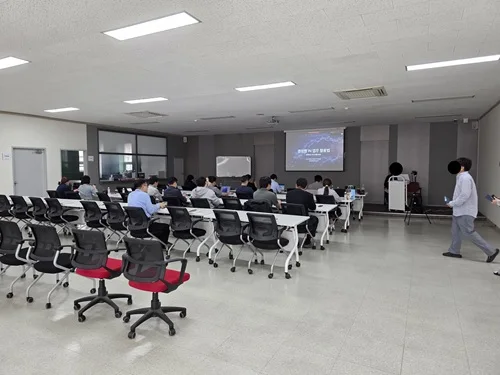
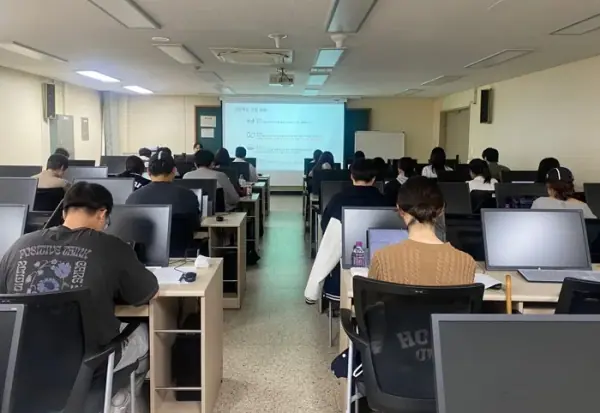

[2025년 미래교육 학부모 아카데미 1기 - 명사 초청 특강]의 세 번째 강사로 초청받아 지역 주민들과 AI에 대한 이야기를 나누었습니다.
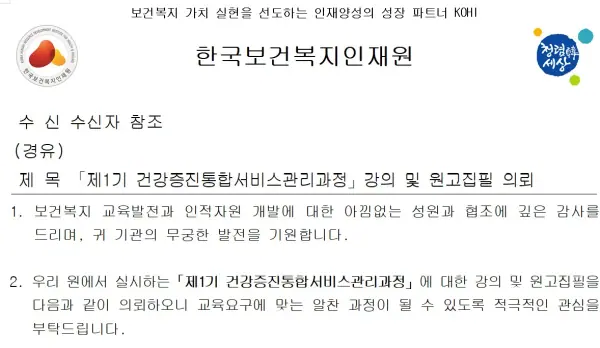
보건복지인재원의 초청으로 [제1기 건강증진통합서비스관리과정] 특강강사로 출강했습니다. 실습이 포함된 프롬프트 엔지니어링 강의입니다.
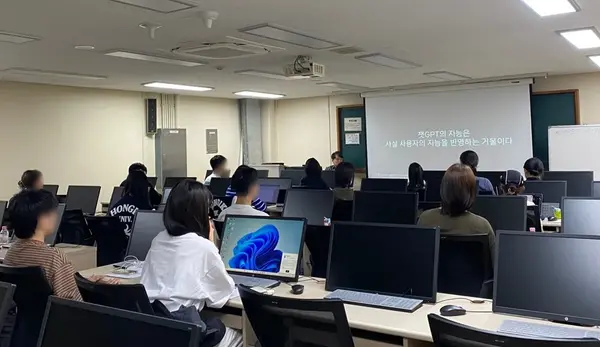

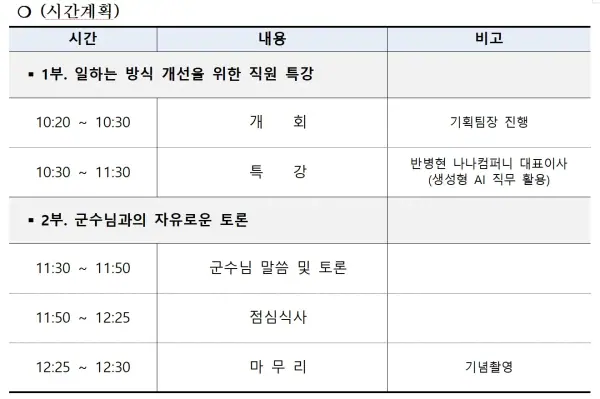
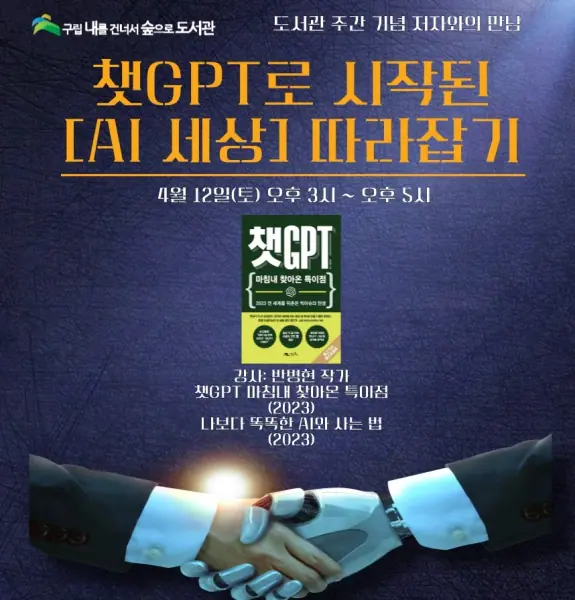
내숲도서관의 초청으로 지역 주민들과 AI를 주제로 재미있는 이야기를 많이 나눌 수 있었습니다. 윤동주 기념도서관이라고 하셔서, AI에게 윤동주 스타일의 시를 쓰는 과정을 시연시켜 봤습니다.
보건복지부에서 진행했던 "생성형 AI 올인원 패키지"를 수강하신 국장님께서 직원들의 업무 효율 향상을 위한 강의를 요청해 주셨습니다. 재결서를 작성하는 데 필요한 다양한 프롬프트 기법들을 설계해 소개했고, 실무자들의 매우 뜨거운 성원을 받았습니다.
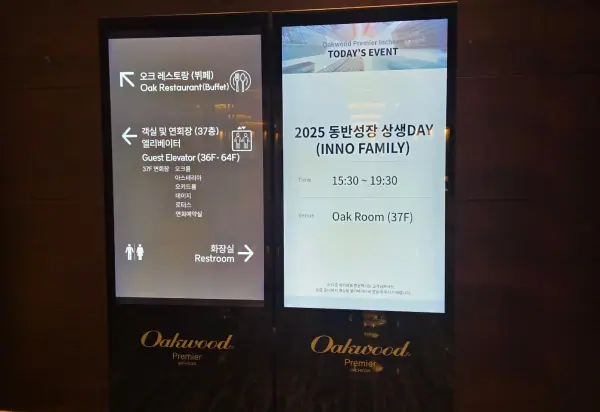
LG 이노텍과 협력회사들 사이의 친목을 도모하는 [2025 동반성장 상생DAY]에서 특강을 진행했습니다. Inno Family 회원사 대표이사님들 35분과 LG이노텍 임원분들을 대상으로 생성형 AI의 활용 전략을 안내했습니다. 반응이 무척 뜨거워, 이 날의 인연을 계기로 다른 협력도 진행했습니다.
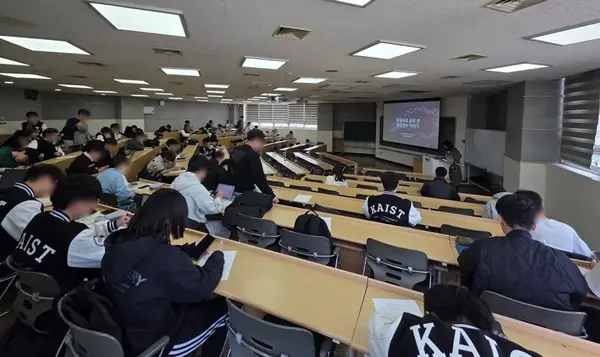
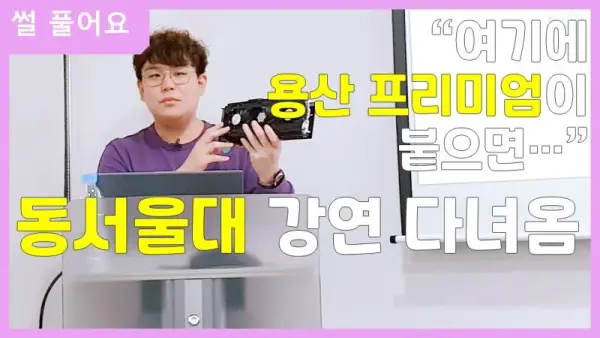
카이스트 글로벌리더십센터에서 진행하는 "영리더 목요특강"에 초청을 받았습니다. 제가 학창시절 얼마나 주변 눈치 안 보고 재미있게 지냈는지 썰을 풀다 오는 즐거운 시간이었습니다. 오리연못에서 보트 탄 코스 특히 반응이 좋았습니다. 학생들이 인스타 팔로우도 많이 해 줘서 뿌듯했습니다.

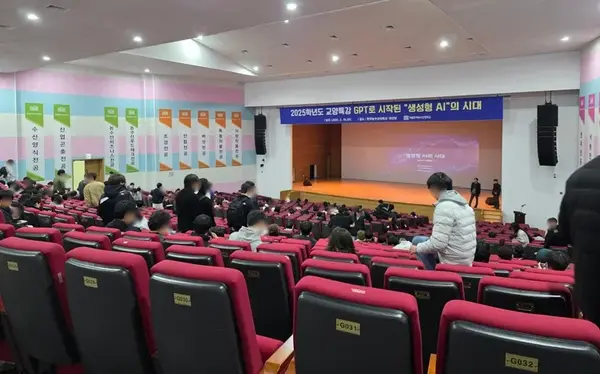

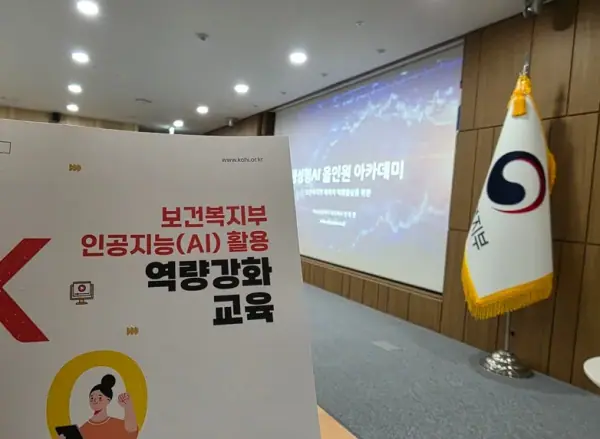
인사혁신처 챗GPT아카데미로 인연이 닿아 보건복지부에서 초청해 주셨습니다. 오전, 오후 통으로 진행되는 실습 교육을 제공했습니다. 사전설문, 사후설문평가를 제공하여 교육 이해도를 최대한 높이는 방향으로 많은 분들께서 수고해주셨습니다.

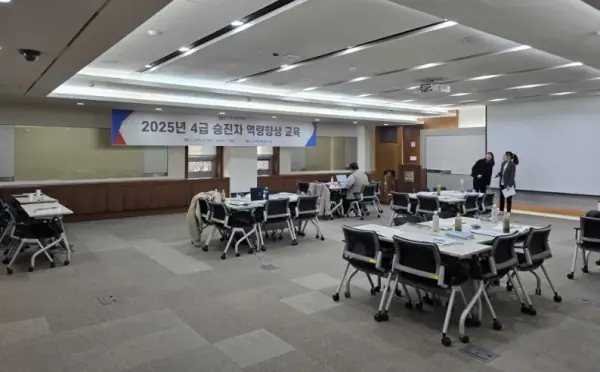
2025년도 차석 및 지점장급 교육과정에 초청을 받아 생성형 AI 교육을 제공했습니다.
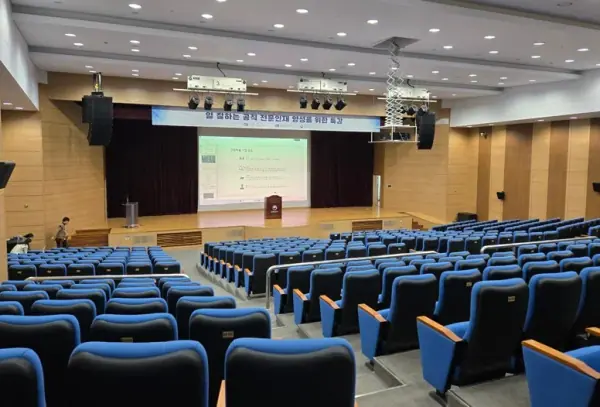
인사혁신처 챗GPT 아카데미에서 인연이 닿아 질병관리청에 초청을 받았습니다. "일 잘하는 공직 전문인재 양성을 위한 특강"이 기획되었고, 실습이 포함된 특강을 제공했습니다.
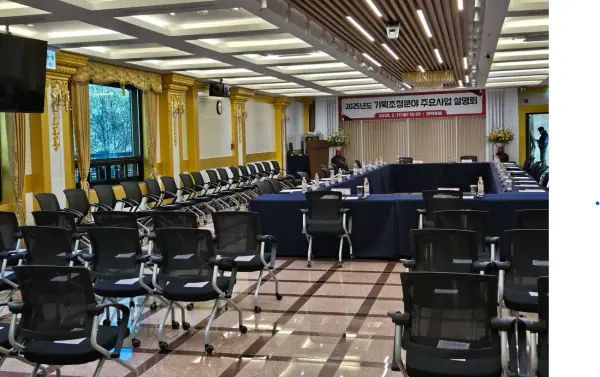
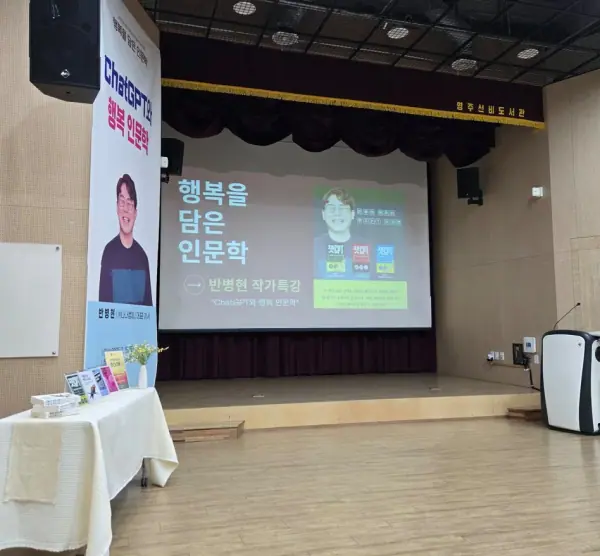
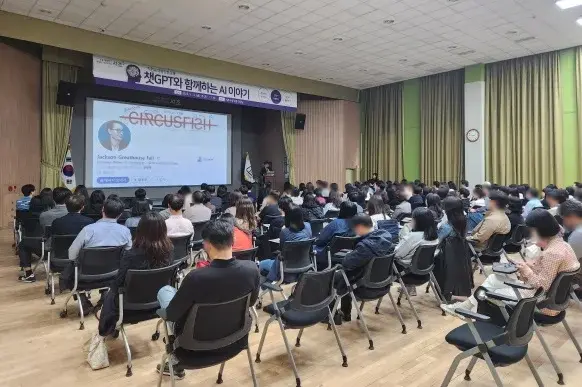
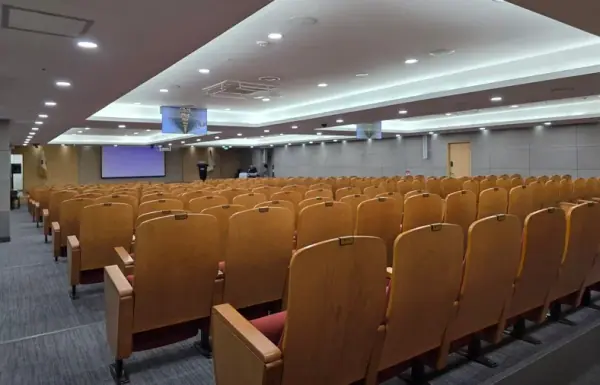
영주시 지역 주민들과 함께 도서관에 모여 즐거운 시간을 나누었습니다. 대강당이 가득 찰 정도로 뜨거운 관심을 보내주셔서 감사했고, 제 얼굴을 건물 2층 높이 현수막에 뽑아놓으셔서 무척이나 부끄러웠습니다. 융숭한 대접 받았습니다 감사합니다.
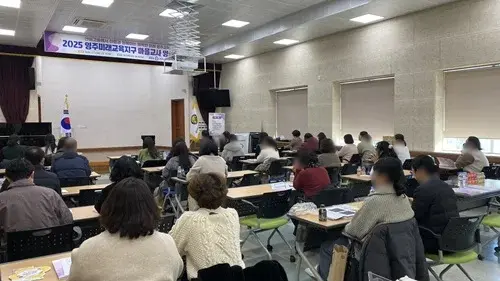
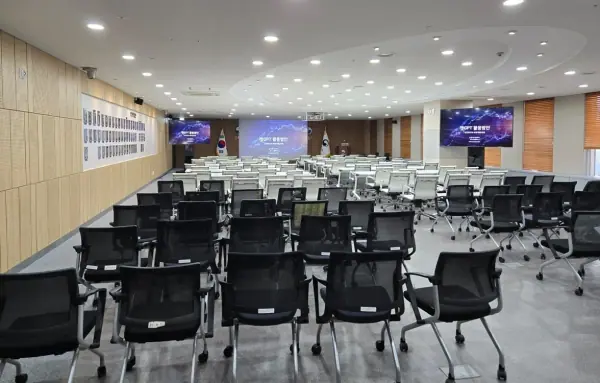
인사혁신처 챗GPT 아카데미를 통해 연이 닿아 보건복지부에 다녀왔습니다. 재직자들을 대상으로 직무에 생성형 AI를 활용하는 방안을 교육했습니다.

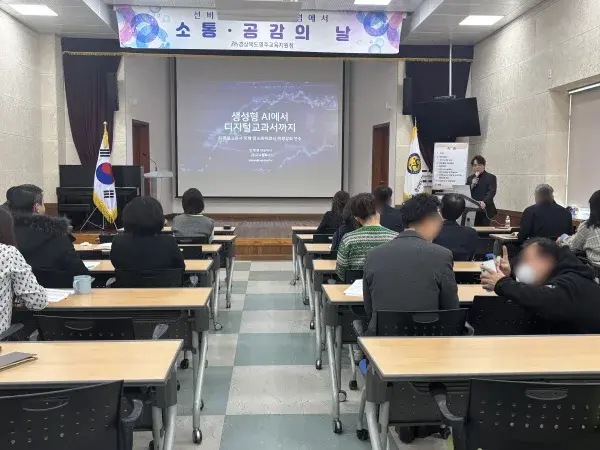

의성군 교통혼잡의 원인, 제가 다시 방문했습니다. 이번에는 조금 더 실생활의 활용례에 가까운 예시들을 소개했습니다.
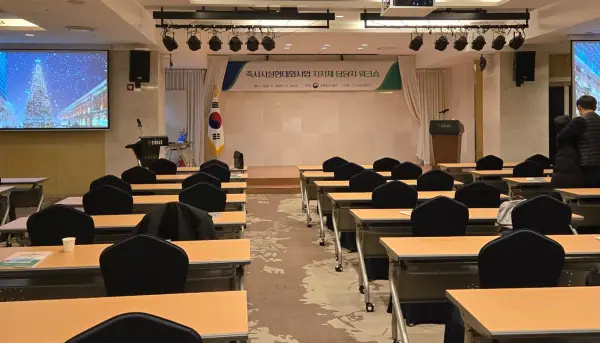


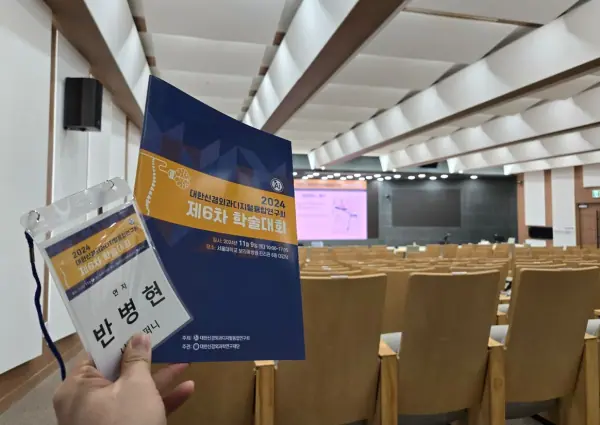
대한신경외과학회의 연구지회인 대한신경외과디지털융합연구회의 초청을 받아 키노트 스피치를 했습니다. 연구윤리와 관련된 다양한 경험을 나누었습니다. 특히 논문을 하루만에 써 accept 된 사례에서 많은 분들께서 놀라셨습니다.

인사혁신처 챗GPT 아카데미에서 연이 닿아 교육부에 초대를 받았습니다. 교육부 직원들을 대상으로 생성형 AI의 실무 적용 방법을 교육했습니다.

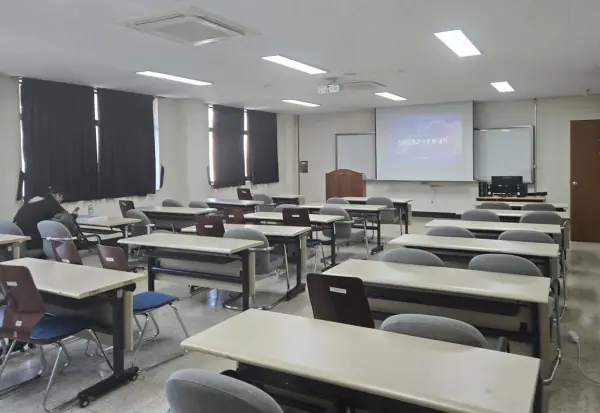
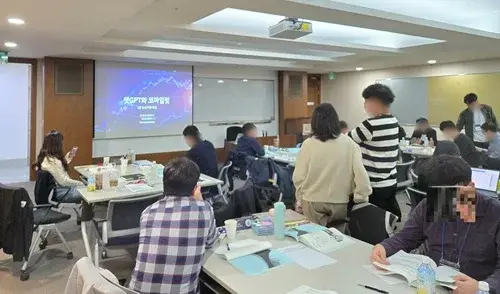
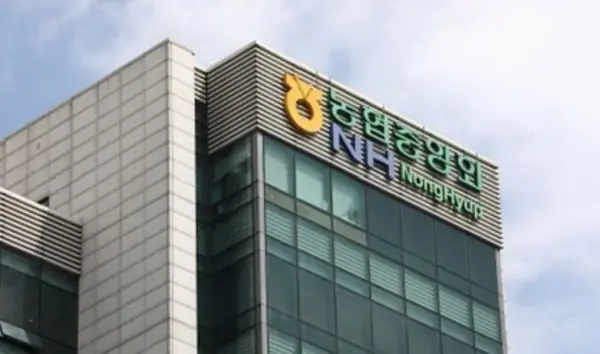

2024년도 하반기 정보통신담당자 기술교육 강사로 초청받아 특강을 제공하고 왔습니다. 강의 도중에도 출동 사이렌이 울리고, 많은 인원이 분주히 달려나가는 모습을 보며 많은 감동을 받았습니다. 존경합니다.
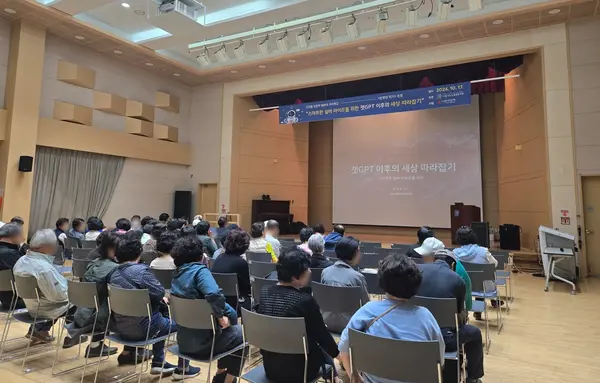
어르신들이 AI시대에도 행복을 찾으실 수 있도록, 세상의 변화와 더 나은 내일에 대해 강의했습니다.


교육공무직실무능력향상 과정 특강을 부탁받아 다녀왔습니다. 교무실무사, 행정실무원 등 교육공무원 200여명을 대상으로 진행했습니다.

건설기술인협회 전사 워크숍에 초청받아 특강을 제공했습니다. 과연 건설업에서 GPT가 어떻게 활약할 수 있을까요?

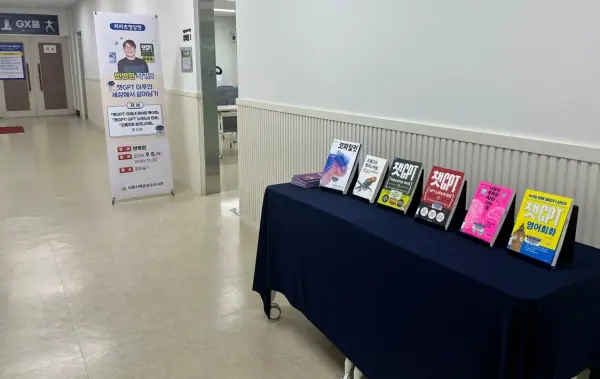
백운호수도서관의 초청을 받아 특강을 다녀왔습니다. 주변이 무척이나 고즈넉하고 아름다워서 기억에 오래 남아 있습니다.

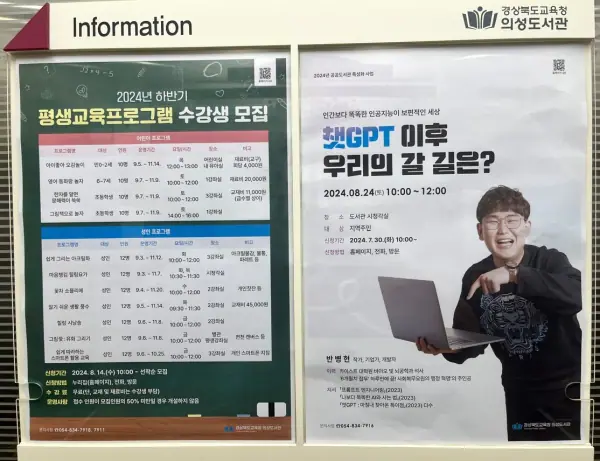
안녕하세요, 의성군 교통혼잡유발의 주범 반병현입니다. 많은 분들께서 참석해 주셔서 그 큰 공간이 가득 찼습니다. 지역주민들, 특히 어르신들과 AI를 활용하여 더 나은 내일을 고민하는 방법을 이야기했습니다.


애경그룹 신규 이사 교육으로 인연이 닿아 에이엠플러스 자산개발 전체 임직원 대상 AI교육을 진행했습니다.
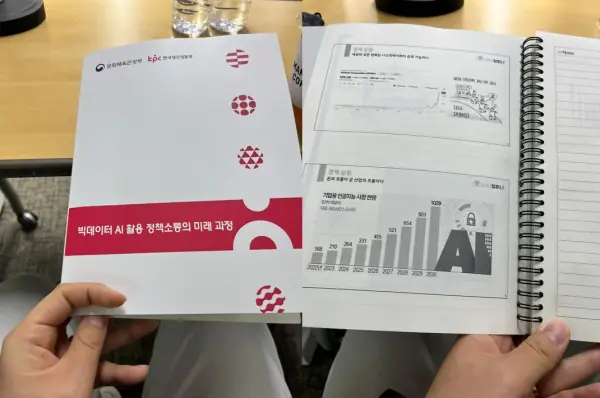
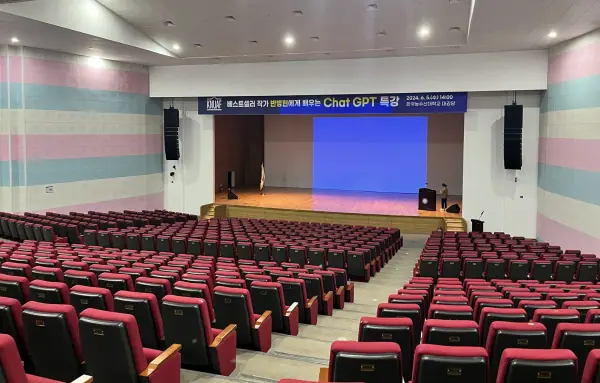
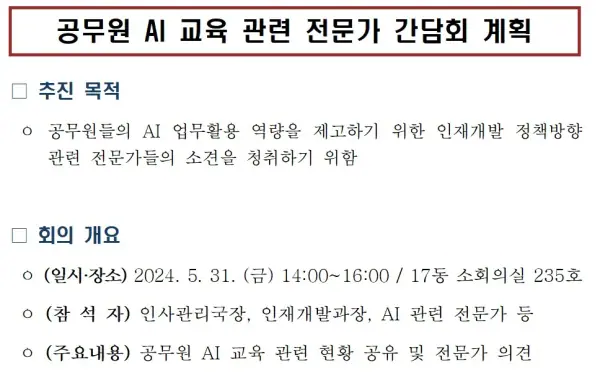
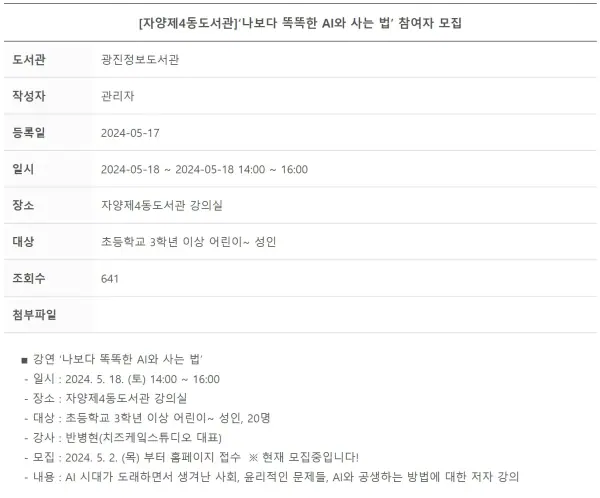

성공 그 자체를 대변하는 CEO님들의 프라이빗 모임에 초청을 받아 프롬프트 엔지니어링과 AI가 불러올 변화에 대해 강의했습니다. 감사하게도 저도 회원으로 초대받았습니다.
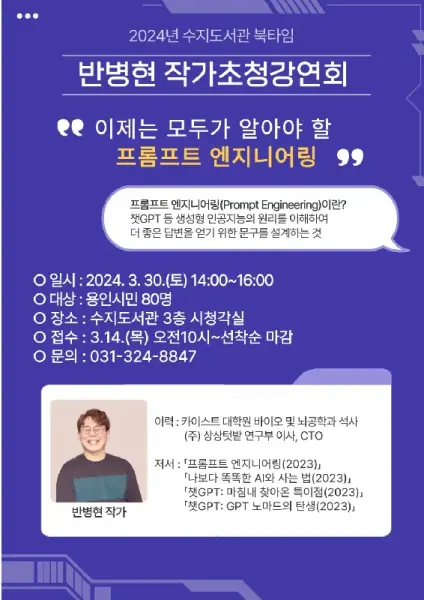
용인 수지도서관에서 다시 초청해 주셔서 특강을 제공하고 왔습니다. 이제는 모든 사람들이 챗GPT를 효율적으로 다루고, 스마트하게 질문을 설계하는 방법에 대하여 알아야 하지요. 이에 누구나 쉽게 활용할 수 있는 프롬프트 엔지니어링 기법을 소개했습니다.
안랩 소속 기획자들이 모두 모이는 기획자 스쿨에서 코파일럿과 챗GPT 등을 효율적으로 활용하는 방법에 대한 특강을 진행했습니다. 기획자 직무도 ENFP가 많은 것 같았습니다. 활기찬 분위기에 무척 즐거웠습니다.
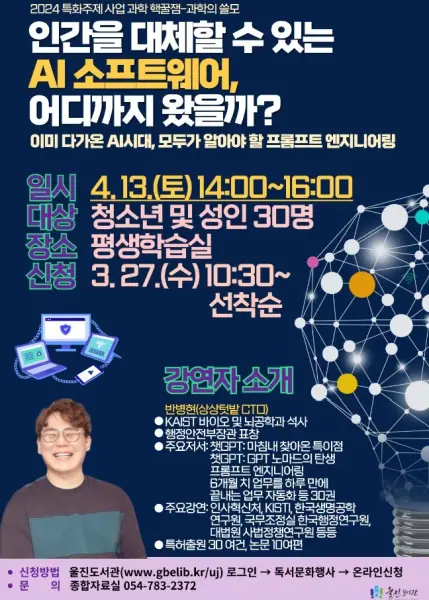
울진군의 청소년들과 어르신들을 대상으로 챗GPT 관련 특강을 진행했습니다. 흰머리 지긋하신 어르신들께서 적극적인 자세로 새로운 지식을 습득하기 위하여 노력하시는 모습이 인상깊었습니다.
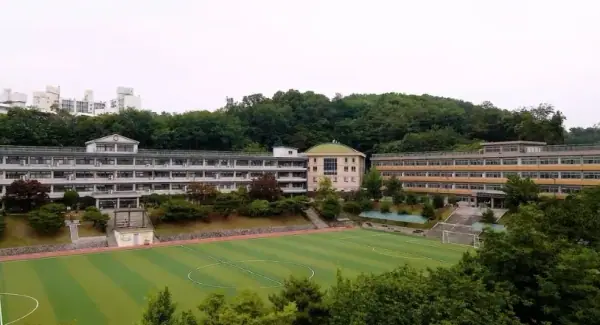
1차 융합독서특강
동국대 사범대 부속고등학교 도서관에서 초청해주셔서 특강을 진행했습니다. 진로형성에 있어 가장 중요한 시기를 겪고 있는 고등학생들을 대상으로, AI산업이
어디까지 발전했는지, 어떤 산업의 기회가 축소되거나 신설되고 있는지에 대한 인사이트를 제공했습니다.

삼성전자 DA사업부 임직원 350여명을 대상으로 특강을 진행했습니다. 특히, 생성형 AI가 생산시설 자동화와 품질관리 분야에 어떻게 적용될 수 있는지에 중점을 두고 최신 연구 결과들을 요약하여 전달했습니다.
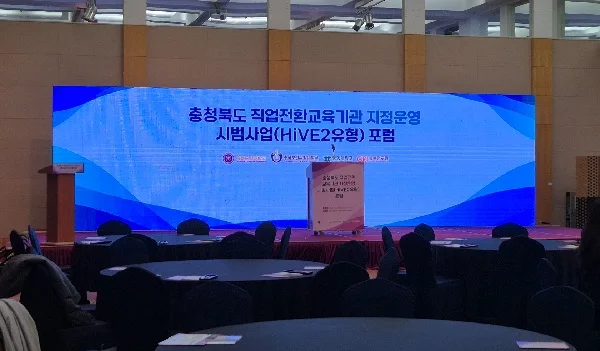
충북 직업전환 교육기관 지정 운영 사업에 참가하는 기관 담당자들을 대상으로 특강을 제공했습니다.

애경그룹의 각 계열사 신규 임원 승진자 대상 특강을 진행하였습니다. 챗GPT의 영향력과 프롬프트 엔지니어링, 조직 내 성과창출을 위한 쾌속한 도입 방향 등에 대하여 강의했습니다.
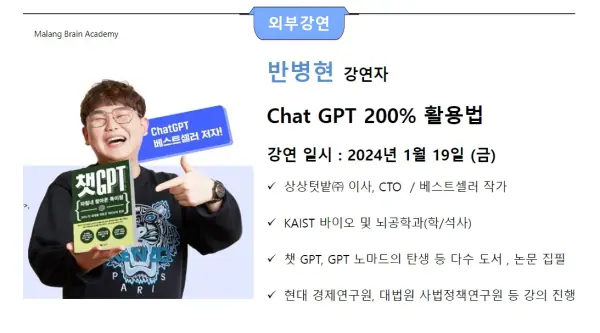
한국암웨이 본사에서 마케팅 임직원 대상 특강을 진행하였습니다. 마케팅 담당자들이라 그런지 외향적인 분들이 많이 참여해주셔서 즐거웠습니다.
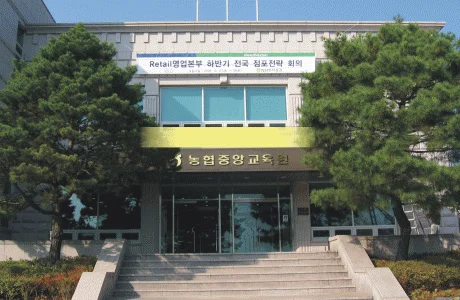
농협중앙회 신규직원 DT교육
농협그룹 전 계열 신입사원을 대상으로 챗GPT와 디지털 트렌드 관련 특강을 제공하였습니다.

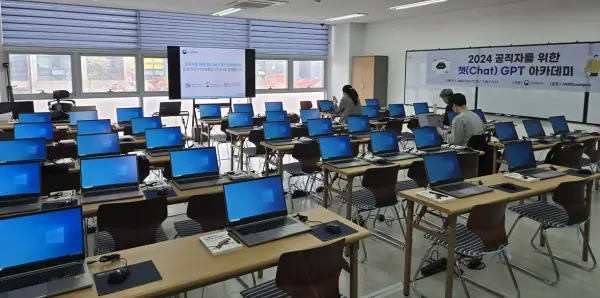
인사혁신처에서 전국 국가직 공직자를 대상으로 진행한, 2억 원 규모의 대형 교육사업입니다. 총 11회에 걸쳐 교육이 진행되었고, 600여명의 공직자 분들을 대상으로 생성형 AI의 실무 활용 방법을 강의했습니다.

수지도서관 베스트셀러 작가 초청 강연. 연말까지도 챗GPT의 열기가 뜨거우니 참 신기하네요. 재미있는 시간 보내고 왔습니다.

미추홀구립도서관 문화가 있는 날 특강
성인을 위한 강의 진행했습니다. 어르신들에게 GPT를 이해시키는 대단한 강사가 바로 접니다.

아산시립도서관의 음봉권역 찾아가는 독서문화행사에서 AI가 가져올 위기와 기회를 주제로 작가 강연을 진행했습니다.
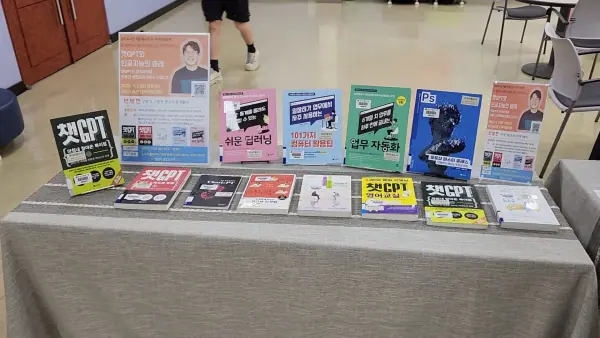
안성 공도도서관에서 강연을 했습니다. 제 도서를 다양하게 소장하고 있는 것으로 보아 아주 훌륭한 곳입니다. 지역 주민들과 챗GPT에 대해 이야기를 나누었습니다.
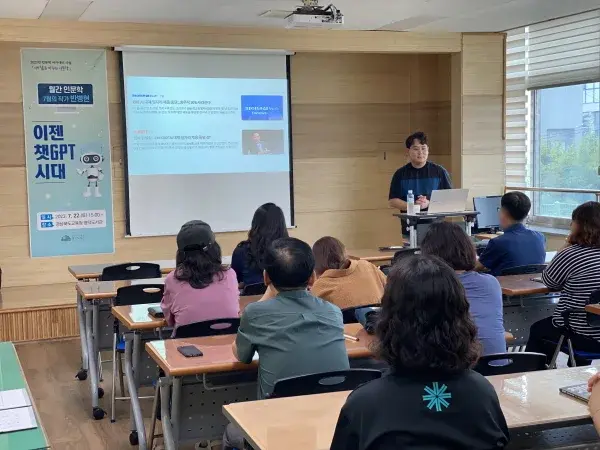

포항 과학원에서 교사들 대상으로 연수라는 명목하에 스탠딩 코미디를 하고 왔습니다. 13년 전, 여기서 영재교육을 받던 학생이었는데 이제는 강단에 서서 마이크를 잡으니 기분이 묘했습니다.
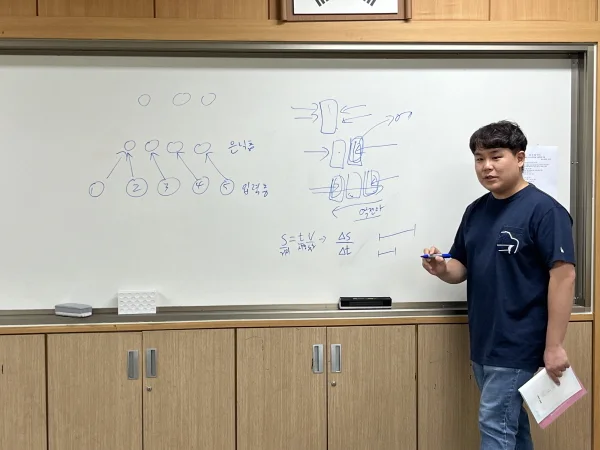
올해도 모교 방문하여 딥러닝 시작부터 끝까지 한 번 훑어주고 왔습니다. 대학에 간 졸업생들이 앞다투어 효능을 간증하는 바로 그 강의가 올해도 돌아왔습니다.
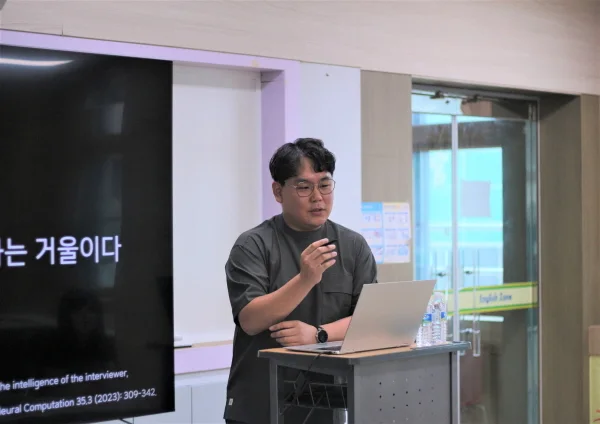


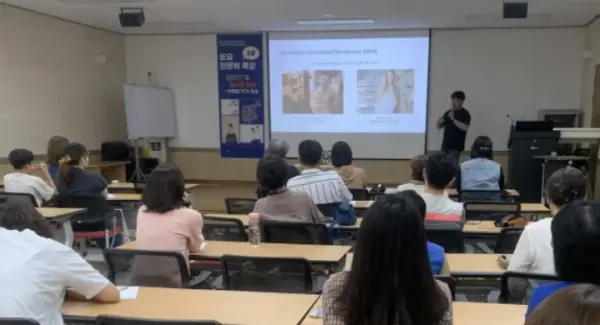
토요 인문학 특강 다녀왔습니다. 백발 어르신이 무서운 속도로 필기도 하시고 관련 애플리케이션 개발 동향 질문도 하셔서 무척 강렬한 기억으로 남았습니다.

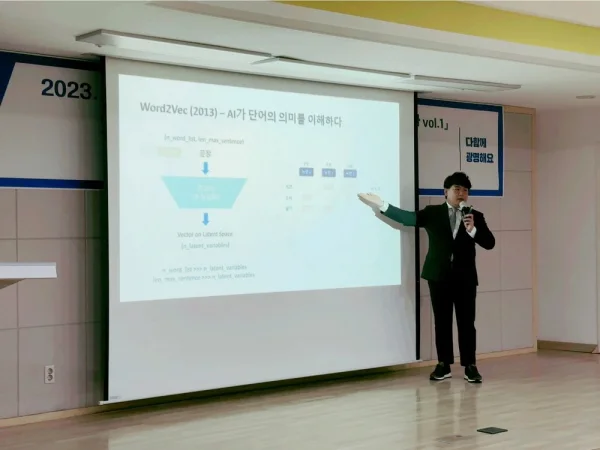
광명시 하얀도서관에서 강연을 진행했습니다. 자리가 모자라 뒤쪽에 간이 의자를 깔고 앉아 수강해 주신 분들도 계셨습니다. 초청해 주셔서 무척이나 감사드립니다. 강연 후 광명 명물인 이케아에서 즐거운 시간을 보냈습니다.

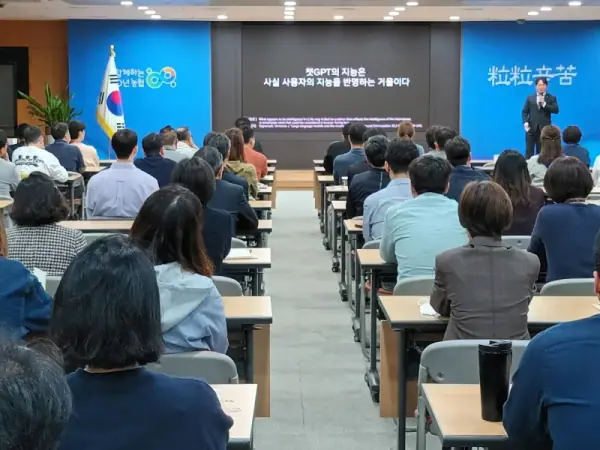
농협중앙회 본부에 방문할 일은 로또 당첨 전에는 없을 줄 알았습니다. 강연도 제공하고 당첨자 기운도 받아왔습니다.
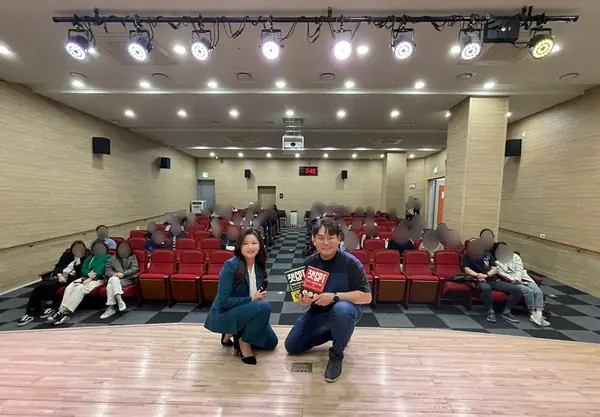
부산까지 다녀온 보람이 있었습니다. 한 시간 가량 강연 후 끝없는 Q&A를 거쳐 사인회까지 무사히 마치고 돌아왔습니다.


미래엔 지식발전소 명사초청특강
챗GPT의 원리부터 프롬프트 엔지니어링, 그리고 챗GPT 기반 챗봇 서비스 설계 기획 방법을 알려드립니다.
벤처기업
신입사원 온보딩
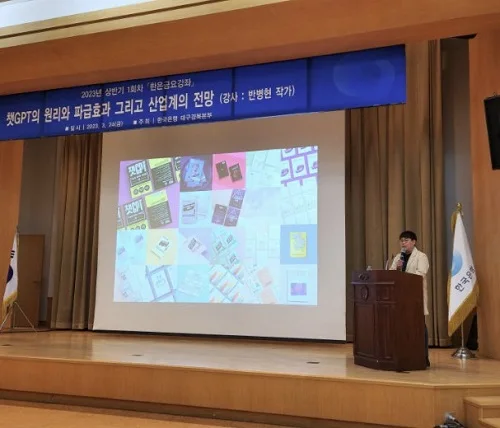
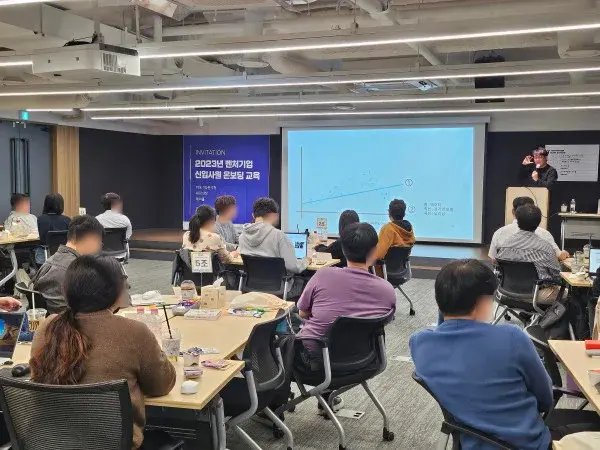
감사하게도 다시 불러주셨습니다. 벤처기업에 입사한 신입사원들을 대상으로, 생성형 AI의 업무 활용 방안 교육을 총 4회 진행하였습니다.

중학교 시절 담임선생님께서 초대해 주셨습니다. 안동여고 학생들과 함께 생성형 AI의 발전이 세상에 끼칠 영향과, 우리가 지향해야 할 성장의 방향에 대한 이야기를 나누었습니다.
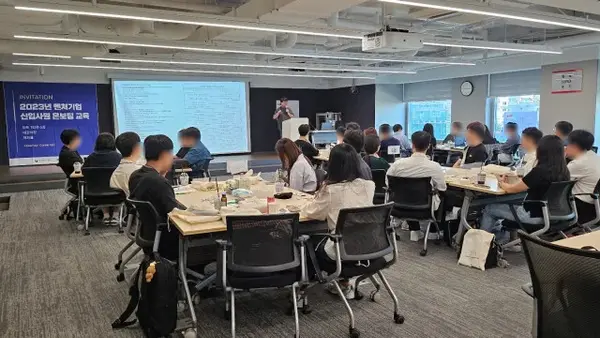
벤처기업
신입사원 온보딩
벤처기업 신입사원들을 대상으로 한 교육프로그램에 초청받아 생성형 AI 활용 방안에 대한 강의를 제공했습니다.
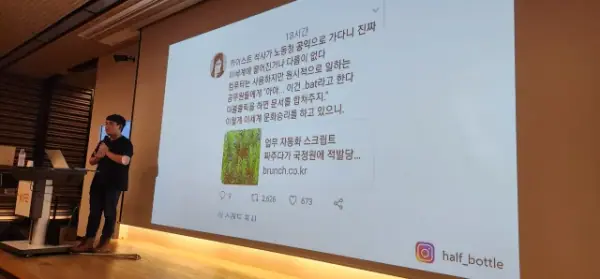


전 직원 대상 온라인 강의였습니다. 라이브로 200명 가량 수강해주셨고 녹화 영상이 한달 간 사내 교육자료로 사용될 예정이라고 하네요.
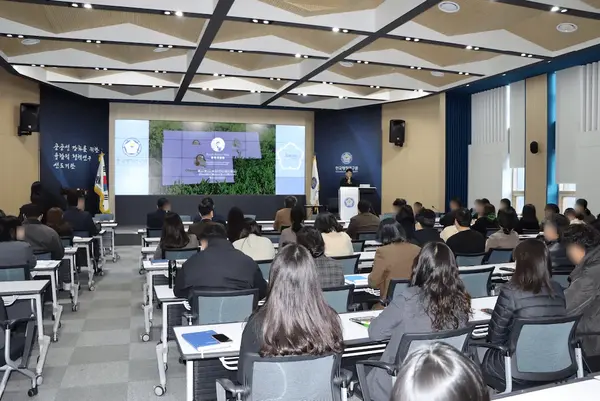
대한민국의 행정정책을 선도하는 국무조정실 한국행정연구원의 초청으로 챗GPT에 대한 강연을 제공하였습니다. 뉴스나 유튜브에서는 볼 수 없는 깊은 내용들을, 인문학 및 사회과학 박사님들께 쉽게 전달해 드리려 최선을 다했습니다.

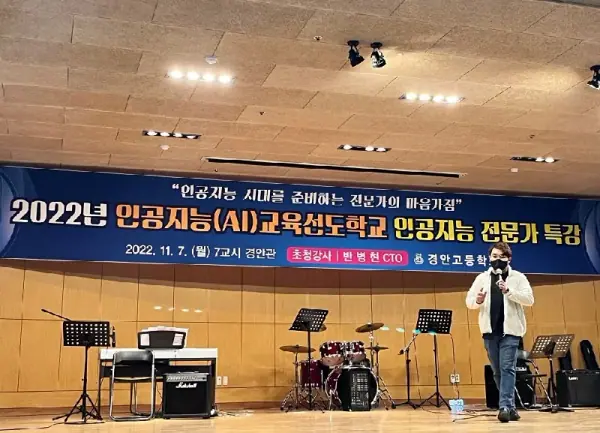
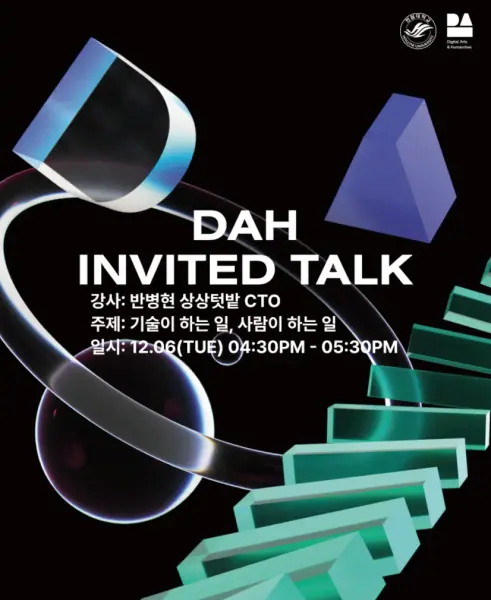
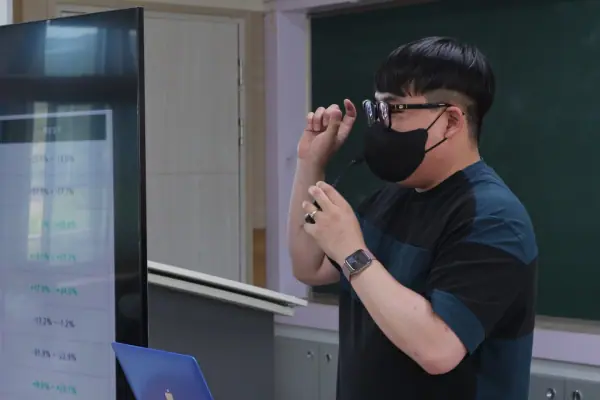
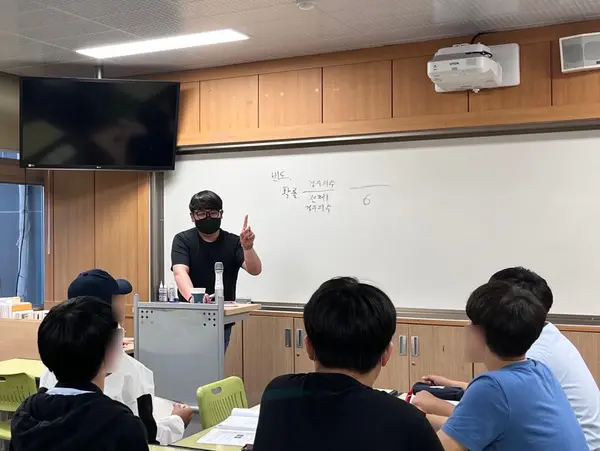
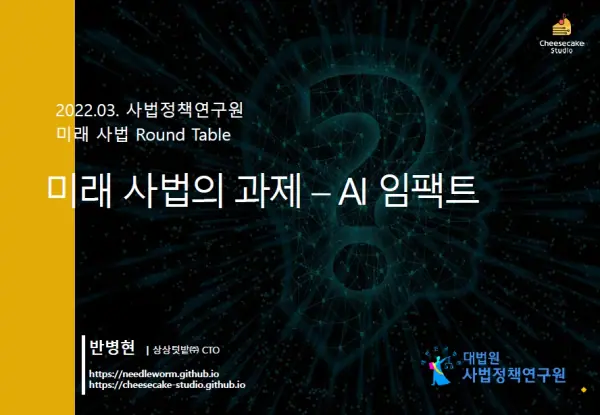
미래 사법 Round Table
AI기술과 관련하여, 미래의 사법부가 추구해야 할 바람직한 모습을 연구하고 설계하기 위한 방향에 대하여 논의.

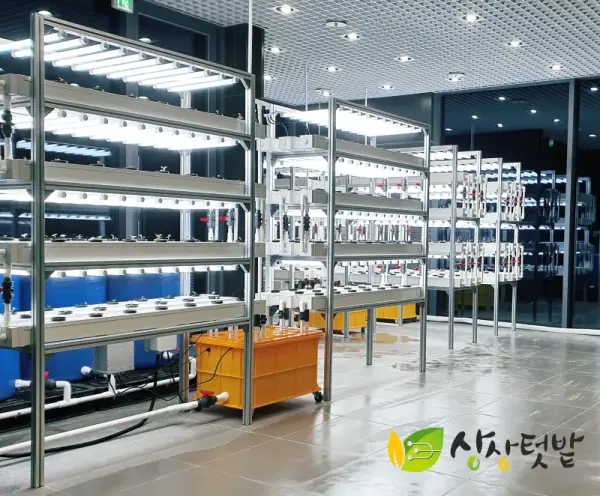
2021년 세종시교육청 영상진로박람회에서 스마트팜과 농업 자동화 기술, 관련 직업과 기회를 소개하는 진로특강을 진행했습니다.

청년창업사관학교 교육 수강하시는 대표님들을 대상으로 3개의 교육을 진행했습니다.
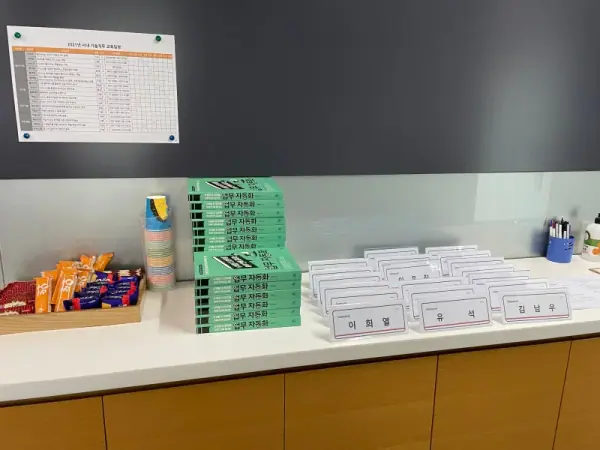
비개발자를 위한 파이썬과 엑셀/한글 RPA 실습 (24차시)
비전공자 사무직 수강생 전원이 자신만의 업무 자동화 소프트웨어를 개발하고, 윈도우용 응용 프로그램으로
빌드하여 배포까지 달성

대구 서구 도시재생지원센터 원고개마을 조성사업, 4차산업혁명과 스마트팜 경영방법
5주 교육과정
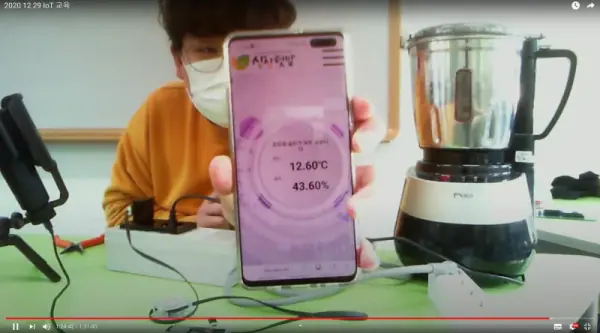


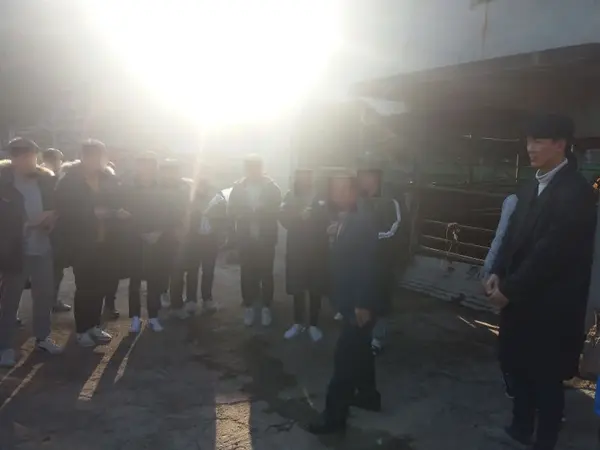
한국생명과학고등학교 선도농가 멘토링 현장교수
4주 교육과정
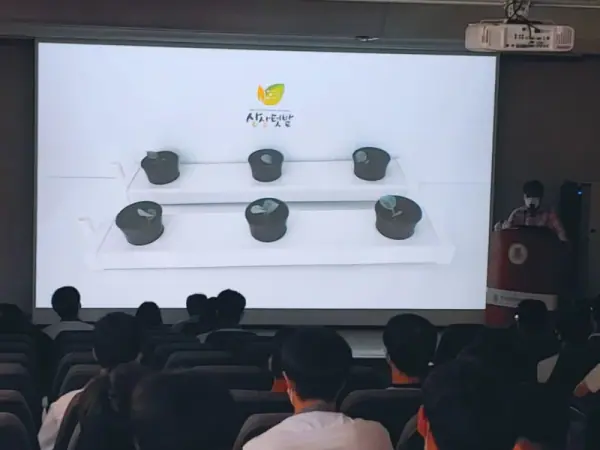
한국생명과학고등학교 고교학점제 교수 (4주)
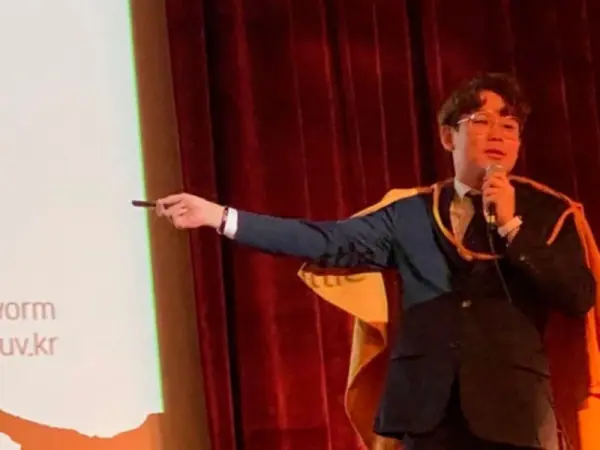
마소콘 2019 기조연설. 코딩하는 공익 썰을 풀고 왔습니다. 저를 보기 위해 강의실이 가득 찬 것은 물론, 복도 밖까지 길게 줄이 이어졌습니다.




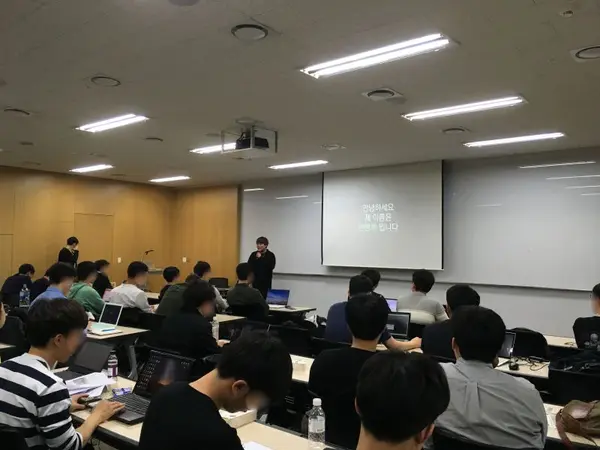

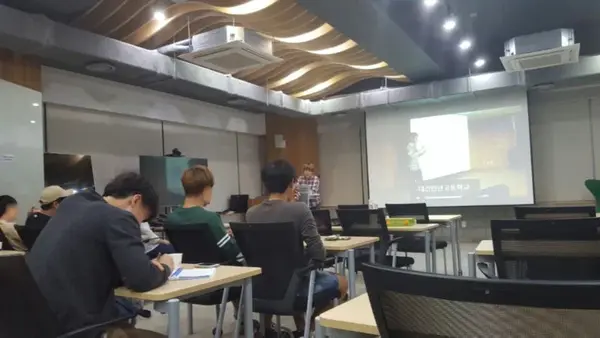
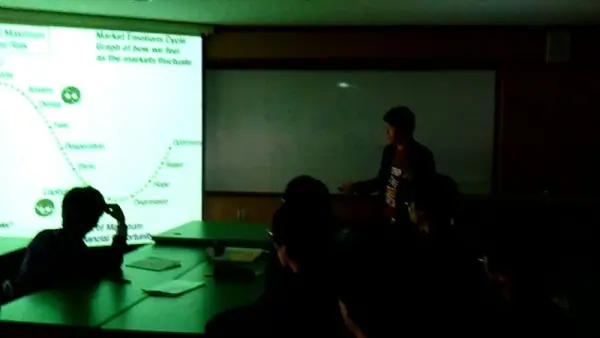

No matching lectures. Try another search or institution category.
All papers, patents and development projects
PAPERS

Byunghyun Ban (2026)
인공지능연구 논문지 7(3), 37–66
AI-based music composition has evolved from explicit rule encoding and local symbolic prediction to end-to-end generation of integrated musical audio. This historical review examines representative systems that either introduced a distinct generative paradigm or achieved practical deployment. It traces the progression from rule-based and stochastic models through recurrent networks and Transformers to waveform, latent-audio, diffusion, flow-matching, hybrid, and multimodal approaches. Early models reproduced local transitions among notes, chords, and rhythms but struggled with long-range form and thematic development. Recurrent and attention-based architectures expanded temporal context, yet largely remained within symbolic prediction. Audio-level models shifted the generative target from musical instructions to sound itself, enabling joint modeling of structure, performance, timbre, texture, and acoustic realization. The review argues that the key historical transition was not simply an increase in model capacity, but a change in representational scope: from decomposing music into human-defined units to learning high-dimensional relationships more holistically. Current systems still face unresolved problems in long-term planning, fine-grained control, editability, and human–AI collaboration. Nevertheless, their development reflects a broader movement from automating compositional procedures toward modeling increasingly integrated stages of musical ideation and sound formation.

Byunghyun Ban (2026)
ResearchGate · Preprint (not peer-reviewed)
Fermentation is a slow chemical-biological process in which substrates, enzymes, yeast biomass, oxygen, pH, temperature, and metabolic products co-evolve. This paper presents an ODE-network-based chemical complex system simulator for multi-environment fermentation. A shared state-space was instantiated for bread dough, rice wine, beer wort, and malt mash/wort, and a one-command Python workflow generated 108 simulated conditions with CSV outputs. The sweep produced interpretable optima and failure modes that aligned semi-quantitatively with literature-reported fermentation ranges, supporting the model as a compact benchmark for fermentation design and future control studies.

Byunghyun Ban (2026)
Preprints.org · Preprint (not peer-reviewed)
Plant factories have evolved from automated cultivation facilities into data-driven crop production systems. Over the last decade, artificial intelligence has been applied to non-destructive crop monitoring, sensor correction, nutrient-solution diagnosis, growth prediction, environmental control, digital twins, and product-level inspection. This review summarizes AI technologies for plant factories, focusing on machine vision, deep learning, nutrient-solution intelligence, reinforcement learning, and digital-twin interfaces. The main argument is that plant-factory AI should not be understood only as image-based phenotyping; practical systems require an integrated intelligence stack connecting visual perception, sensor calibration, nutrient modeling, control, remote operation, and industrial inspection. Remaining challenges include dataset scarcity, model generalization, sensor drift, explainability, energy-aware control, and closed-loop decision-making.

Byunghyun Ban (2026)
Preprints.org · Preprint (not peer-reviewed)
Artificial intelligence (AI) research in logistics has rapidly shifted since 2024 toward operationally specific systems for forecasting, routing, warehouse optimization, supply-chain visibility, port scheduling, and smart-port maintenance. This paper presents an evidence-oriented operational review of studies published since 2024 on AI applications in logistics. Instead of classifying the literature by model type alone, the review organizes studies by logistics decision function and evaluates the evidence profile of each application: whether real operational data were used, whether the study relied on simulation or benchmark instances, whether the data scale was reported, and whether field validation was conducted. The analysis shows that recent AI logistics studies increasingly address concrete operational tasks, including demand forecasting, late-delivery prediction, route deviation prediction, dynamic vehicle routing, warehouse order picking, robotic fulfillment scheduling, vessel arrival prediction, berth allocation, quay crane scheduling, container dwell-time prediction, and predictive maintenance at smart ports. However, the evidence base remains uneven. Several studies use real operational or survey data, while many warehouse and routing studies rely on simulation, generated instances, or benchmark settings. Field validation remains rare. The paper argues that the next stage of logistics AI research should move beyond model accuracy and report operational evidence: data provenance, data scale, logistics KPIs, field validation, integration requirements, and human oversight.

Byunghyun Ban (2026)
ResearchGate · Preprint (not peer-reviewed)
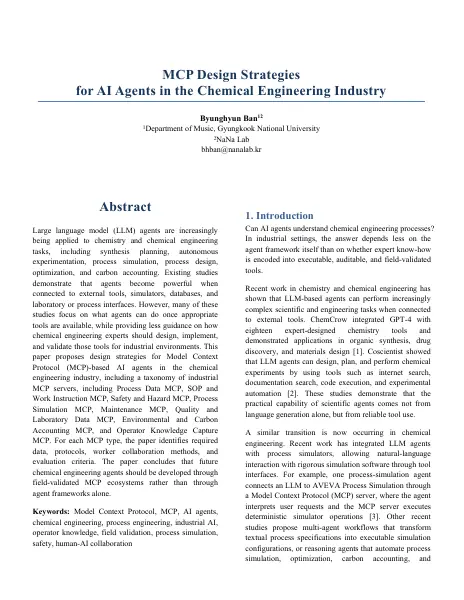
Plant factories are increasingly equipped with sensors, cameras, automatic controllers, digital twins, and artificial intelligence models. However, integrating these components into a practical operation AI agent requires a safe interface between AI reasoning and facility-level control. This paper proposes an MCP design strategy for plant-factory operation AI agents. The focus is not on implementing a new autonomous agent or replacing existing control systems, but on designing the Model Context Protocol layer through which an agent can read plant-factory context, call diagnostic and simulation tools, follow standard operating prompts, and update supervisory operation parameters. In the proposed strategy, MCP resources represent sensor data, crop images, nutrient states, recipes, actuator states, logs, and digital-twin states; MCP tools represent diagnosis, prediction, simulation, and bounded parameter-update functions; and MCP prompts represent user-selectable standard operating procedure templates. The key argument is that MCP should not be used as a deterministic real-time controller for plant factories. Instead, it should serve as a supervisory parameter interface that modifies setpoints, recipes, schedules, thresholds, and policy parameters used by existing 24-hour automatic control systems. This paper presents resource URI schemes, tool risk classification, parameter-update tool schemas, prompt-resource-tool binding, safety tables, and closed-loop operation workflows for MCP-mediated plant-factory operation.
Byunghyun Ban (2026)
ResearchGate · Preprint (not peer-reviewed)
Large language model (LLM) agents are increasingly being applied to chemistry and chemical engineering tasks, including synthesis planning, autonomous experimentation, process simulation, process design, optimization, and carbon accounting. Existing studies demonstrate that agents become powerful when connected to external tools, simulators, databases, and laboratory or process interfaces. However, many of these studies focus on what agents can do once appropriate tools are available, while providing less guidance on how chemical engineering experts should design, implement, and validate those tools for industrial environments. This paper proposes design strategies for Model Context Protocol (MCP)-based AI agents in the chemical engineering industry, including a taxonomy of industrial MCP servers, including Process Data MCP, SOP and Work Instruction MCP, Safety and Hazard MCP, Process Simulation MCP, Maintenance MCP, Quality and Laboratory Data MCP, Environmental and Carbon Accounting MCP, and Operator Knowledge Capture MCP. For each MCP type, the paper identifies required data, protocols, worker collaboration methods, and evaluation criteria. The paper concludes that future chemical engineering agents should be developed through field-validated MCP ecosystems rather than through agent frameworks alone.

Byunghyun Ban (2026)
ResearchGate · Preprint (not peer-reviewed)
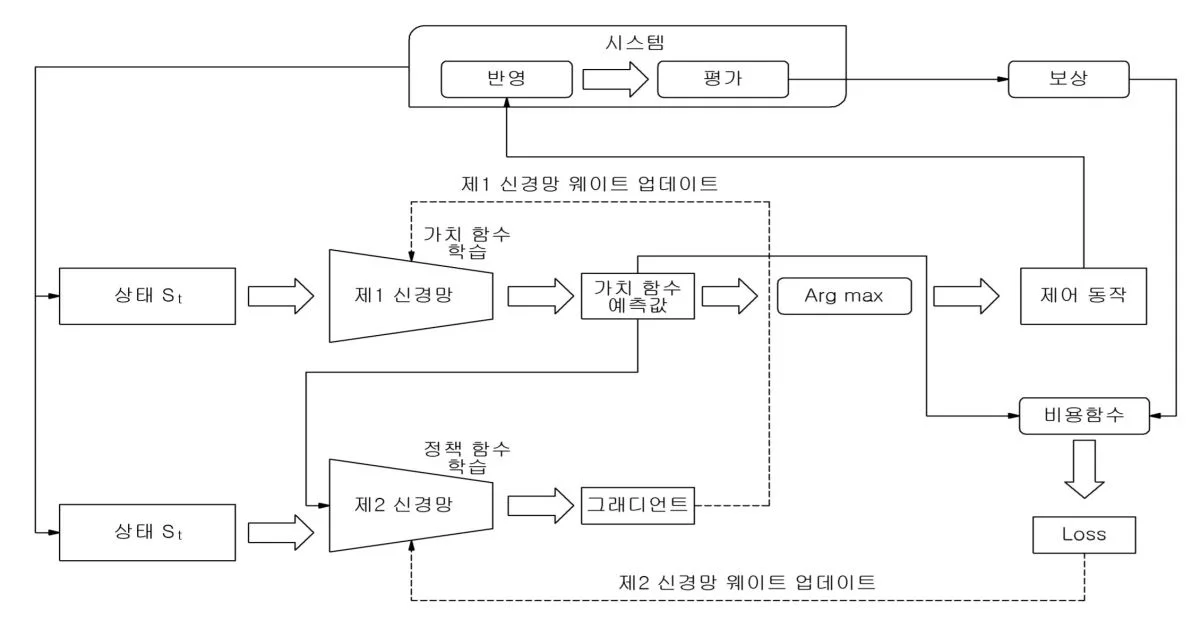
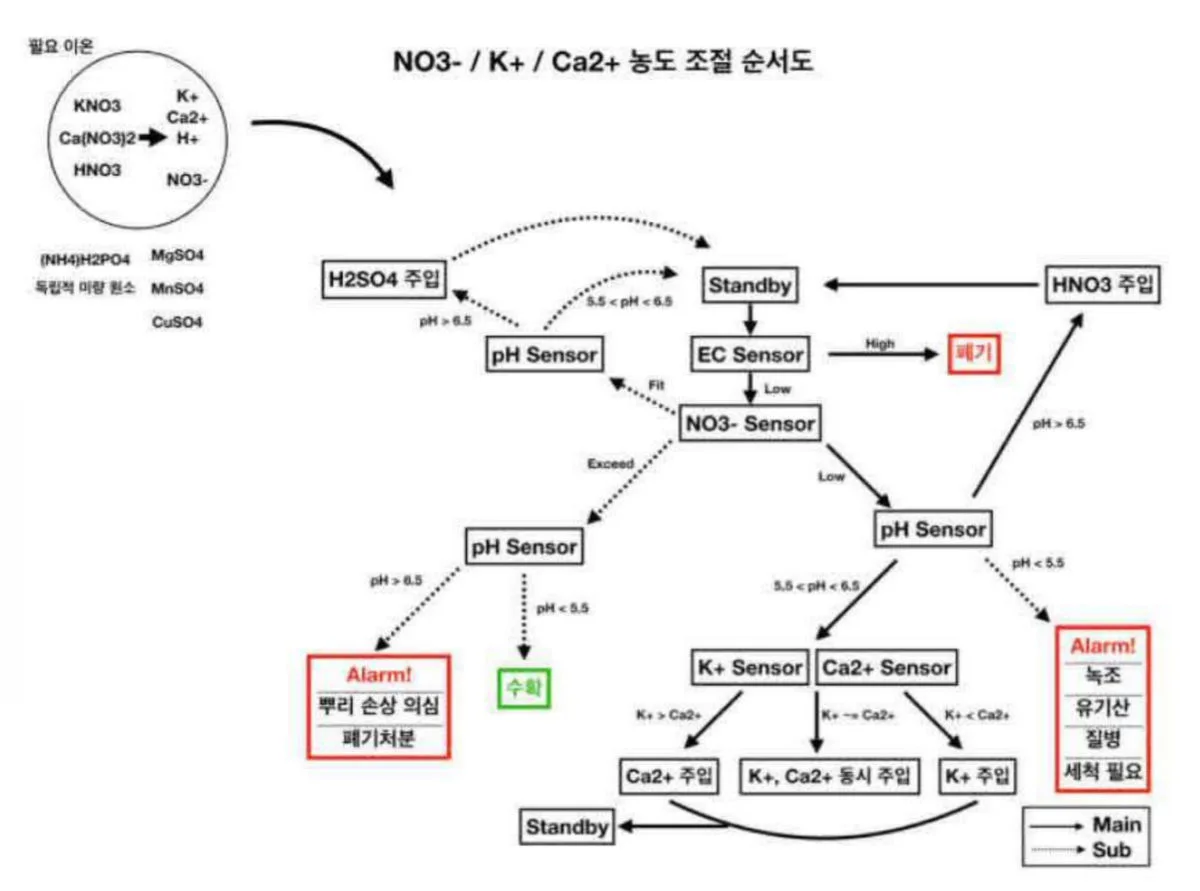
Smart farms and plant factories increasingly use sensors, automatic controllers, digital twins, and artificial intelligence models. However, nutrient management remains difficult because nutrient solutions are nonlinear chemical systems coupled with plant uptake dynamics. This paper proposes a simulation-first strategy for smart-farm nutrient management agents. The proposed strategy is grounded in previous studies on ion-selective electrode correction, ODE network modeling of nutrient solutions, plant-root ion transport, nutrient-plant interaction simulation, automated nutrient-solution management systems, and plant-factory digital twins. The paper further proposes a three-layer digital-twin interpretation consisting of facility-level, crop-level, and nutrient-control digital twins. The nutrient-control digital twin is positioned as a chemical-physiological playground inside a broader plant-factory digital twin. The proposed approach does not require sub-second real-time agent control because nutrient uptake and nutrient-related physiological responses are evaluated over multi-minute, hourly, daily, or crop-stage timescales. Therefore, nutrient management agents should be introduced as supervisory simulators and target-profile optimizers rather than direct dosing robots.

Byunghyun Ban (2026)
ResearchGate · Preprint (not peer-reviewed)
This technical report presents TechNews, a registered automated science news portal that transforms newly released scientific papers into publishable science news articles through an agentic production workflow. (https://technews.ai.kr) Rather than treating automated journalism as a single text-generation task, TechNews decomposes human content-production work into persistent stages: source collection, freshness filtering, article drafting, translation, formatting, thumbnail generation, publication upload, backend monitoring, and operational maintenance. The system is organized around two agentic components. The first is a reporter agent, Persica, which performs source collection, article generation, translation, formatting, thumbnail handling, upload preparation, and operational reporting. The second is a backend operations agent that maintains service awareness across the publishing backend, including API behavior, database state, media storage, deployment assumptions, diagnostic routines, and operational failure modes. Together, these agents form an agent-operated publishing infrastructure rather than a one-shot article generator. TechNews operates as a registered internet newspaper in the Republic of Korea under registration number 경북아 00881.

Byunghyun Ban (2026)
ResearchGate · Preprint (not peer-reviewed)
Authors are often advised to respond to peer-review comments politely and point by point. However, this advice is insufficient when a formal review appears to be LLM-written or hallucinated: fluent, plausible, professionally formatted, but contradicted by the manuscript. This paper proposes a claim-level audit protocol for responding to suspected LLM-written hallucinated peer reviews. The protocol decomposes reviewer comments into atomic claims, classifies each claim as supported, partially supported, contradicted, generic, scope-mismatched, or not assessable, and maps each claim to manuscript evidence before selecting a response strategy. The protocol is illustrated using an anonymized case from an actual submission to a Korea Citation Index (KCI) candidate journal, in which one review contained multiple false missing-content claims. The goal is not to encourage accusations of AI use, but to help authors replace speculation with auditable evidence for revision, rebuttal, and editorial escalation.

Byunghyun Ban (2026)
ResearchGate · Preprint (not peer-reviewed)
Post-publication integrity concerns are often treated as problems of textual similarity, missing citation, or minor correctable error. However, some cases involve deeper forms of scholarly overlap that cannot be remedied through limited post-publication modification. This paper presents a case study of a post-publication complaint involving a 2022 preprint and a subsequent 2023 journal article that was later retracted. The official retraction notice states that an editorial investigation confirmed a high level of overlap between the subsequent article and the prior publication, including similarities in methodology, figures, layout, paper structure, and overall study topic, without appropriate acknowledgement and citation. The notice also states that concerns regarding the origins of the underlying data could not be satisfactorily resolved, leading the Editorial Board to lose confidence in the reliability and originality of the article. Using this case, the paper proposes a multi-layer overlap taxonomy and an editorial remedy framework. The central argument is that post-publication modification may be insufficient when the integrity concern extends beyond wording to methodology, visual materials, manuscript structure, attribution, and data provenance. In such cases, correction or citation addition cannot substitute for a full editorial investigation and, where appropriate, retraction.

Byunghyun Ban (2026)
ResearchGate · Preprint (not peer-reviewed)
Maybe not. Large language models (LLMs) can produce fluent and plausible peer-review reports, but fluency is not scholarly judgment. This paper presents a case study of three formal peer-review reports received during an actual submission to a Korea Citation Index (KCI) candidate journal. One review claimed that key methodological and experimental details were missing, although the manuscript explicitly contained information about validation data, hardware, software frameworks, model configuration, parameter count, algorithmic procedure, and limitations. After the author reported these grounding failures to the editor, the problematic review was not relied upon in the final decision, and the manuscript was subsequently accepted and published. The case is compared with two more grounded human reviews and an exploratory source-grounded LLM-generated review. The source-grounded LLM review was more aligned with the manuscript, but still produced minor factual errors and overstatements. The case suggests that grounding improves LLM-assisted review, but does not eliminate hallucination or accountability gaps.

Byunghyun Ban (2026)
ResearchGate · Preprint (not peer-reviewed)
AI-based music composition has evolved rapidly, with research paradigms shifting from modeling local patterns to capturing global musical coherence. This paper examines how compositional AI has progressed from modeling local patterns to forming global musical ideas. Early machine learning models, based on state transition probabilities, were able to capture only local continuity between notes and chords, and thus failed to produce meaningful phrasing or large-scale musical structure. With the introduction of recurrent architectures, models began to incorporate temporal context, and transformer-based approaches further enabled the generation of musically coherent passages over longer spans. Nevertheless, these models still exhibit limitations in maintaining overall structural completeness and long-term musical direction. More recent approaches move beyond sequential prediction toward the simultaneous generation of musical structure and sonic characteristics. This shift reflects a transition from the accumulation of local decisions to the formation of a more holistic musical representation.

Byunghyun Ban (2026)
ResearchGate · Preprint (not peer-reviewed)
Large language models are now used in many knowledge-intensive applications, but their outputs still need to be grounded in reliable, recent, and domain-specific information. Although many datasets and fine-tuning resources have been introduced for LLM development, many practical applications do not need to modify model weights; they need a convenient way to connect pretrained models to trusted external knowledge. Retrieval-Augmented Generation (RAG) has become a common approach for this purpose, but production RAG requires document ingestion, chunking, embedding, indexing, retrieval, reranking, access control, citation handling, and continuous evaluation. This short paper discusses RAG-as-a-Service (RAGaaS) as an emerging service model that provides retrieval, grounding, curation, and citation as a managed knowledge delivery layer. Unlike vector databases or enterprise search alone, RAGaaS is defined here as a reusable service interface that connects pretrained models to curated and citation-ready knowledge. We distinguish RAGaaS from adjacent concepts, review representative services and downstream implementations, classify likely demand areas, and propose practical criteria for evaluating RAGaaS platforms.

Byunghyun Ban*, Hyoseok Lee (2024)
인공지능연구 논문지 5(2), 57–72
DOI: 10.52618/aied.2024.5.2.6
In the contemporary digital era, protection of personal information has become a paramount issue. The exponential growth of the media industry has heightened concerns regarding the anonymization of individuals captured in video footage. Traditional methods, such as blurring or pixelation, are commonly employed, while recent advancements have introduced generative adversarial networks (GANs) to redraw faces in videos. In this study, we propose a novel approach that employs a significantly smaller model to achieve real-time full-body anonymization of individuals in videos. Unlike conventional techniques that often fail to effectively remove personal identification information—such as skin color, clothing, accessories, and body shape—our method successfully eradicates all such details. Furthermore, by leveraging pose estimation algorithms, our approach accurately represents information regarding individuals' positions, movements, and postures. This algorithm can be seamlessly integrated into CCTV or IP camera systems installed in various industrial settings, functioning in real-time and thus facilitating the widespread adoption of full-body anonymization technology.
Byunghyun Ban, Donghun Ryu, Su-won Hwang (2023)
ICTC 2023
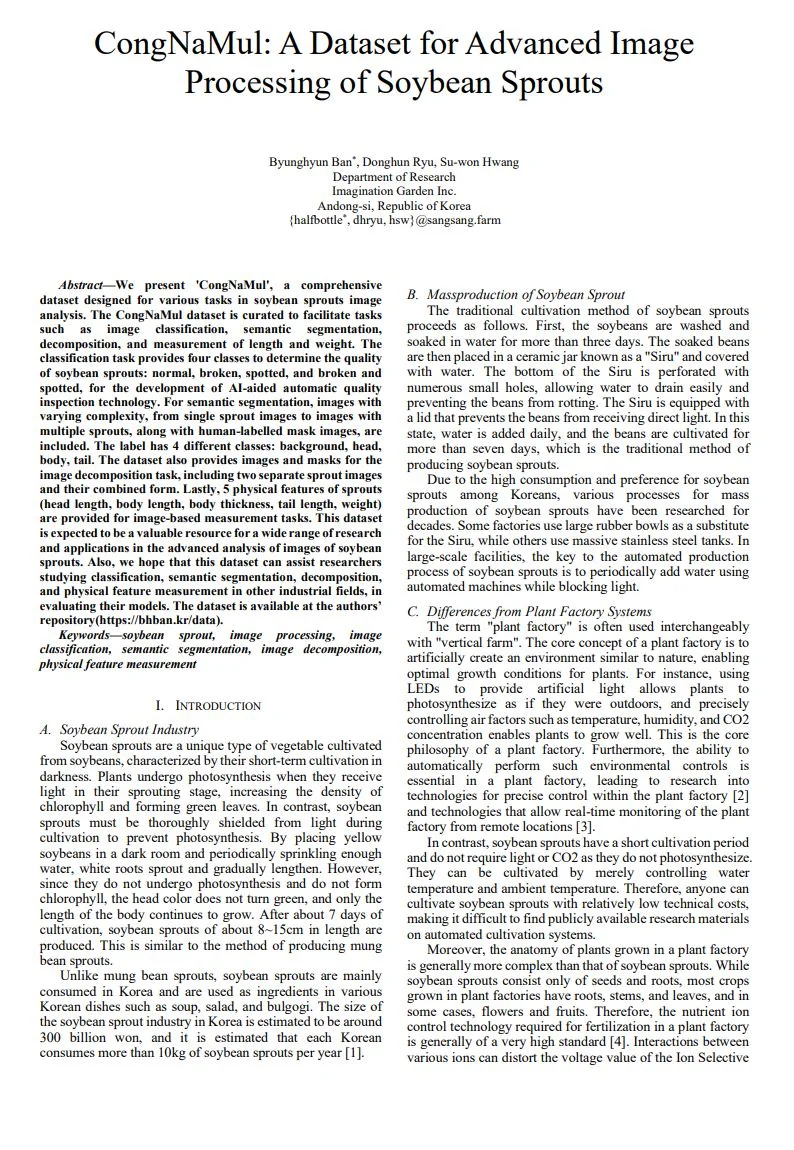
We present 'CongNaMul', a comprehensive dataset designed for various tasks in soybean sprouts image analysis. The CongNaMul dataset is curated to facilitate tasks such as image classification, semantic segmentation, decomposition, and measurement of length and weight. The classification task provides four classes to determine the quality of soybean sprouts: normal, broken, spotted, and broken and spotted, for the development of AI-aided automatic quality inspection technology. For semantic segmentation, images with varying complexity, from single sprout images to images with multiple sprouts, along with human-labelled mask images, are included. The label has 4 different classes: background, head, body, tail. The dataset also provides images and masks for the image decomposition task, including two separate sprout images and their combined form. Lastly, 5 physical features of sprouts (head length, body length, body thickness, tail length, weight) are provided for image-based measurement tasks. This dataset is expected to be a valuable resource for a wide range of research and applications in the advanced analysis of images of soybean sprouts. Also, we hope that this dataset can assist researchers studying classification, semantic segmentation, decomposition, and physical feature measurement in other industrial fields, in evaluating their models. The dataset is available at the authors’ repository (https://bhban.kr/data).
Byunghyun Ban, Jejong Lee, Hyeonmok Hwang (2023)
ICTC 2023 (IEEE)
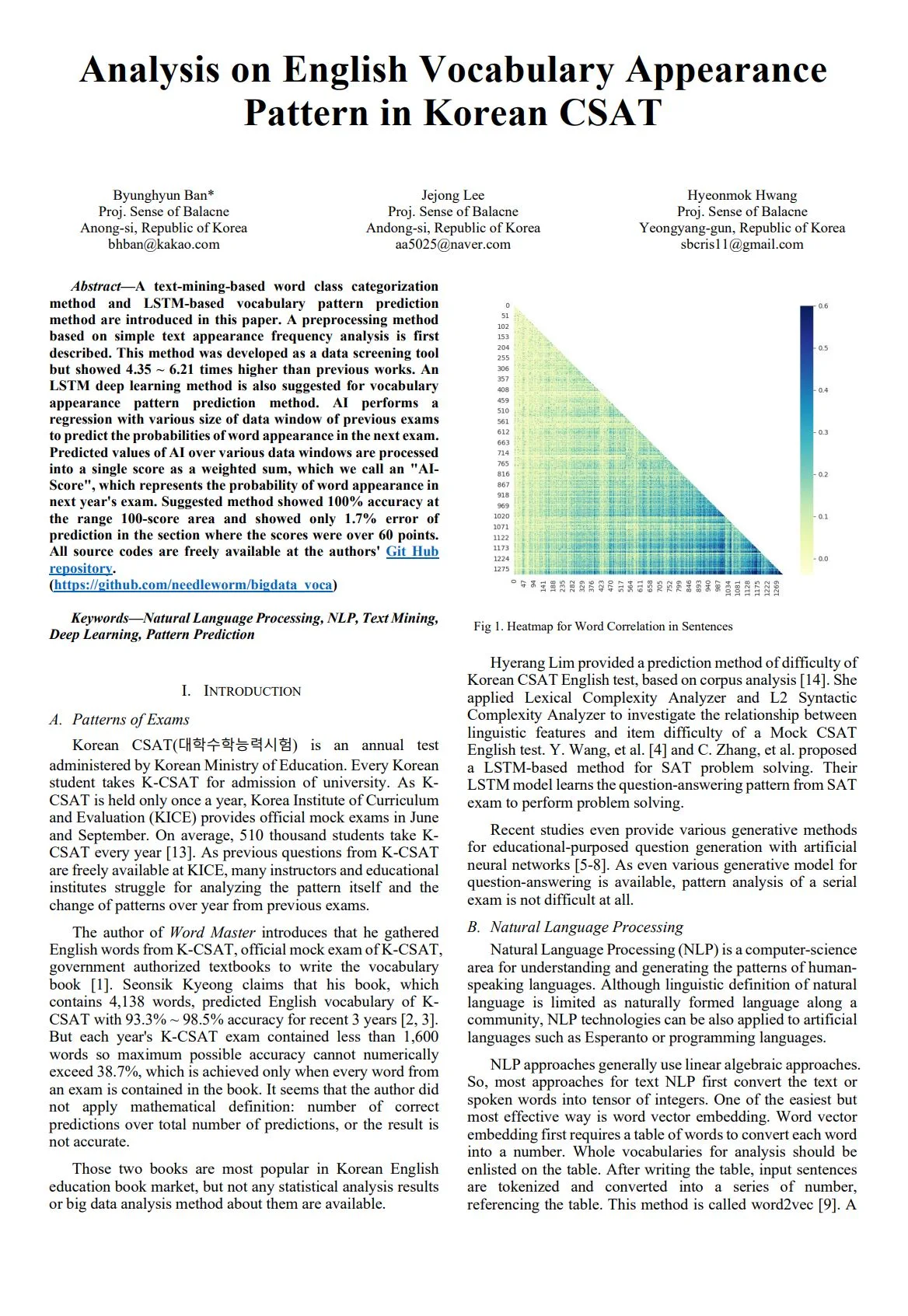
A text-mining-based word class categorization method and LSTM-based vocabulary pattern prediction method are introduced in this paper. A preprocessing method based on simple text appearance frequency analysis is first described. This method was developed as a data screening tool but showed 4.35 times higher prediction accuracy compared to Word Master book. An LSTM deep learning method is also suggested for vocabulary appearance pattern prediction method. AI performs a regression with various size of data window of previous exams to predict the probabilities of word appearance in the next exam. Predicted values of AI over various data windows are processed into a single score as a weighted sum, which we call an "AI-Score", which represents the probability of word appearance in next year's exam. Suggested method showed 100% accuracy at the range 100-score area and showed only 1.7% error of prediction in the section where the scores were over 60 points. All source codes are freely available at the authors' Git Hub repository. (https://github.com/needleworm/bigdata_voca)
반병현, 이제종, 황현목 (2022)
인공지능연구
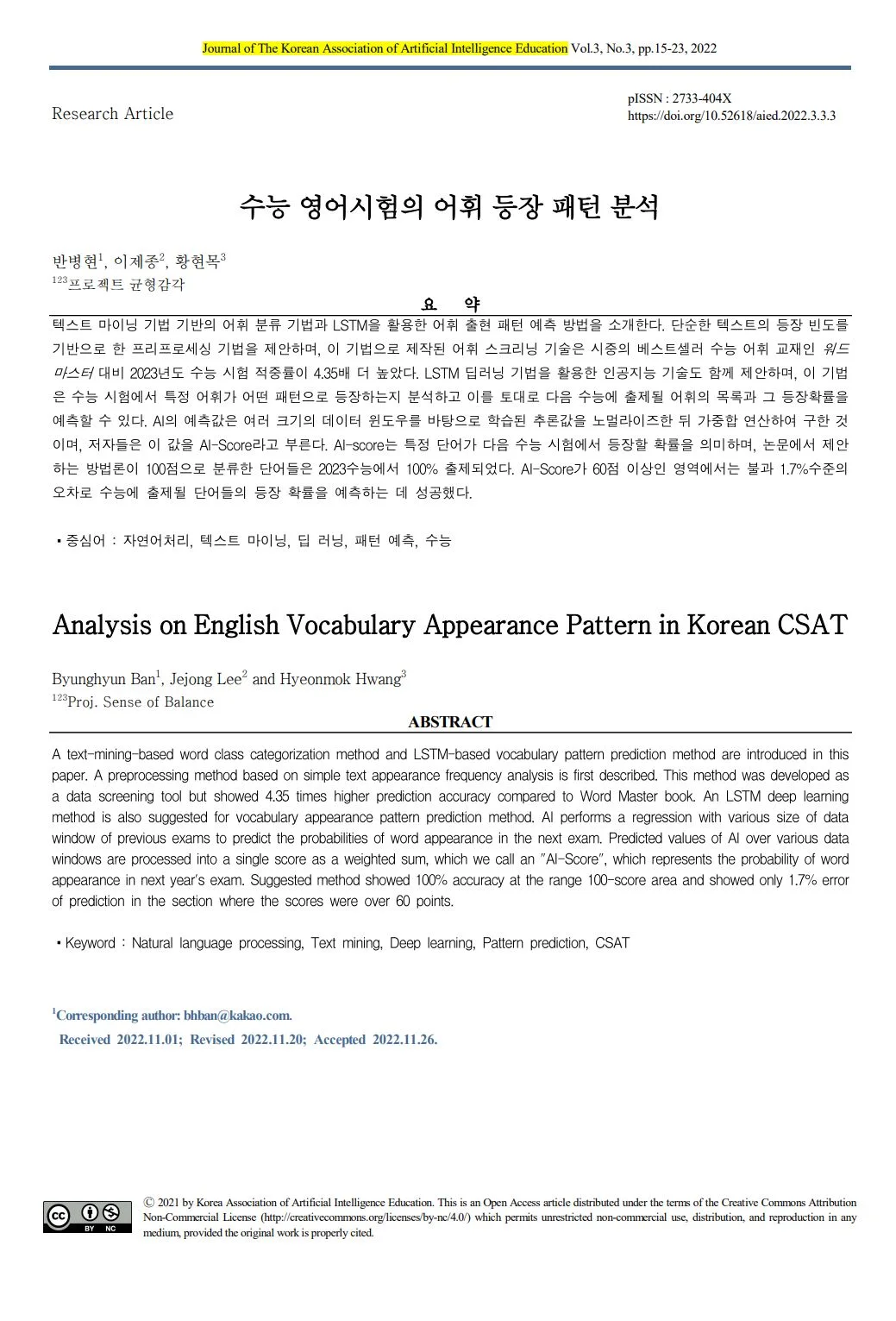
A text-mining-based word class categorization method and LSTM-based vocabulary pattern prediction method are introduced in this paper. A preprocessing method based on simple text appearance frequency analysis is first described. This method was developed as a data screening tool but showed 4.35 times higher prediction accuracy compared to Word Master book. An LSTM deep learning method is also suggested for vocabulary appearance pattern prediction method. AI performs a regression with various size of data window of previous exams to predict the probabilities of word appearance in the next exam. Predicted values of AI over various data windows are processed into a single score as a weighted sum, which we call an "AI-Score", which represents the probability of word appearance in next year's exam. Suggested method showed 100% accuracy at the range 100-score area and showed only 1.7% error of prediction in the section where the scores were over 60 points.
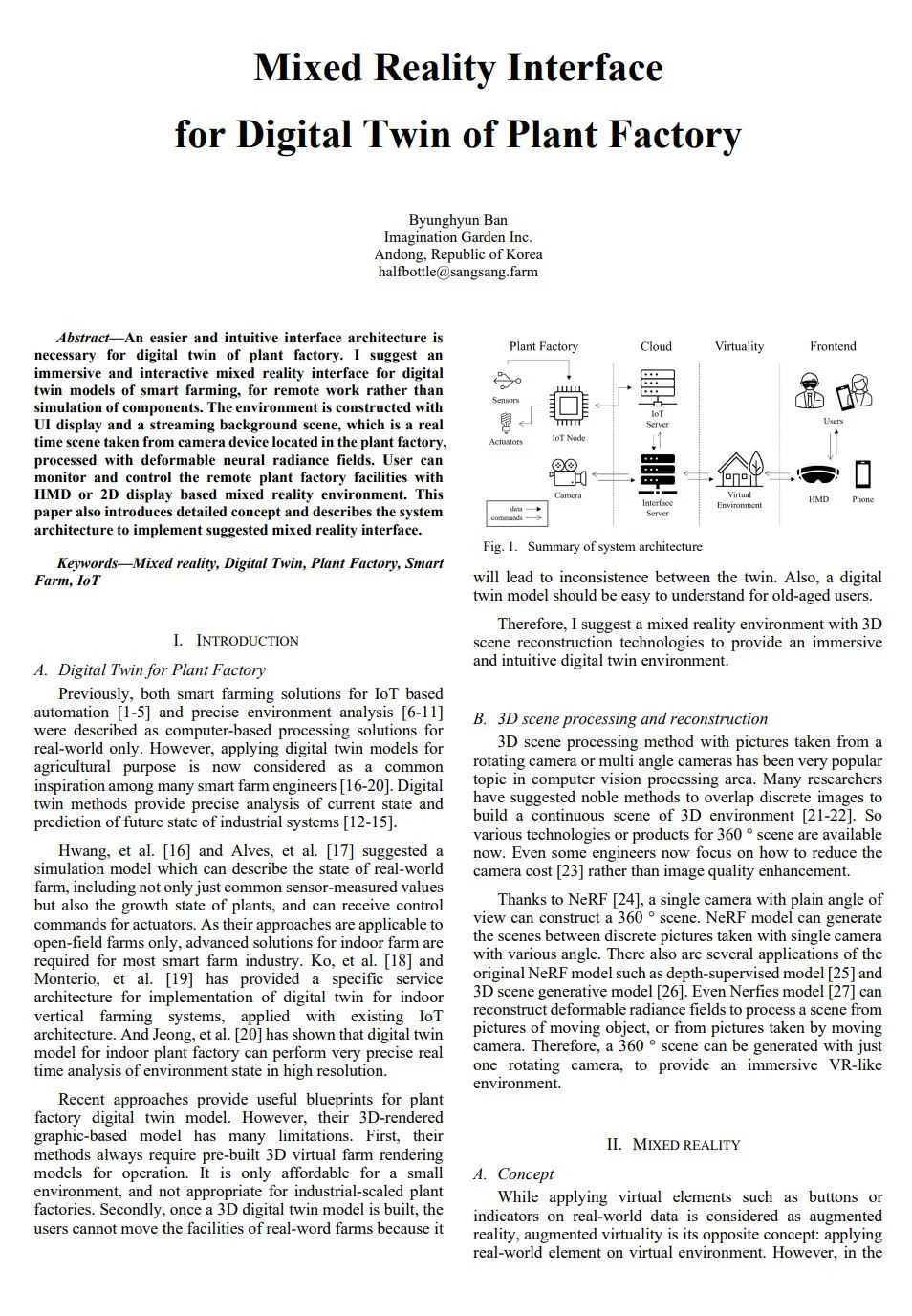
Byunghyun Ban(2022)
Preprint (arXiv)
An easier and intuitive interface architecture is necessary for digital twin of plant factory. I suggest an immersive and interactive mixed reality interface for digital twin models of smart farming, for remote work rather than simulation of components. The environment is constructed with UI display and a streaming background scene, which is a real time scene taken from camera device located in the plant factory, processed with deformable neural radiance fields. User can monitor and control the remote plant factory facilities with HMD or 2D display based mixed reality environment. This paper also introduces detailed concept and describes the system architecture to implement suggested mixed reality interface.
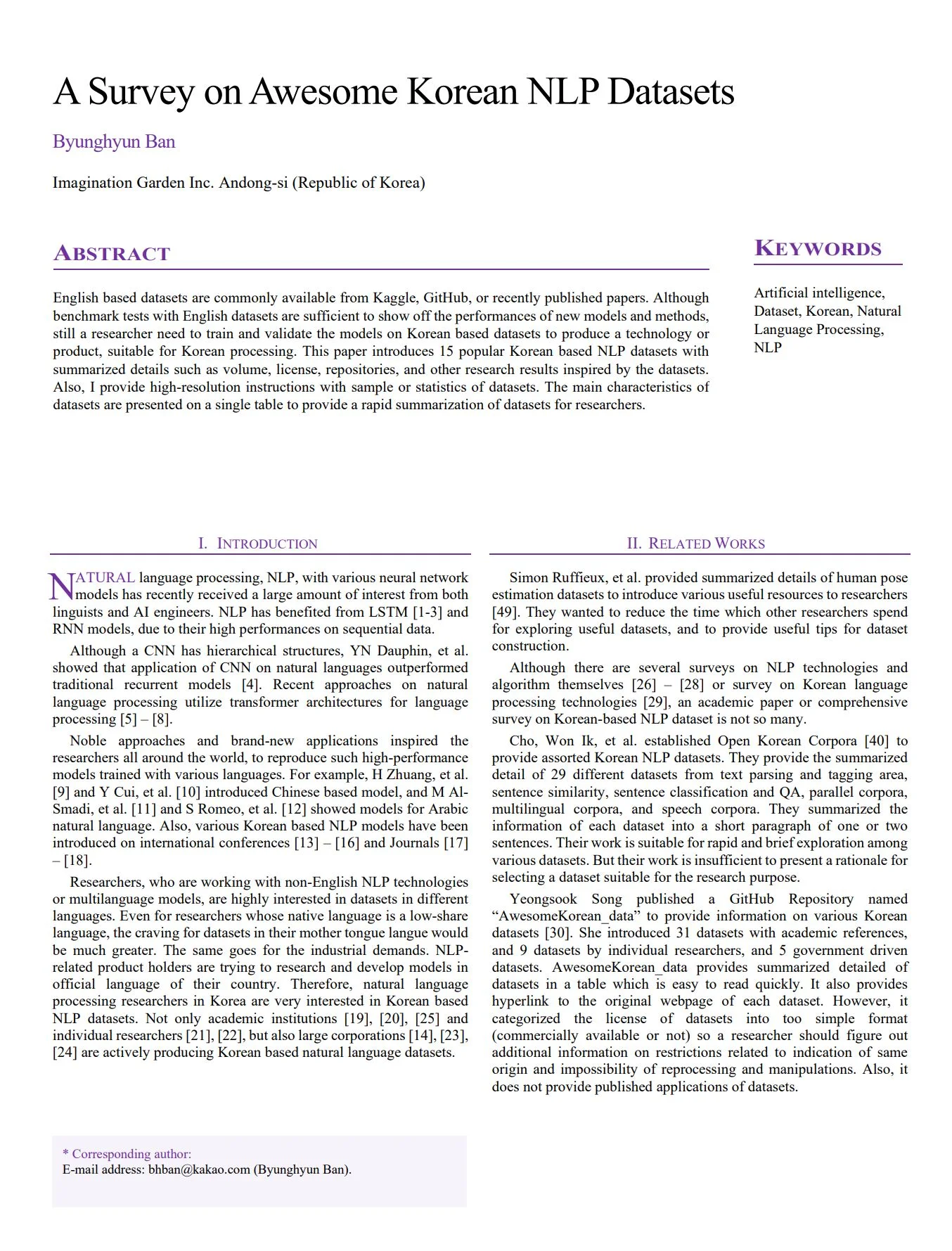
Byunghyun Ban(2022)
ICTC
English based datasets are commonly available from Kaggle, GitHub, or recently published papers. Although benchmark tests with English datasets are sufficient to show off the performances of new models and methods, still a researcher need to train and validate the models on Korean based datasets to produce a technology or product, suitable for Korean processing. This paper introduces 15 popular Korean based NLP datasets with summarized details such as volume, license, repositories, and other research results inspired by the datasets. Also, I provide high-resolution instructions with sample or statistics of datasets. The main characteristics of datasets are presented on a single table to provide a rapid summarization of datasets for researchers.
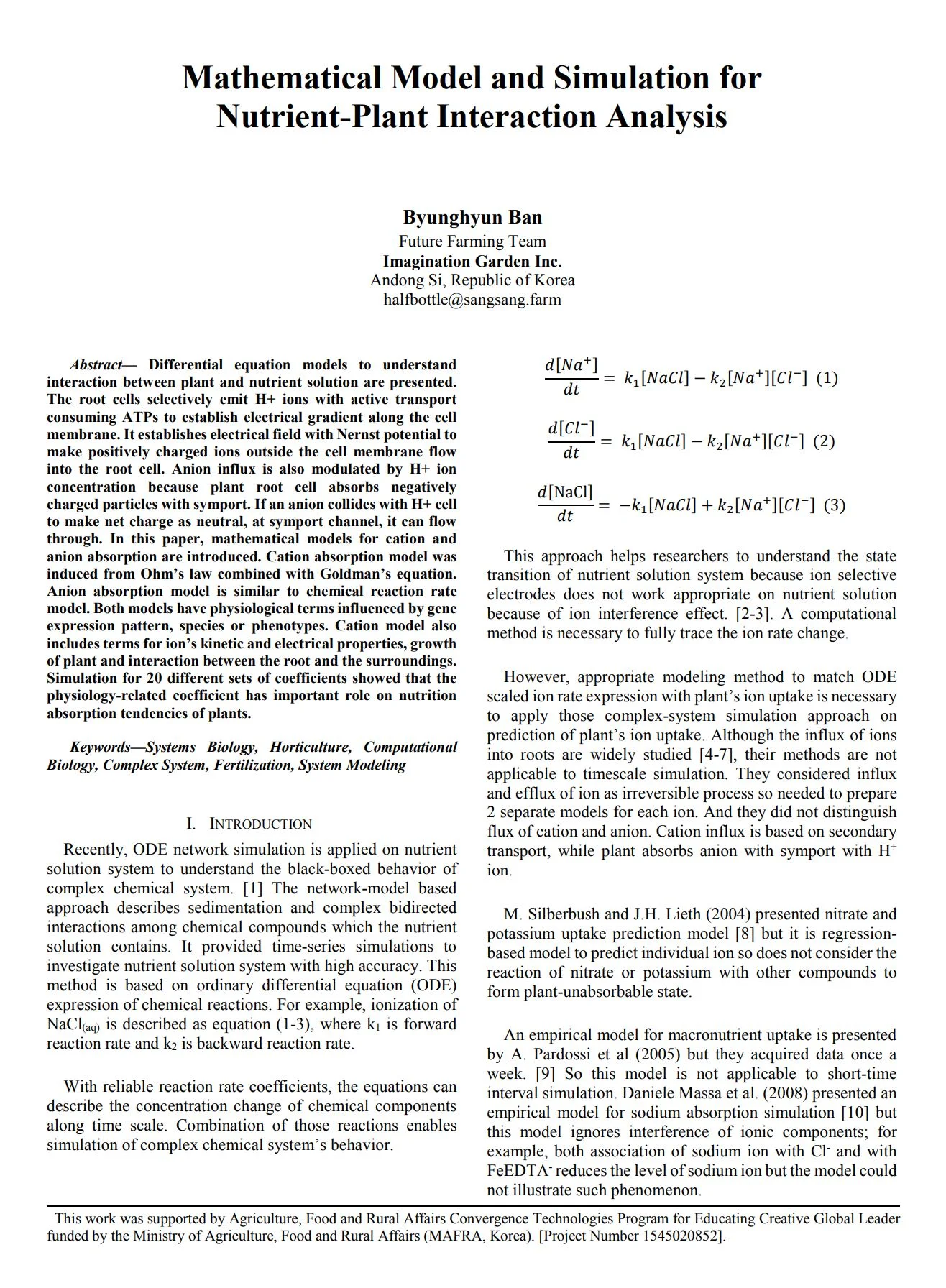
Byunghyun Ban (2020)
ICTC
Differential equation models to understand interaction between plant and nutrient solution are presented. The root cells selectively emit H+ ions with active transport consuming ATPs to establish electrical gradient along the cell membrane. It establishes electrical field with Nernst potential to make positively charged ions outside the cell membrane flow into the root cell. Anion influx is also modulated by H+ ion concentration because plant root cell absorbs negatively charged particles with symport. If an anion collides with H+ cell to make net charge as neutral, at symport channel, it can flow through. In this paper, mathematical models for cation and anion absorption are introduced. Cation absorption model was induced from Ohm’s law combined with Goldman’s equation. Anion absorption model is similar to chemical reaction rate model. Both models have physiological terms influenced by gene expression pattern, species or phenotypes. Cation model also includes terms for ion’s kinetic and electrical properties, growth of plant and interaction between the root and the surroundings. Simulation for 20 different sets of coefficients showed that the physiology-related coefficient has important role on nutrition absorption tendencies of plants.
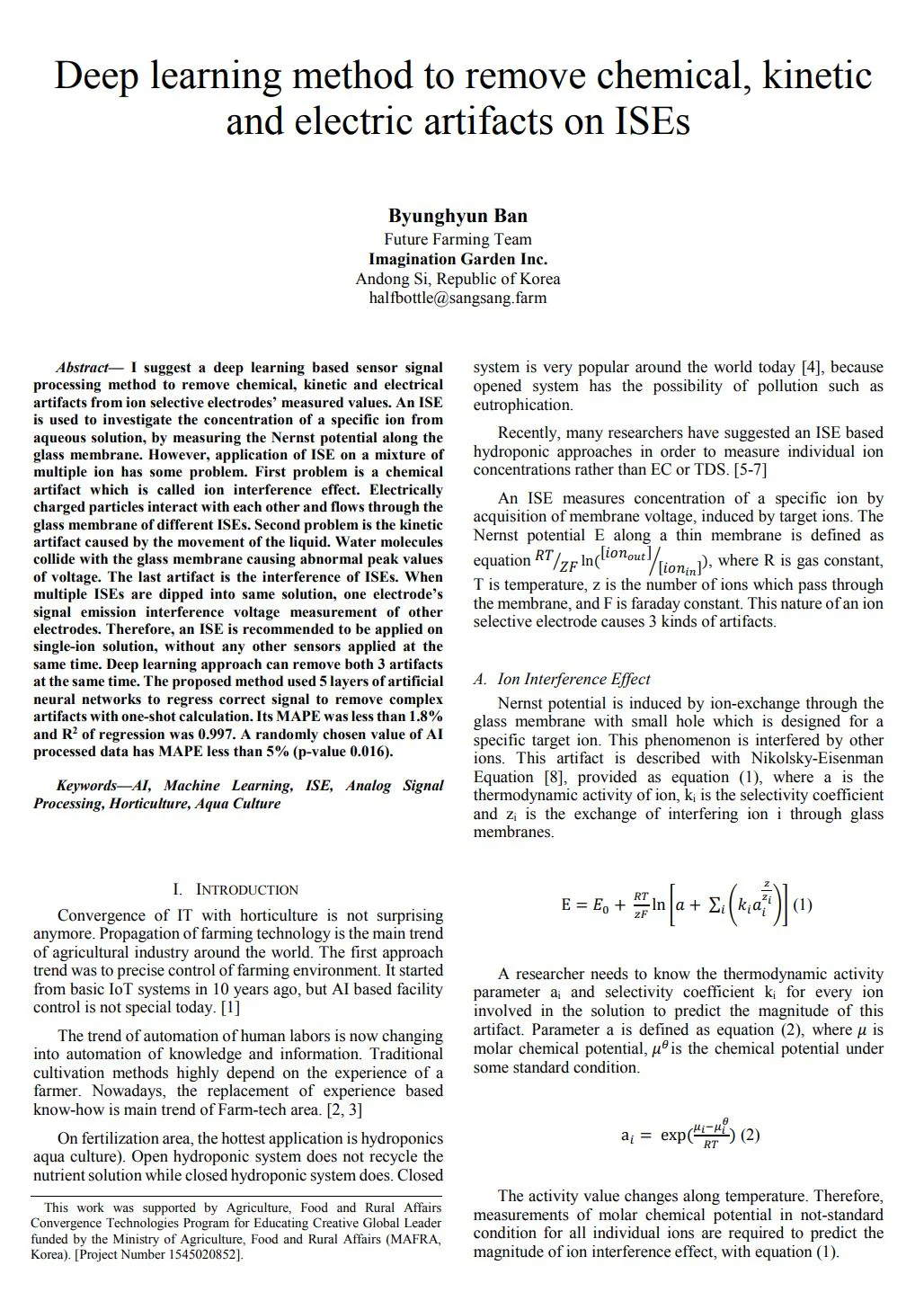
Byunghyun Ban (2020)
ICTC
I suggest a deep learning based sensor signal processing method to remove chemical, kinetic and electrical artifacts from ion selective electrodes’ measured values. An ISE is used to investigate the concentration of a specific ion from aqueous solution, by measuring the Nernst potential along the glass membrane. However, application of ISE on a mixture of multiple ion has some problem. First problem is a chemical artifact which is called ion interference effect. Electrically charged particles interact with each other and flows through the glass membrane of different ISEs. Second problem is the kinetic artifact caused by the movement of the liquid. Water molecules collide with the glass membrane causing abnormal peak values of voltage. The last artifact is the interference of ISEs. When multiple ISEs are dipped into same solution, one electrode’s signal emission interference voltage measurement of other electrodes. Therefore, an ISE is recommended to be applied on single-ion solution, without any other sensors applied at the same time. Deep learning approach can remove both 3 artifacts at the same time. The proposed method used 5 layers of artificial neural networks to regress correct signal to remove complex artifacts with one-shot calculation. Its MAPE was less than 1.8% and R2 of regression was 0.997. A randomly chosen value of AI processed data has MAPE less than 5% (p-value 0.016).
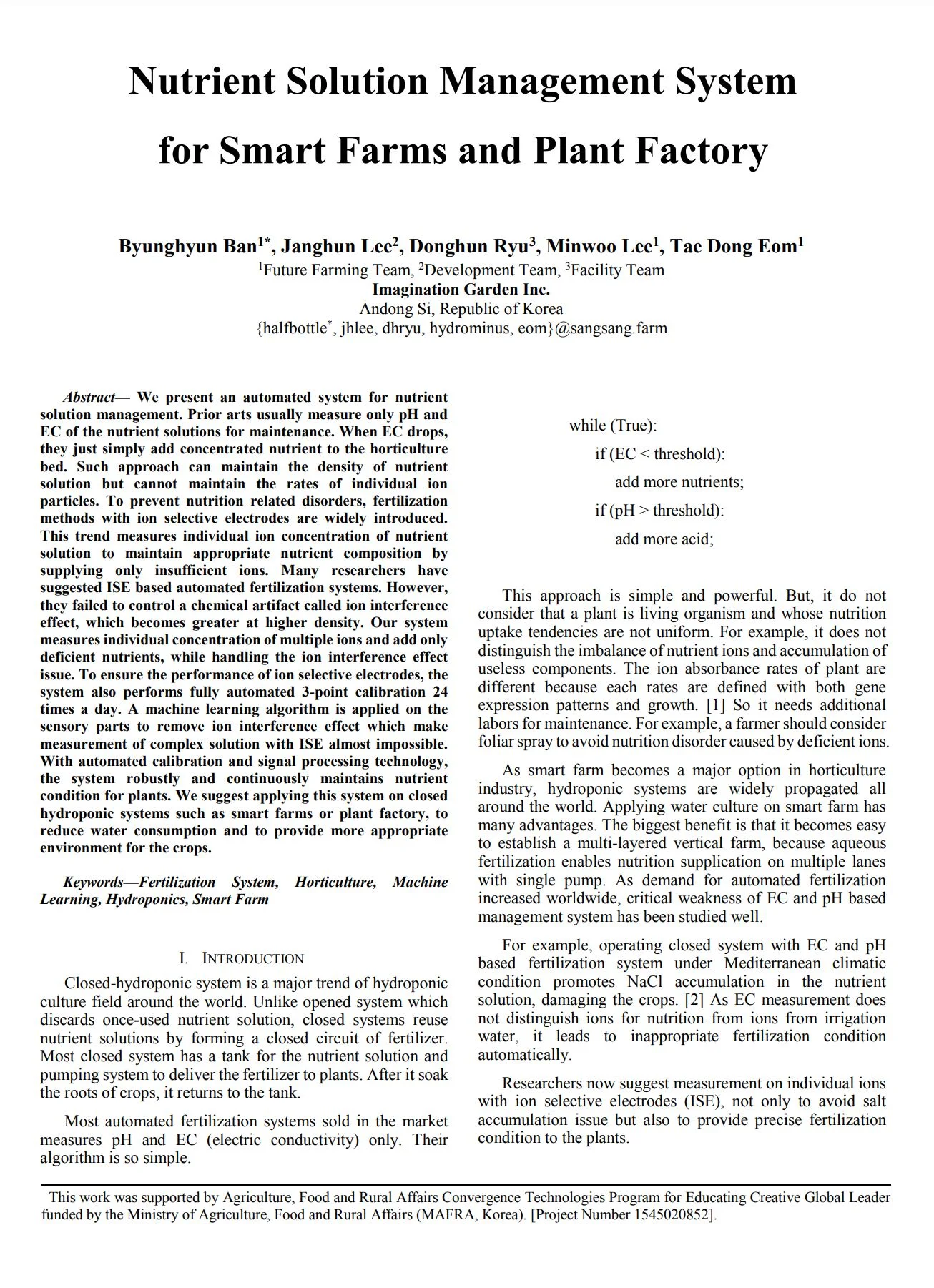
Byunghyun Ban*, Janghun Lee, Donghun Ryu, Minwoo Lee, Tae Dong Eom
(2020)
ICTC
We present an automated system for nutrient solution management. Prior arts usually measure only pH and EC of the nutrient solutions for maintenance. When EC drops, they just simply add concentrated nutrient to the horticulture bed. Such approach can maintain the density of nutrient solution but cannot maintain the rates of individual ion particles. To prevent nutrition related disorders, fertilization methods with ion selective electrodes are widely introduced. This trend measures individual ion concentration of nutrient solution to maintain appropriate nutrient composition by supplying only insufficient ions. Many researchers have suggested ISE based automated fertilization systems. However, they failed to control a chemical artifact called ion interference effect, which becomes greater at higher density. Our system measures individual concentration of multiple ions and add only deficient nutrients, while handling the ion interference effect issue. To ensure the performance of ion selective electrodes, the system also performs fully automated 3-point calibration 24 times a day. A machine learning algorithm is applied on the sensory parts to remove ion interference effect which make measurement of complex solution with ISE almost impossible. With automated calibration and signal processing technology, the system robustly and continuously maintains nutrient condition for plants. We suggest applying this system on closed hydroponic systems such as smart farms or plant factory, to reduce water consumption and to provide more appropriate environment for the crops.
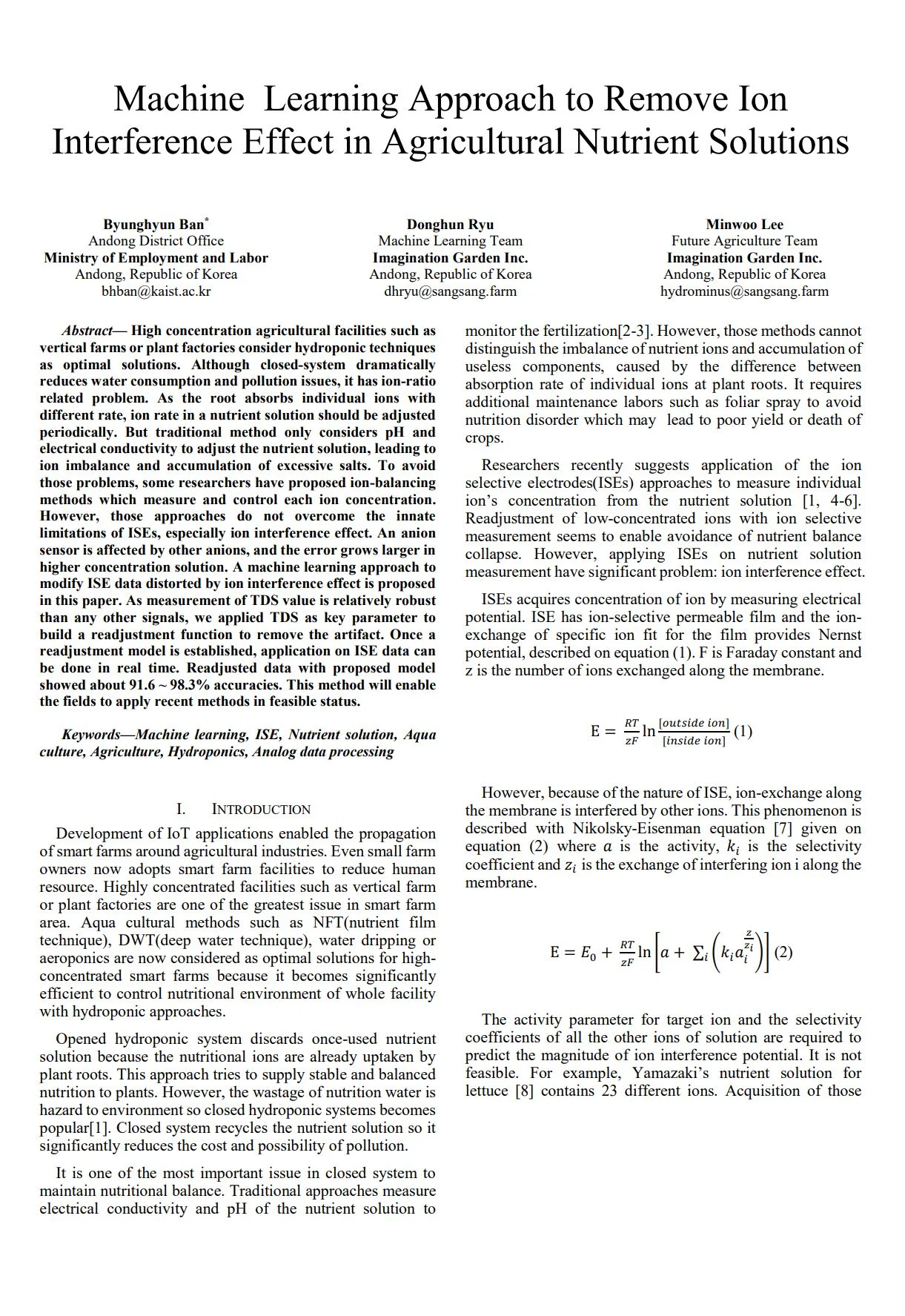
Byunghyun Ban*, Donghun Ryu, Minwoo Lee (2019)
ICTC
High concentration agricultural facilities such as vertical farms or plant factories consider hydroponic techniques as optimal solutions. Although closed-system dramatically reduces water consumption and pollution issues, it has ion-ratio related problem. As the root absorbs individual ions with different rate, ion rate in a nutrient solution should be adjusted periodically. But traditional method only considers pH and electrical conductivity to adjust the nutrient solution, leading to ion imbalance and accumulation of excessive salts. To avoid those problems, some researchers have proposed ion-balancing methods which measure and control each ion concentration. However, those approaches do not overcome the innate limitations of ISEs, especially ion interference effect. An anion sensor is affected by other anions, and the error grows larger in higher concentration solution. A machine learning approach to modify ISE data distorted by ion interference effect is proposed in this paper. As measurement of TDS value is relatively robust than any other signals, we applied TDS as key parameter to build a readjustment function to remove the artifact. Once a readjustment model is established, application on ISE data can be done in real time. Readjusted data with proposed model showed about 91.6 ~ 98.3% accuracies. This method will enable the fields to apply recent methods in feasible status.
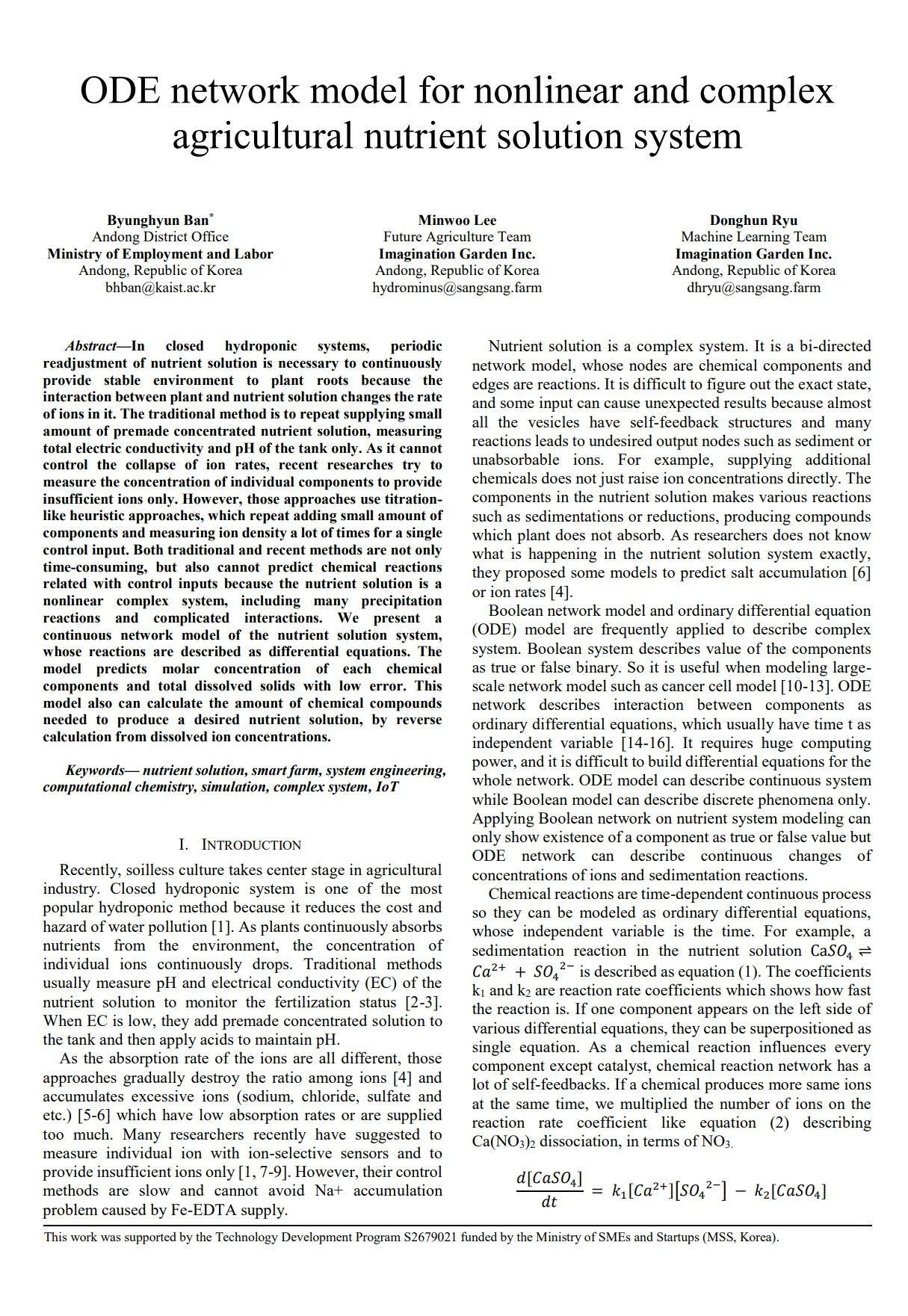
Byunghyun Ban*, Minwoo Lee, Donghun Ryu (2019)
ICTC
In closed hydroponic systems, periodic readjustment of nutrient solution is necessary to continuously provide stable environment to plant roots because the interaction between plant and nutrient solution changes the rate of ions in it. The traditional method is to repeat supplying small amount of premade concentrated nutrient solution, measuring total electric conductivity and pH of the tank only. As it cannot control the collapse of ion rates, recent researches try to measure the concentration of individual components to provide insufficient ions only. However, those approaches use titration-like heuristic approaches, which repeat adding small amount of components and measuring ion density a lot of times for a single control input. Both traditional and recent methods are not only time-consuming, but also cannot predict chemical reactions related with control inputs because the nutrient solution is a nonlinear complex system, including many precipitation reactions and complicated interactions. We present a continuous network model of the nutrient solution system, whose reactions are described as differential equations. The model predicts molar concentration of each chemical components and total dissolved solids with low error. This model also can calculate the amount of chemical compounds needed to produce a desired nutrient solution, by reverse calculation from dissolved ion concentrations.
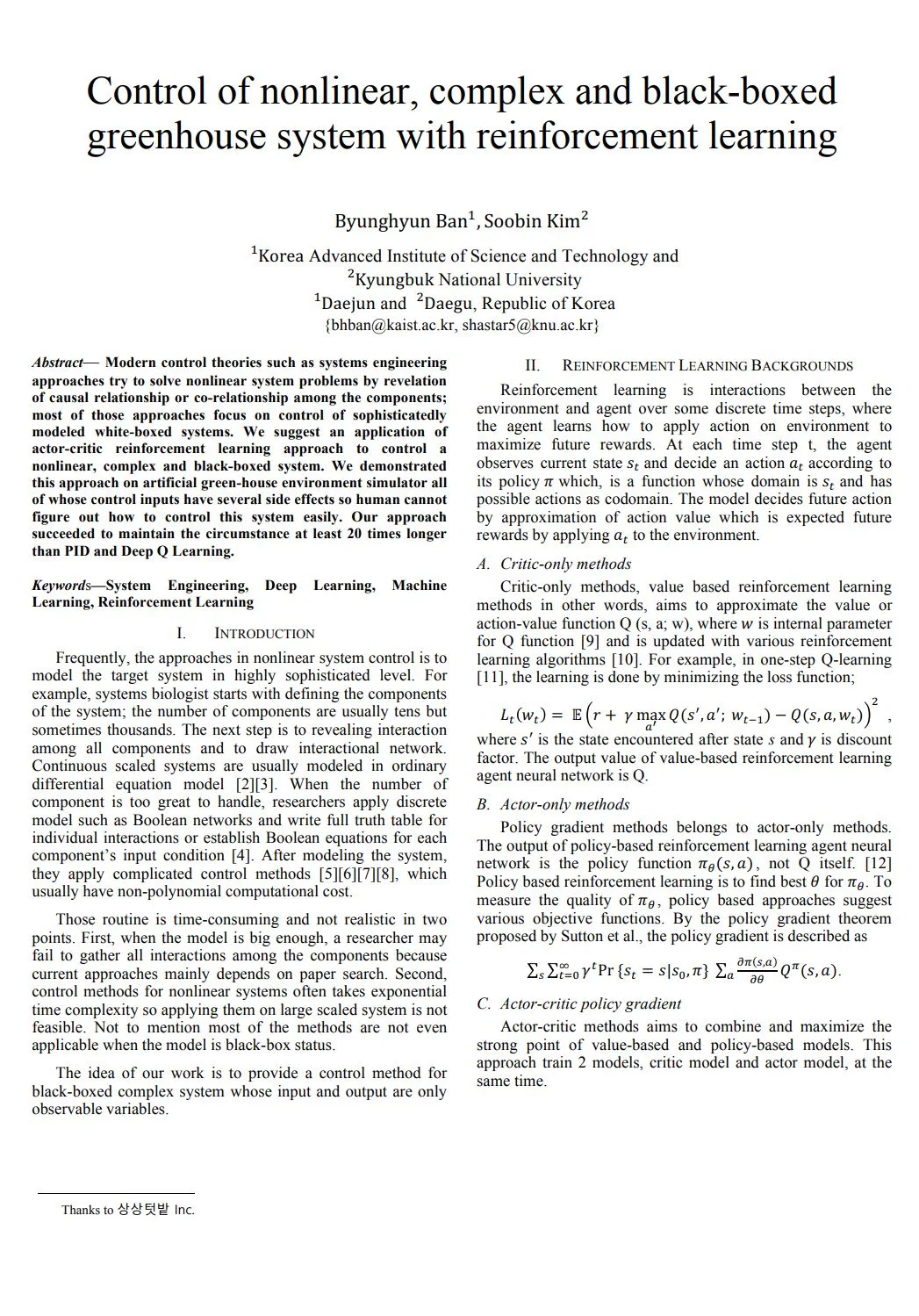
Byunghyun Ban*, Soobin Kim (2017)
ICTC
Modern control theories such as systems engineering approaches try to solve nonlinear system problems by revelation of causal relationship or co-relationship among the components; most of those approaches focus on control of sophisticatedly modeled white-boxed systems. We suggest an application of actor-critic reinforcement learning approach to control a nonlinear, complex and black-boxed system. We demonstrated this approach on artificial green-house environment simulator all of whose control inputs have several side effects so human cannot figure out how to control this system easily. Our approach succeeded to maintain the circumstance at least 20 times longer than PID and Deep Q Learning.
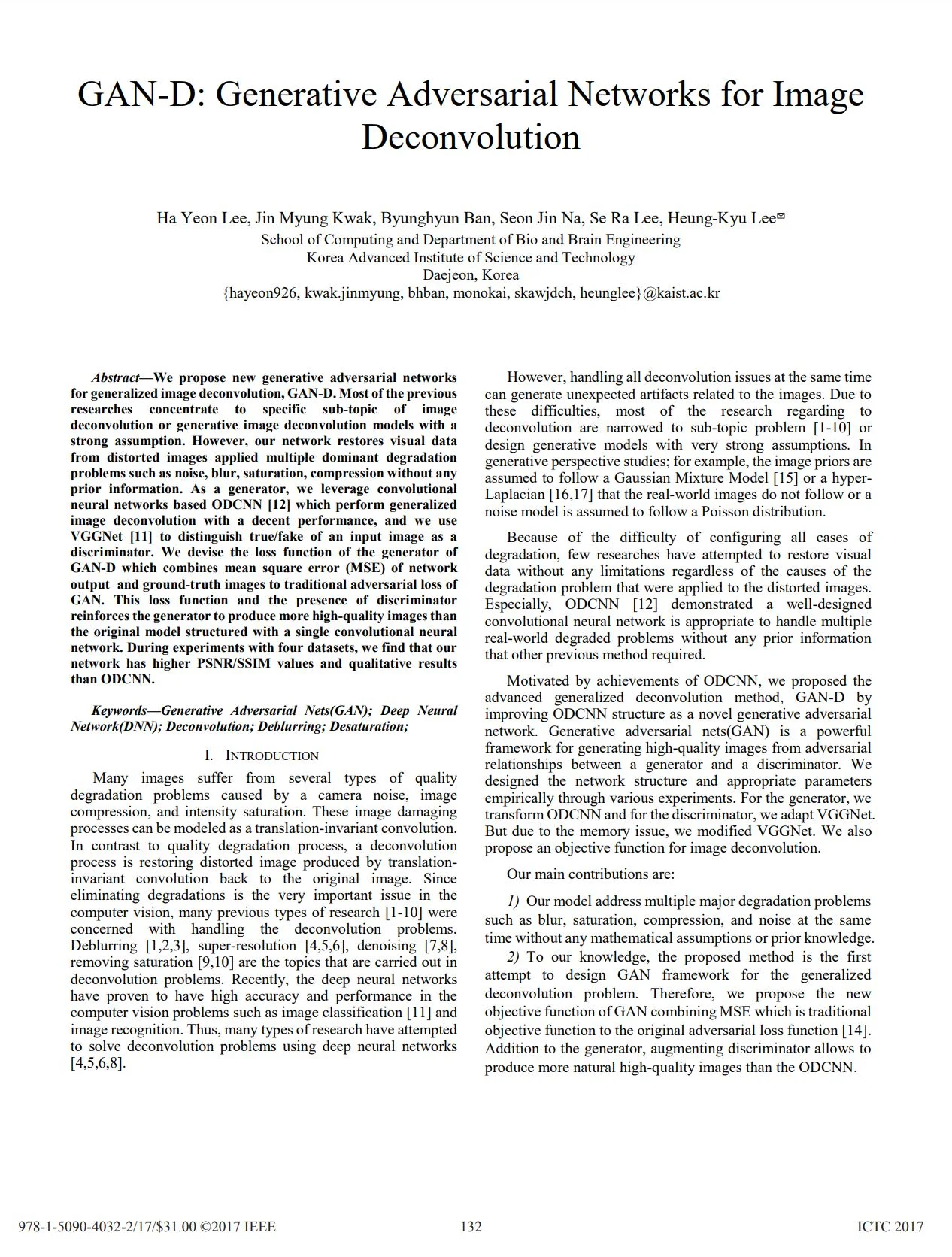
Ha Yeon Lee, Jin Myung Kwak, Byunghyun Ban, Seon Jin Na, Se Ra Lee,
Heung-Kyu Lee* (2017)
ICTC
We propose new generative adversarial networks for generalized image deconvolution, GAN-D. Most of the previous researches concentrate to specific sub-topic of image deconvolution or generative image deconvolution models with a strong assumption. However, our network restores visual data from distorted images applied multiple dominant degradation problems such as noise, blur, saturation, compression without any prior information. As a generator, we leverage convolutional neural networks based ODCNN [12] which perform generalized image deconvolution with a decent performance, and we use VGGNet [11] to distinguish true/fake of an input image as a discriminator. We devise the loss function of the generator of GAN-D which combines mean square error (MSE) of network output and ground-truth images to traditional adversarial loss of GAN. This loss function and the presence of discriminator reinforces the generator to produce more high-quality images than the original model structured with a single convolutional neural network. During experiments with four datasets, we find that our network has higher PSNR/SSIM values and qualitative results than ODCNN.
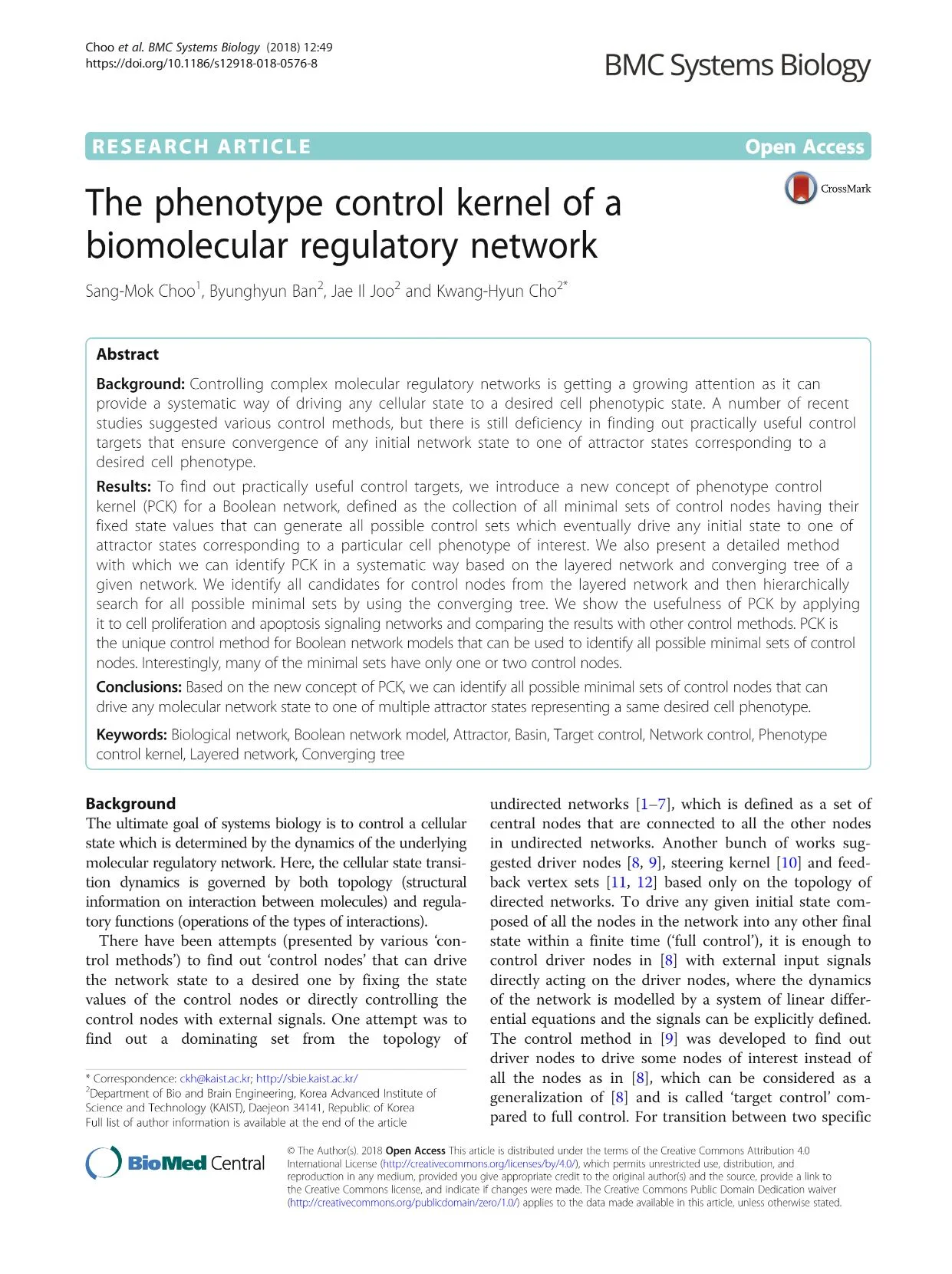
Sang-Mok Choo, Byunghyun Ban, Jae Il Joo, Kwang-Hyun Cho* (2018)
BMC Systems Biology (SCI)
Background: Controlling complex molecular regulatory networks is getting a growing attention as it can provide a systematic way of driving any cellular state to a desired cell phenotypic state. A number of recent studies suggested various control methods, but there is still deficiency in finding out practically useful control targets that ensure convergence of any initial network state to one of attractor states corresponding to a desired cell phenotype. Results: To find out practically useful control targets, we introduce a new concept of phenotype control kernel (PCK) for a Boolean network, defined as the collection of all minimal sets of control nodes having their fixed state values that can generate all possible control sets which eventually drive any initial state to one of attractor states corresponding to a particular cell phenotype of interest. We also present a detailed method with which we can identify PCK in a systematic way based on the layered network and converging tree of a given network. We identify all candidates for control nodes from the layered network and then hierarchically search for all possible minimal sets by using the converging tree. We show the usefulness of PCK by applying it to cell proliferation and apoptosis signaling networks and comparing the results with other control methods. PCK is the unique control method for Boolean network models that can be used to identify all possible minimal sets of control nodes. Interestingly, many of the minimal sets have only one or two control nodes. Conclusions: Based on the new concept of PCK, we can identify all possible minimal sets of control nodes that can drive any molecular network state to one of multiple attractor states representing a same desired cell phenotype.
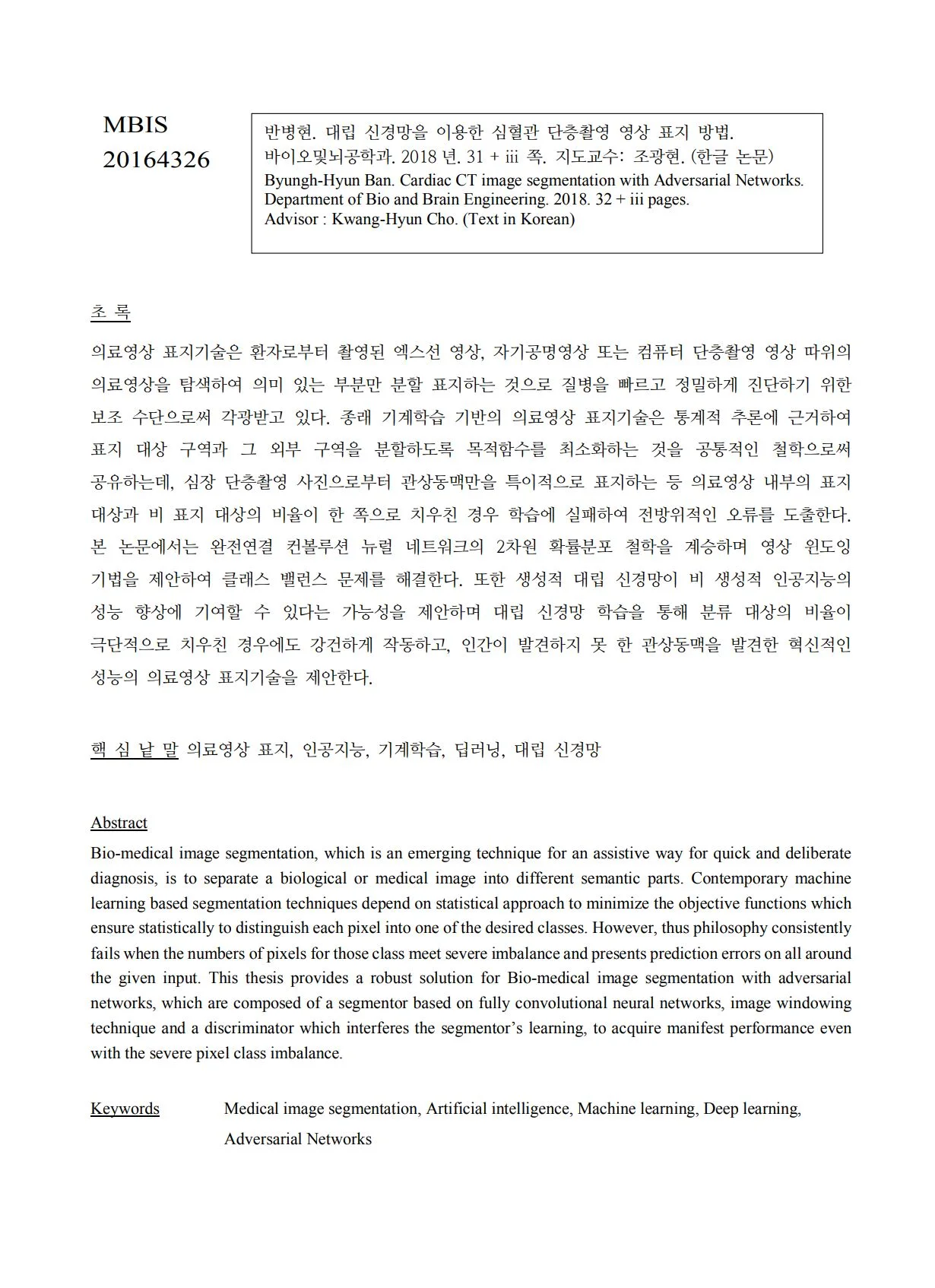
반병현(2018)
한국과학기술원 (석사학위논문)
Bio-medical image segmentation, which is an emerging technique for an assistive way for quick and deliberate diagnosis, is to separate a biological or medical image into different semantic parts. Contemporary machine learning based segmentation techniques depend on statistical approach to minimize the objective functions which ensure statistically to distinguish each pixel into one of the desired classes. However, thus philosophy consistently fails when the numbers of pixels for those class meet severe imbalance and presents prediction errors on all around the given input. This thesis provides a robust solution for Bio-medical image segmentation with adversarial networks, which are composed of a segmentor based on fully convolutional neural networks, image windowing technique and a discriminator which interferes the segmentor’s learning, to acquire manifest performance even with the severe pixel class imbalance.
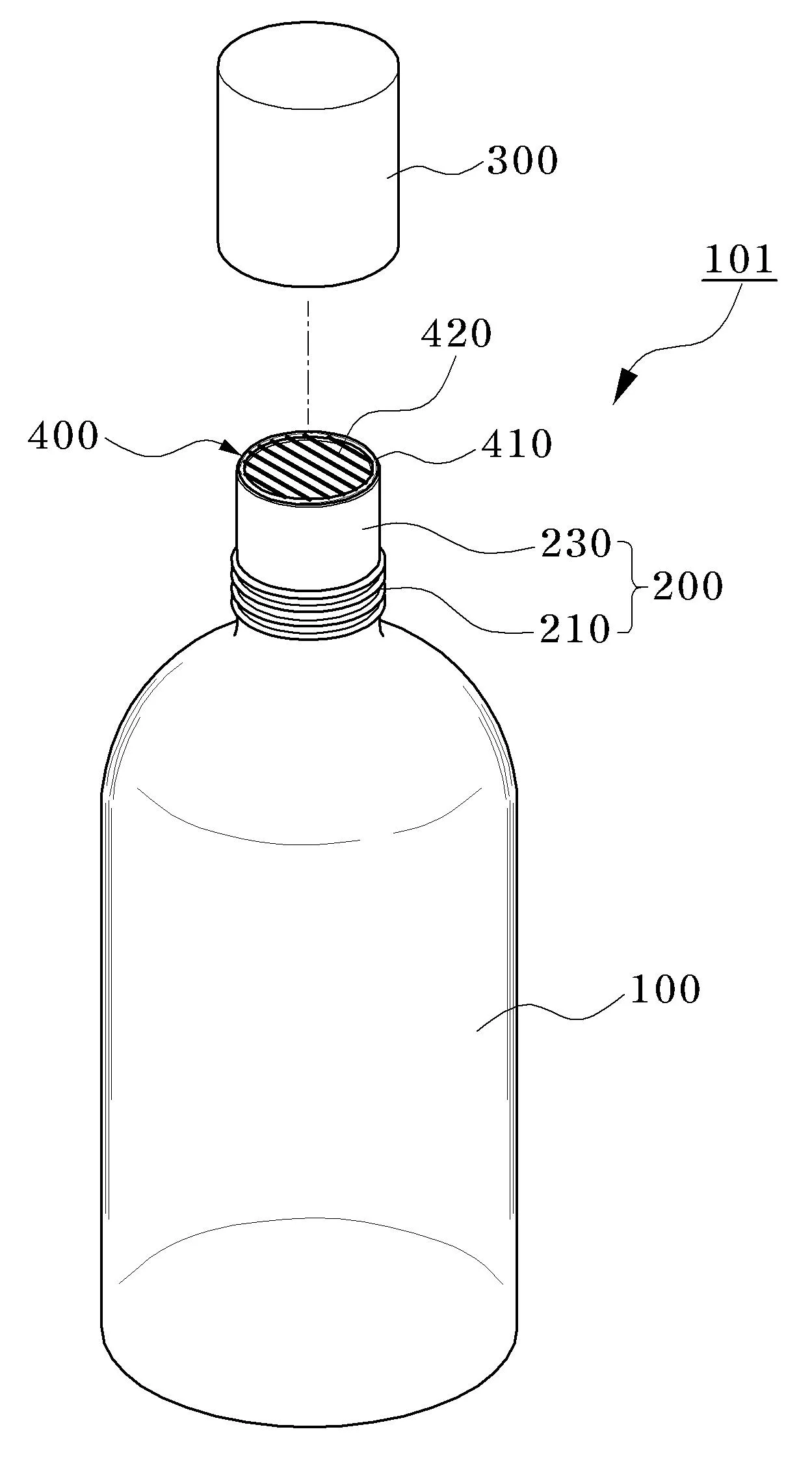
PATENTS
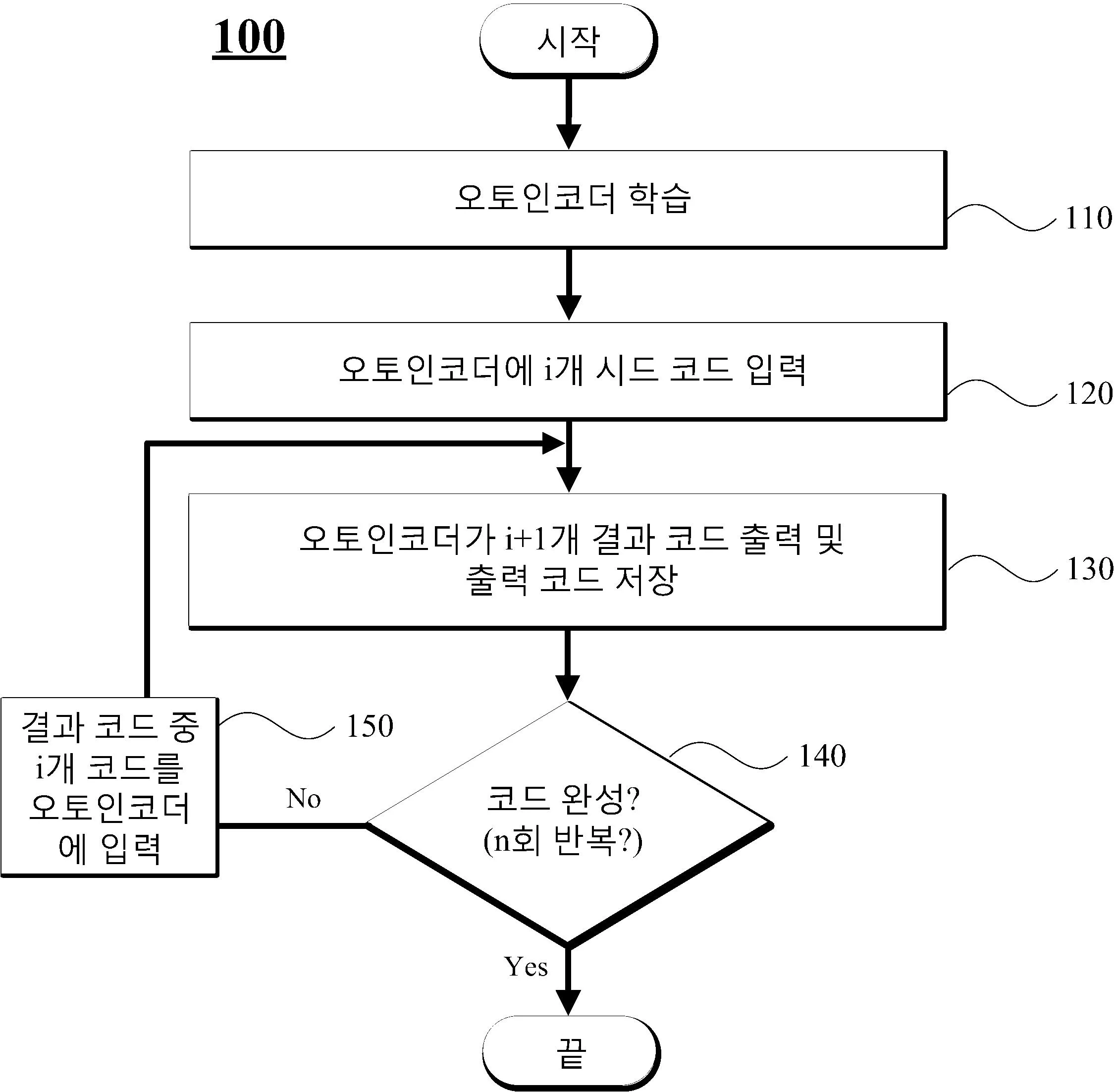
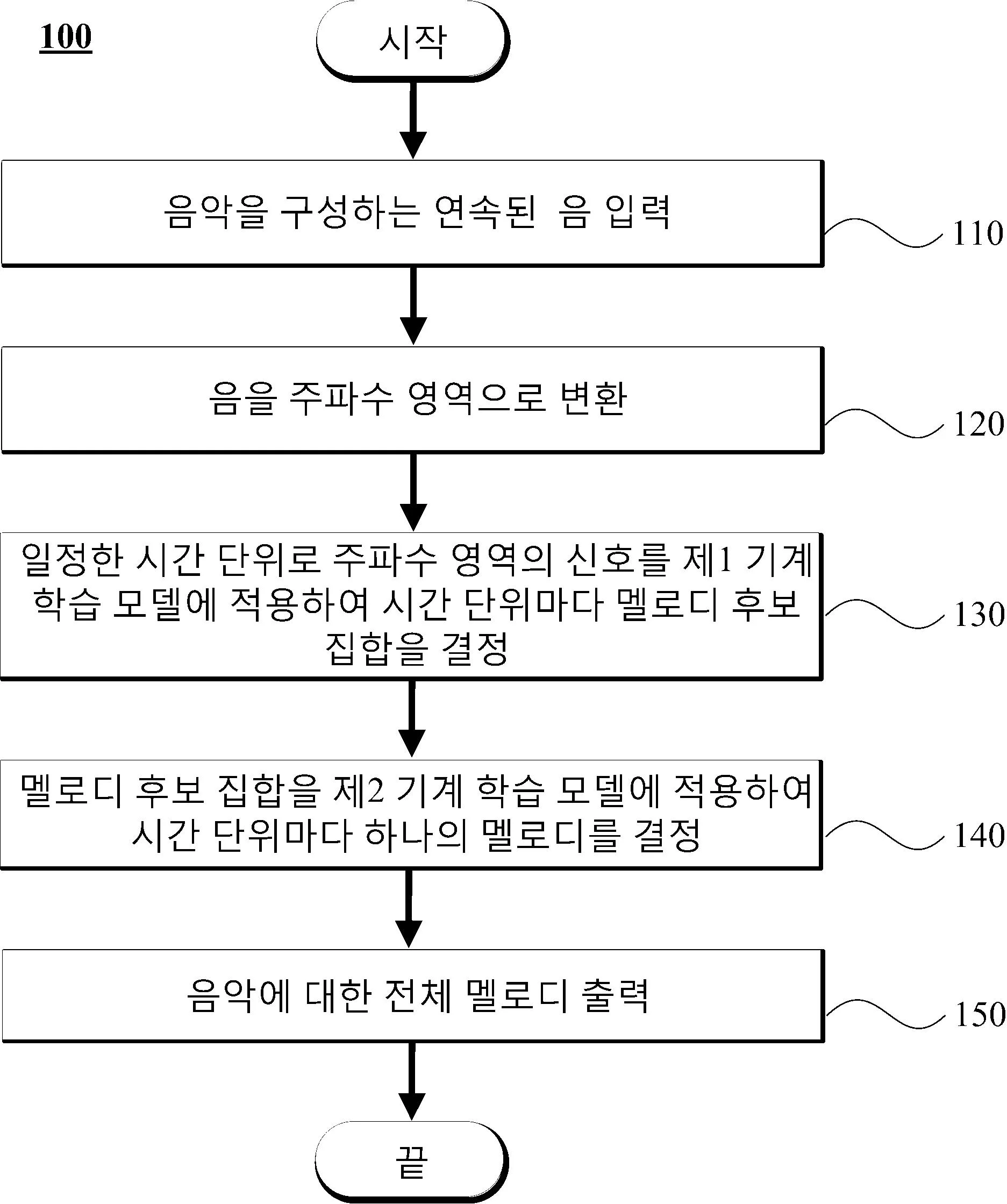
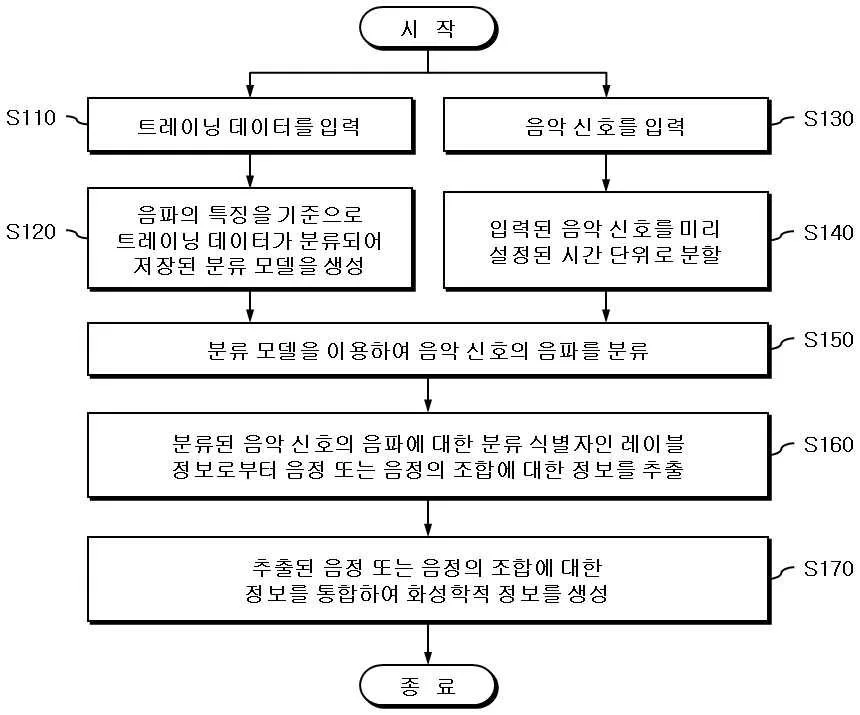
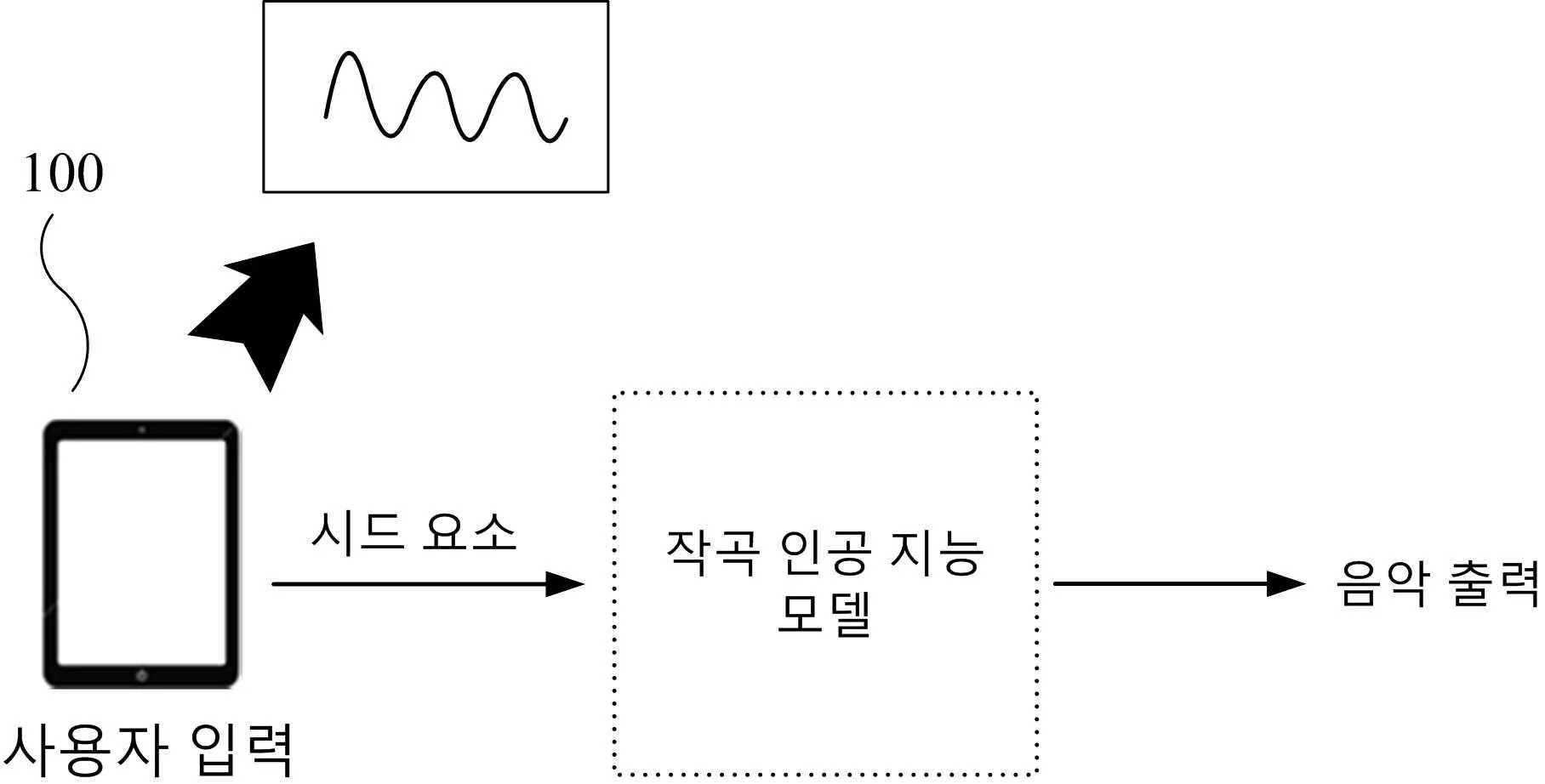
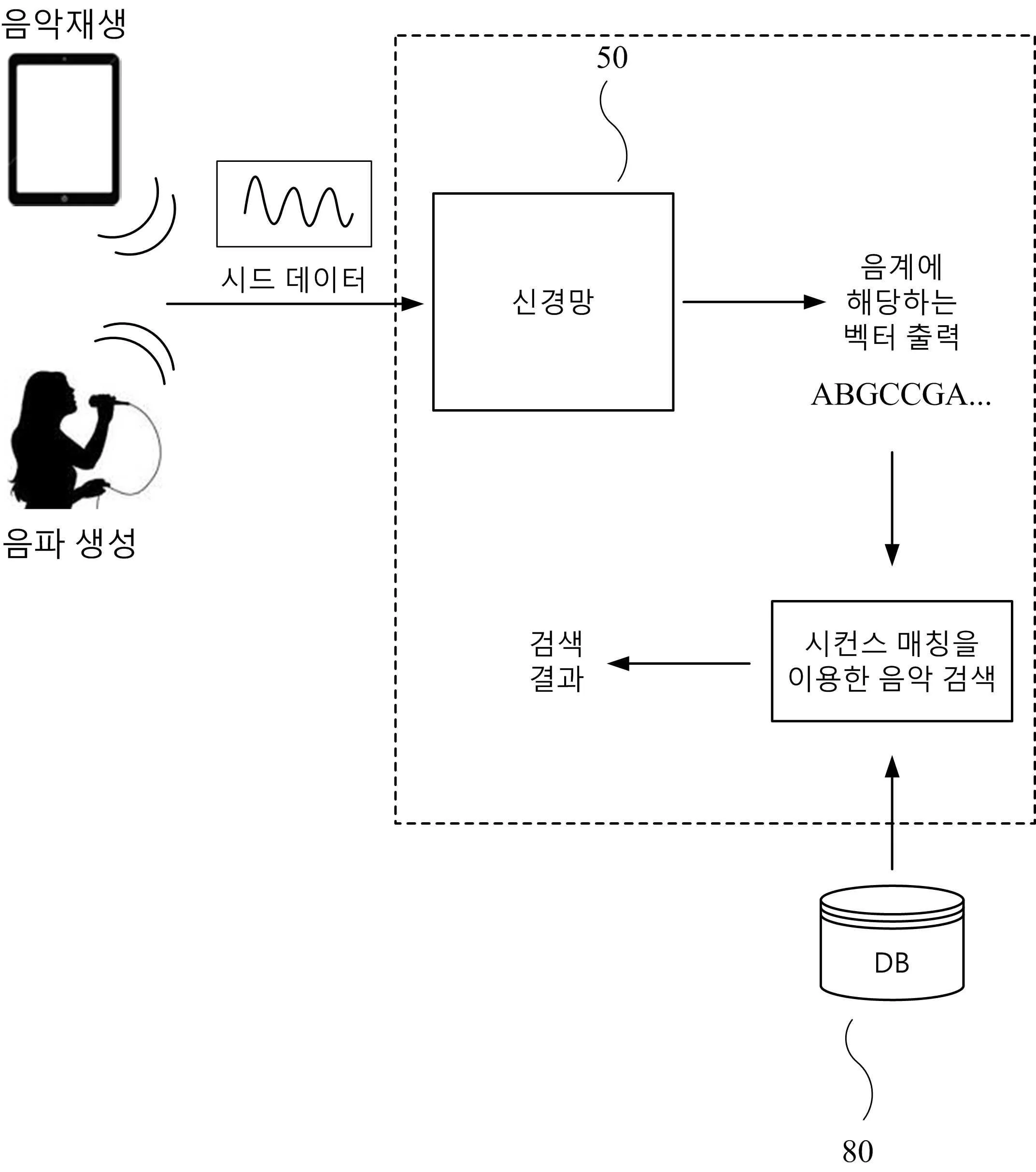
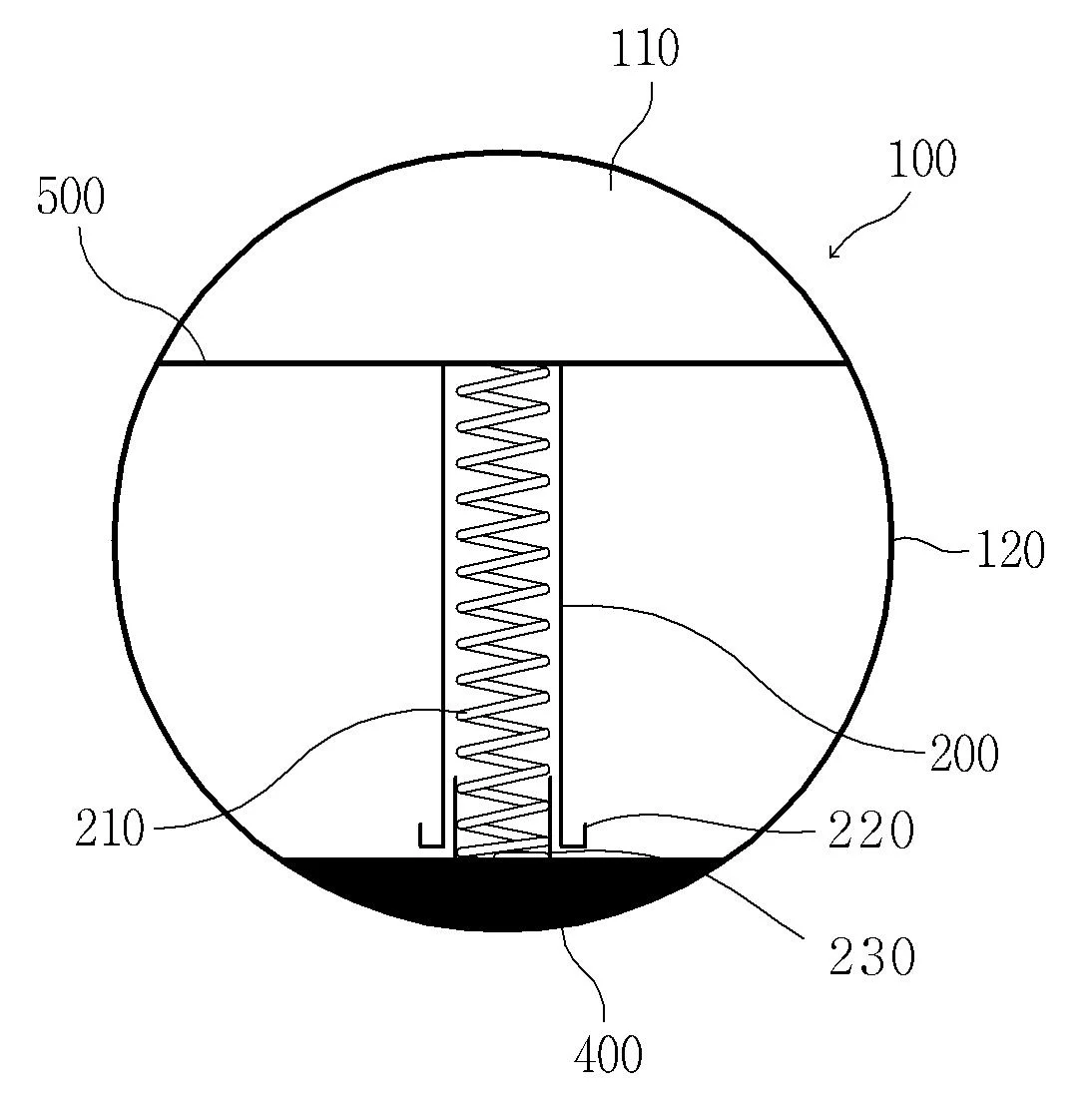
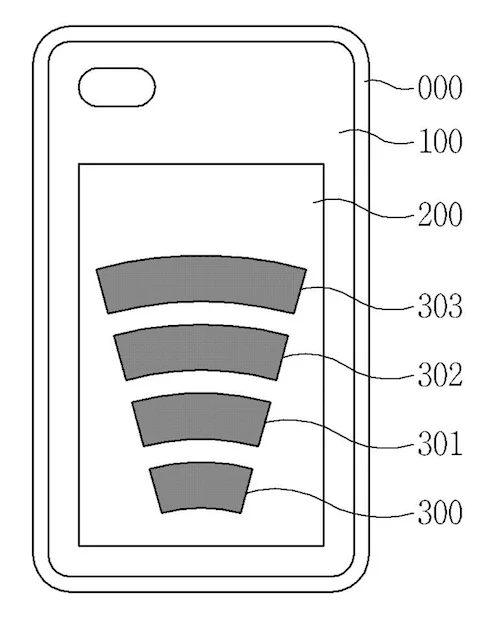
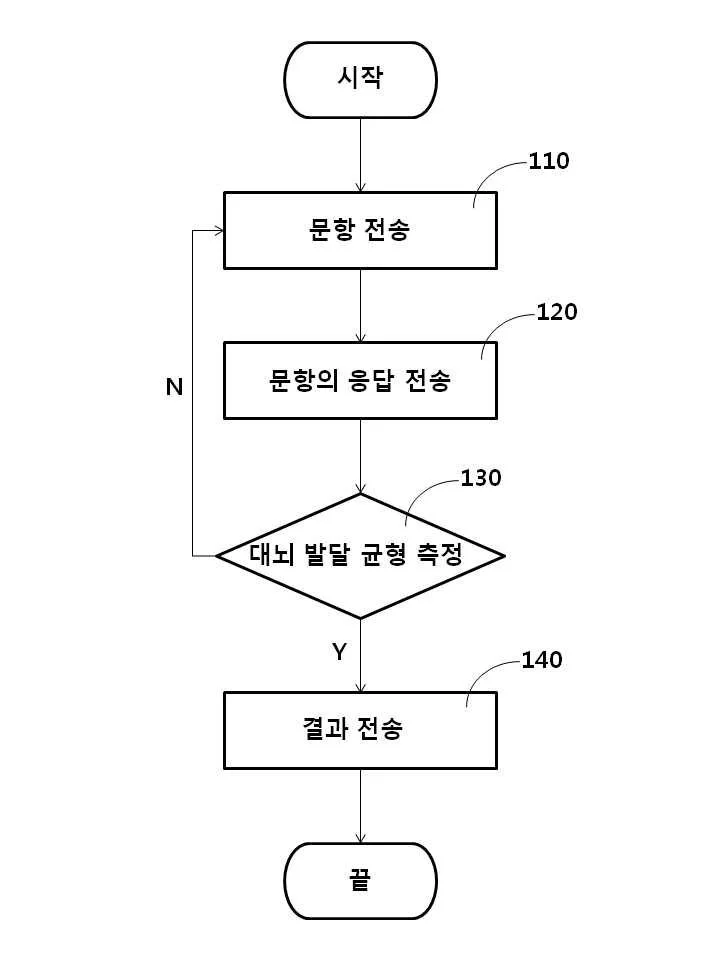
WEBSITES

Official website of AI.Eng. This website was built with React.js and @material-ui.
My own webpage built with React. This static
website is hosted on Github Pages.
It was inspired by
Thomas Zuhlke's jekyll theme
. The original theme runs with jQuery for github API calling, and SCSS for
styling.
And its jQuery function supported only one content wrapper element.
I built a React app looks similar to Thomas'
work.
As you can see, this page supports multiple content wrapper elements.
If you are interested in using this site theme to build your own page, please visit
my
repository to get the source code.
AI족집게 수능영단어(2023, 생능북스)의 부록으로 제공되는 학습용 앱입니다.
매일매일 퀴즈 풀기 기능과, 교사를 위한 PDF 단어 시험지 제작 기능이 제공됩니다.

This page provides example codes for my book, "비전공이지만 개발자로 먹고삽니다 (생능북스, 2022)". It was built with Jekyll and Agency theme by Ravi Riley .

This page provides example codes for my book, "포토샵 마스터 클래스 (생능북스, 2023)". It was built with Jekyll and Agency theme by Ravi Riley .

This webpage provides automated counceling on smart farm and plant factory
facilities.
As there is no standard format of smart farm facilities in Korean market, each
consulting requires so much time and effort from both customers and us.
So I built this automated and interactive web app to provide information and suggest
appropriate options for our customers.
This system also provides formed quote documents for administrative works of
companies.
This static website was built with React and
hosted on Azure.
Business proposal page of Imagination Garden Inc. This website provides embedded slide show for presentation. This static website was built with Jekyll and hosted on Azure. It also utilized Agency theme by Ravi Riley .
This page provides example codes for my book, "내 자산 자동으로 관리하기 (생능출판사, 2021.07.09)". It was built with Jekyll and Agency theme by Ravi Riley .
This page provides example codes for my book, "AI, 빅데이터 활용이 쉬워지는 142가지 데이터셋 (생능북스, 2022.02.22.)". It was built with Jekyll and Agency theme by Ravi Riley .

This page provides example codes for my book, "비전공자가 업무에서 자주 물어보는 101가지 컴퓨터 활용팁 (생능출판사, 2021.07.15.)". It was built with Jekyll and Agency theme by Ravi Riley .

This page provides example codes for my book, "코딩만 따라 해도 웹페이지가 만들어지는 HTML + CSS + 자바스크립트 (생능북스, 2022.02.15.)". It was built with Jekyll and Agency theme by Ravi Riley .
This page provides example codes for my book, "수학, 통계를 몰라도 이해되는 쉬운 딥러닝 (생능출판사, 2021)". It was built with Jekyll and Agency theme by Ravi Riley .

This page provides example codes for my book, "6개월 치 업무를 하루 만에 끝내는 업무 자동화 (생능출판사, 2020)". It was built with Jekyll and Agency theme by Ravi Riley .

A Landing page for Money AUTO project. Money AUTO is a non-commercial project to
provide automated solutionis for individual investors.
It now provides Coin AUTO, an automated cryptocurrency trading system. Money AUTO
will
provide automated stock trading system,
real-time asset management system, and investment portfolio design services. All
services of moneyauto will be provided for free.
This static website was built with Jekyll and
Agency theme by Ravi Riley
.
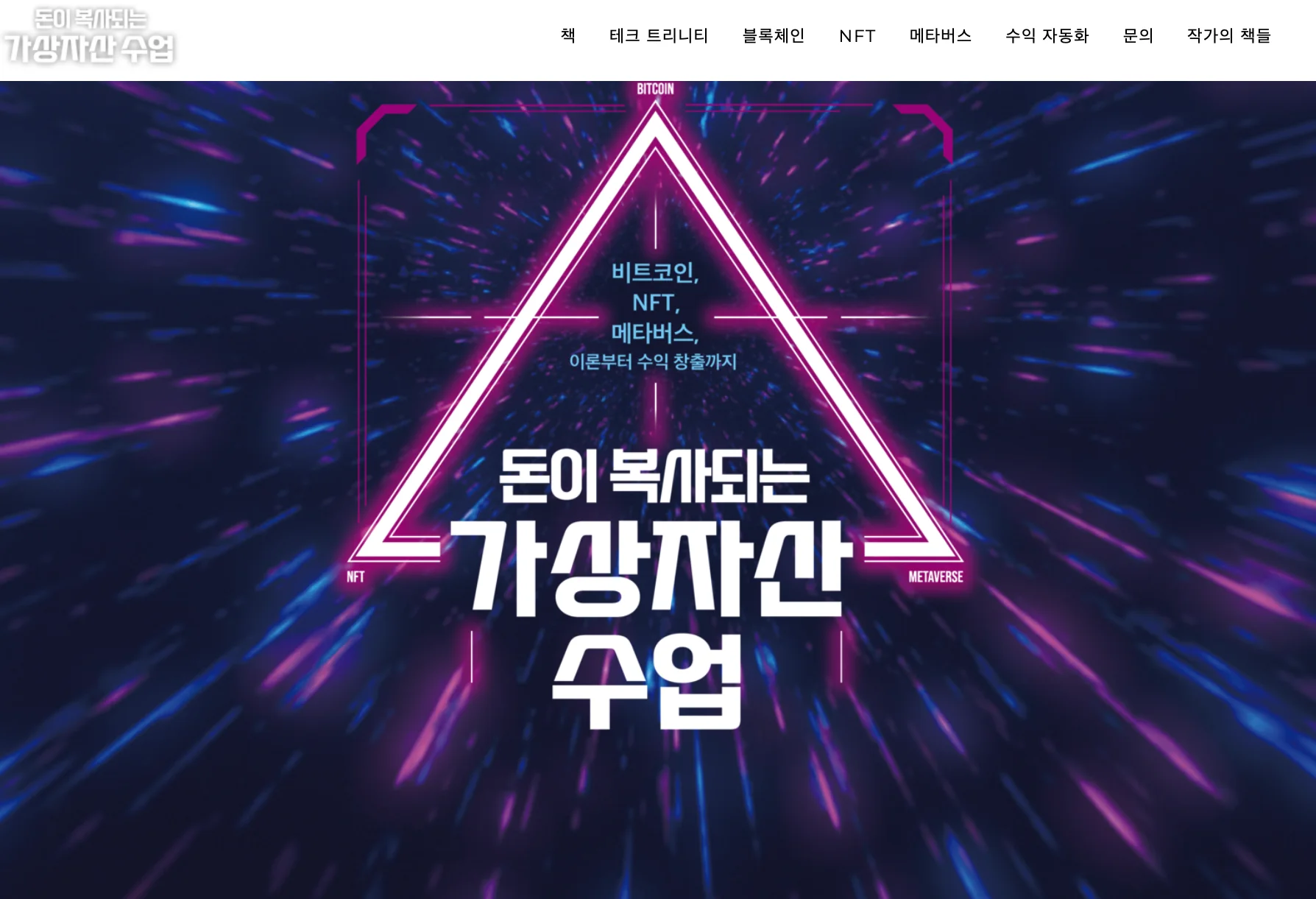
This page provides example codes for my book, "돈이 복사되는 가상자산 수업 (생능북스, 2022)". It was built with Jekyll and Agency theme by Ravi Riley .
Official website of Imagination Garden Inc. for 2022 4Q. It uses a backend MySQL
server for data management, while previous website was a static website.
This website was built with Docker, MySQL, and
Wordpress hosted on Azure.
Official webpage of Imagination Garden Inc. This static website was built with Jekyll and hosted on Azure. It also utilized Agency theme by Ravi Riley .
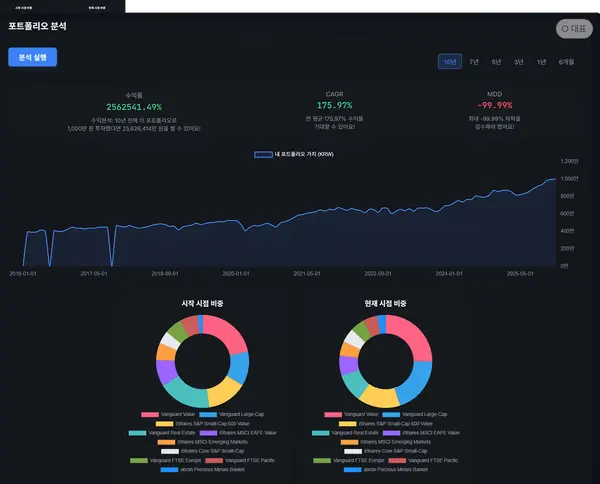
A comprehensive investment analysis platform designed for portfolio exploration and simulation. It provides real-time access to major market indices such as KOSPI, KOSDAQ, NASDAQ, and the S&P 500, and allows users to search individual stocks to view recent price data. The platform introduces well-known asset allocation strategies and explains how to implement them using ETFs. Users can copy selected portfolio recipes into their personal inventory and run backtests, such as simulating how a $10,000 investment made ten years ago might have performed. In addition to sample portfolios, users can customize portfolios using their own selected assets. When signed in with a Google account, portfolio recipes are securely saved to the user's Google Drive. NaNa Lab does not collect or store personal investment data; all information remains within the user's own account.

Instantly convert URLs into QR codes directly in your browser. Since the QR codes are generated locally without passing through external servers, this tool operates significantly faster than most alternatives. It even works reliably when your internet connection is unavailable. The service is 100% free, and you can download clean, well-designed QR codes with a single click.
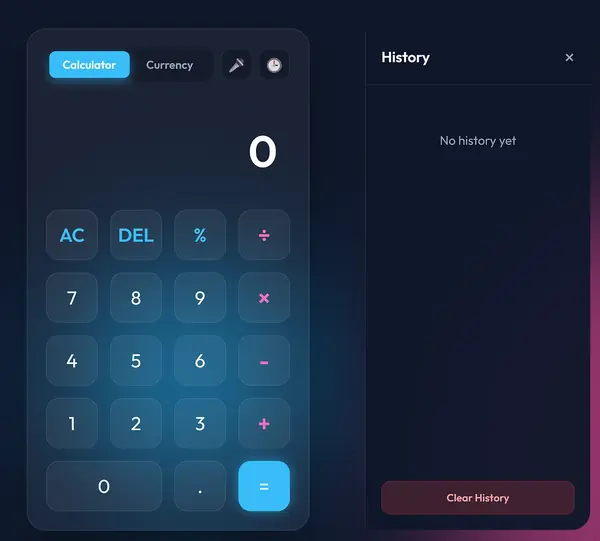
A lightweight yet powerful smart calculator designed for everyday and office use. With built-in speech recognition, it offers improved accessibility in situations where typing is inconvenient. The calculator displays calculation history on screen, helping users keep track of multiple consecutive operations. It also includes currency conversion features, making it especially useful for accounting and financial tasks.
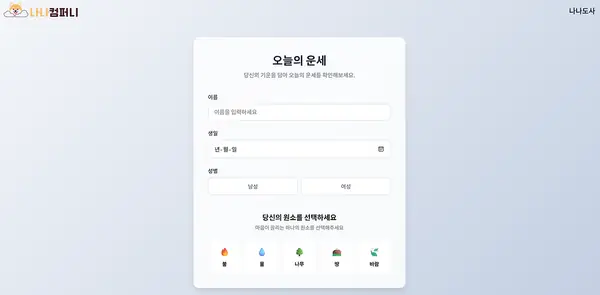
Start your day with a glimpse into your destiny. This application provides daily fortune readings based on your zodiac sign and date of birth. Whether you are looking for advice on love, career, or health, our Fortune Teller offers insights to help you navigate your day with confidence. It is a fun and mystical way to take a moment for yourself amidst a busy schedule.

Maintain professional etiquette even when you're away from your desk. This convenient tool transforms your monitor into a clear status display, greatly helping communication with colleagues in the office. It also features an automatic full-screen mode for a seamless status display experience.
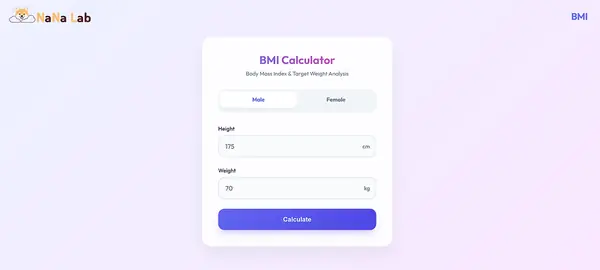
Take control of your health journey with this comprehensive Body Mass Index calculator. It goes beyond simple calculation by analyzing your current weight category and providing actionable insights. The tool calculates exactly how much weight you need to lose or gain to reach specific BMI milestones (like 90, 100, or 110), helping you set and track realistic fitness targets.
A delightful and interactive tool designed to randomly select one lucky person from a group. Whether you are organizing a team event, hosting a prize draw, or simply deciding who goes first, this app transforms the process into an exciting game. Featuring fun animations and a playful interface, it builds anticipation and adds a spark of joy to the moment of selection. Say goodbye to boring methods and let the Lucky Cannon decide the winner with a blast of fun!
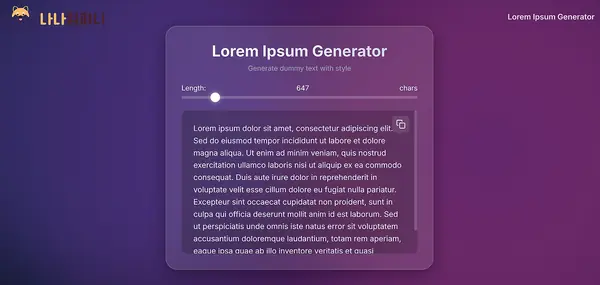
A simple efficient tool for generating placeholder text ("Lorem Ipsum") for your design and typesetting projects. Whether you need a few paragraphs for a website mockup or extensive dummy text for a print layout, this tool provides standardized Latin text quickly. It helps designers focus on visual elements without being distracted by meaningful content. Customize the amount of text generated to perfectly fit your design constraints.
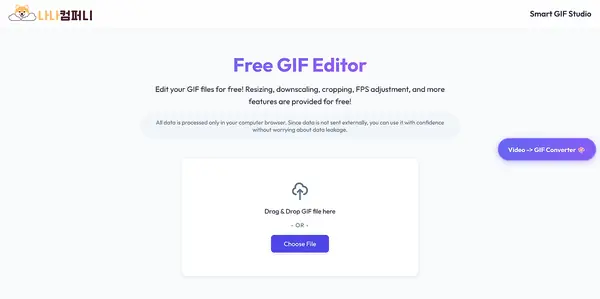
Smart GIF Studio is a free, browser-based GIF editor that lets you resize animations, crop or add padding, reduce file size with multiple optimization options, rotate/flip, reverse playback, adjust speed, and cut or trim frames. It also supports converting GIFs to MP4, WEBM, and JPG, and keeps a simple edit history for faster repetitive work. All processing runs locally in your browser, so files are not uploaded to external servers, making it suitable for handling sensitive media with confidence.
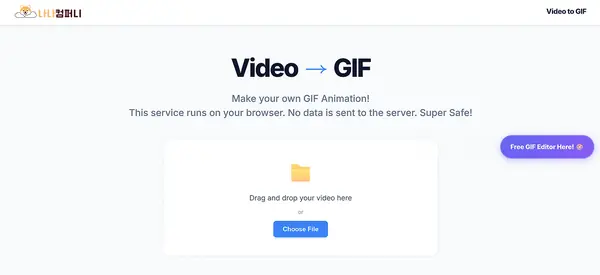
Marketers, designers, webmasters, and other media professionals often need to convert videos into GIF files for presentations, documentation, or social media content. This lightweight GIF converter offers a much faster and more convenient alternative to launching heavy desktop software such as professional video editors. Built on a serverless architecture, all processing is performed locally on the user's computer, so video data is never uploaded or transmitted externally. This makes the tool suitable for converting sensitive or confidential video materials while maintaining both efficiency and data privacy.
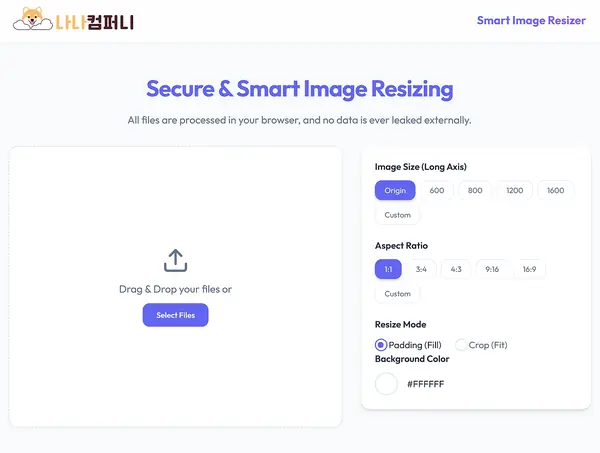
Marketers, designers, and planners often need to process large numbers of images at once. From simple resizing and aspect ratio adjustments to cropping images for social media uploads, NaNa Lab's Image Resizer allows you to complete these tasks instantly with a single click. All image processing is performed locally in your browser without using external servers, which means your files are never uploaded and data privacy is fully preserved. Because images are not transferred over the network, the tool operates faster than many conventional online services, helping you save time by avoiding unnecessary uploads and downloads.
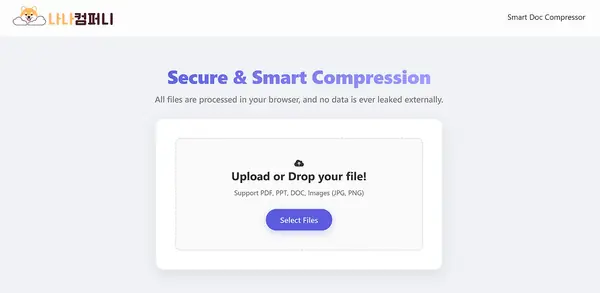
Compress PDF, PPT, Word, and image files quickly and efficiently. Unlike many online tools that upload your documents to external servers, NaNa Lab processes all files locally within your browser, ensuring that no data is transmitted or stored elsewhere. This makes Smart Doc Compressor suitable for handling confidential documents and files containing personal information, while improving efficiency, productivity, and security at the same time.
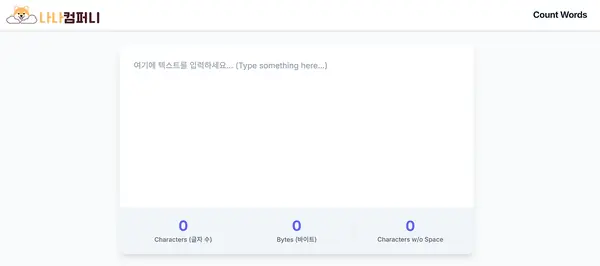
A robust and precise character counting tool designed for writers, editors, and students. Beyond simple word counts, it provides detailed statistics including character counts with and without spaces, paragraph counts, and reading time estimates. It supports various languages and is optimized for checking limits on social media posts, essays, and reports. All text processing happens instantly in your browser, ensuring your content remains private.
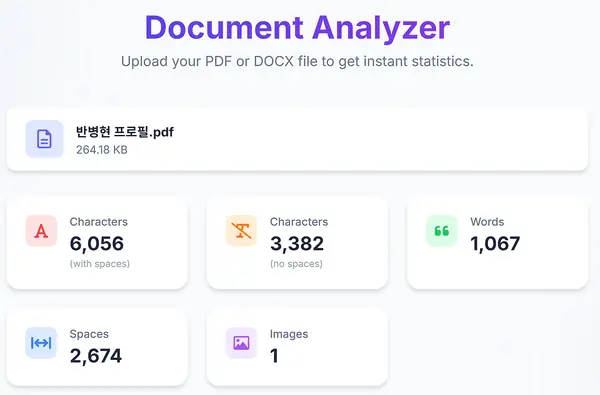
Gain deep insights into your documents with this powerful analysis tool. It supports both PDF and DOCX formats, extracting key metrics such as word count, page count, and keyword frequency. Perfect for reviewing legal contracts, academic papers, or business reports, it helps you understand the structure and content of your files at a glance. Like our other tools, it runs entirely client-side, guaranteeing that your sensitive documents never leave your device.
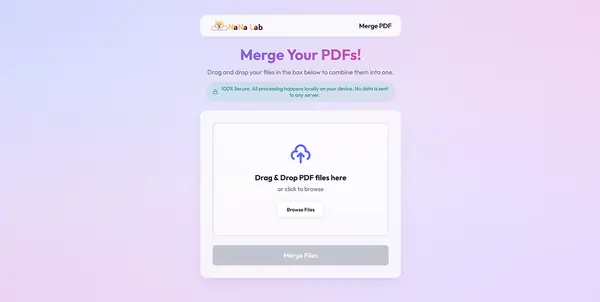
Efficiently combine multiple PDF documents into a single, organized file. Whether you're merging scattered reports, receipts, or study materials, this tool handles it all locally in your browser. Since no files are uploaded to external servers, you can process sensitive content with complete peace of mind, ensuring your data remains private and secure.

An advanced multi-modal chatbot prototype designed to support professional workflows. It features speech recognition for voice-based interaction and allows users to upload PDF files to generate conversations grounded in the document content, such as discussing legal topics using uploaded law texts. Conversation results can be summarized into one or two A4 pages and exported for printing or saving as PDF files, making it useful for report preparation and document review. Users can also organize their work documents and consult the AI for structured assistance. Optional Google Search integration enables the chatbot to actively search the web when answering questions. Powered by Gemini 3.0. As a prototype, usage is limited to 20 conversations per day. For internal or enterprise adoption, the service can be switched to a pay-as-you-go pricing model.
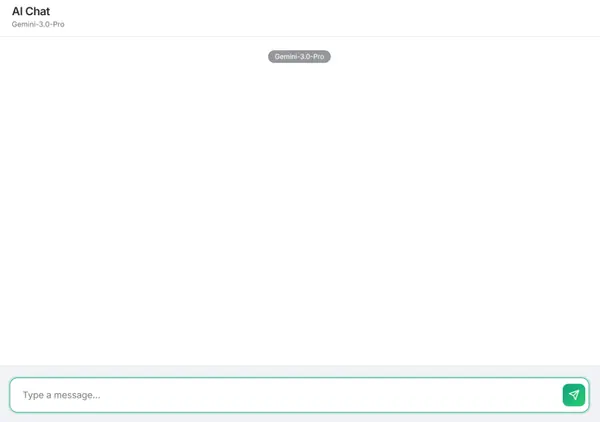
A sleek and modern AI chat interface template designed for seamless user interactions. It serves as a responsive front-end foundation for building custom AI chatbot applications. Features include theme toggling, model selection placeholders, and a clean messaging UI.
Build your next idea with NaNa Lab.